
Last updated October 17, 2026
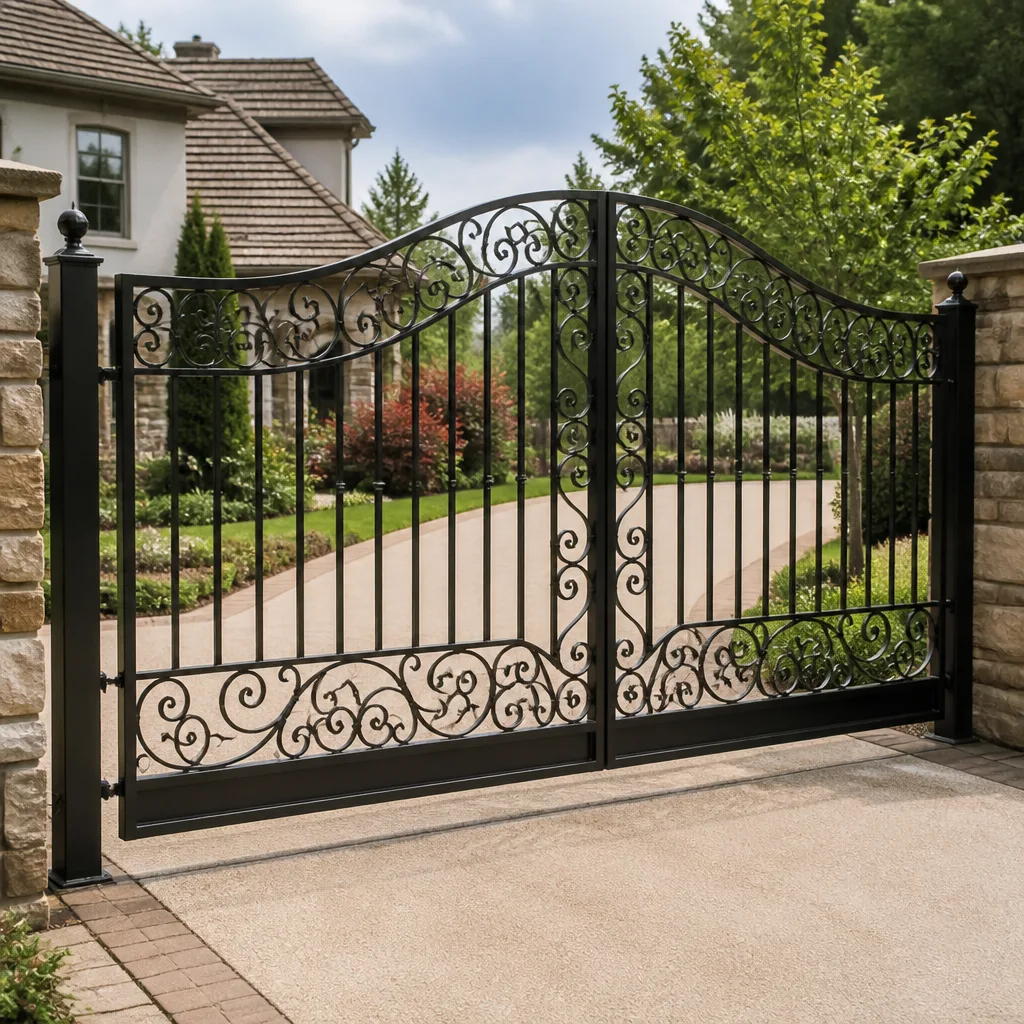 Wrought iron
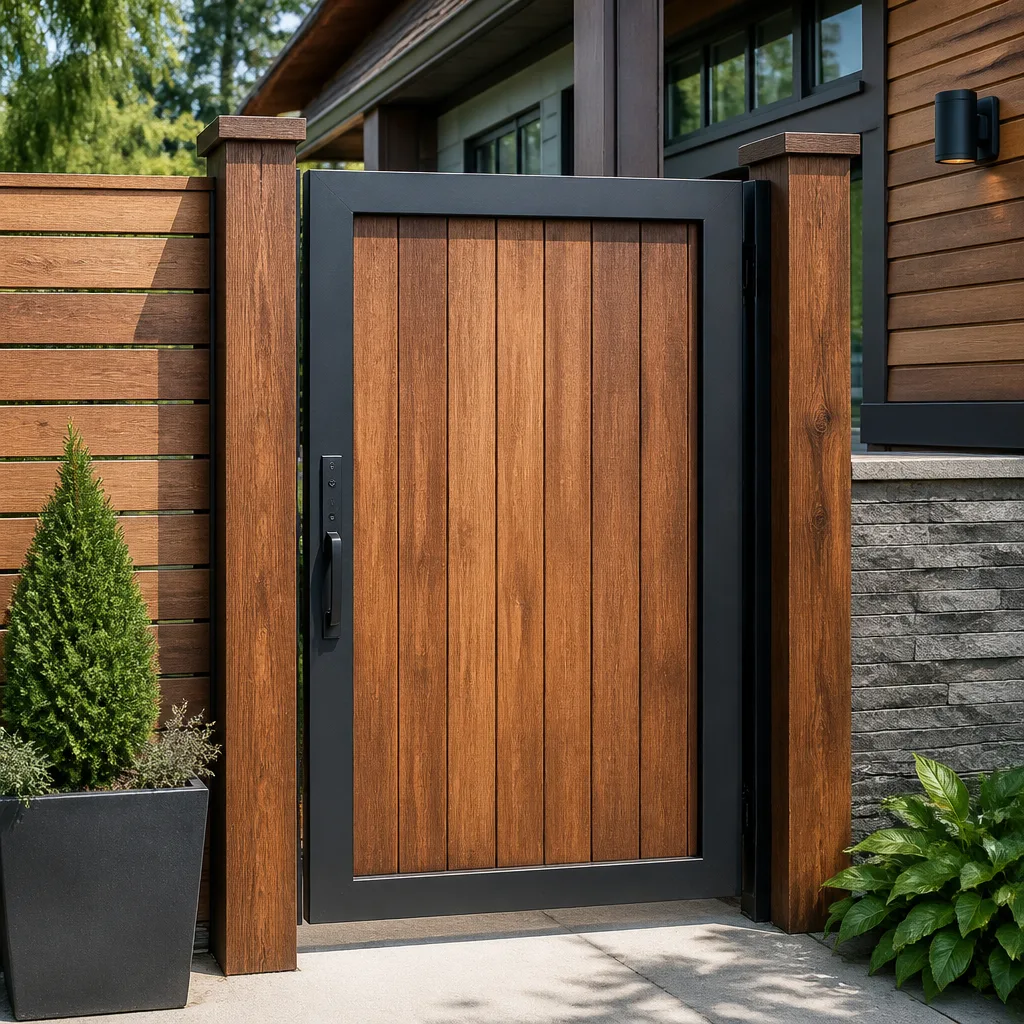 Wood & steel frame
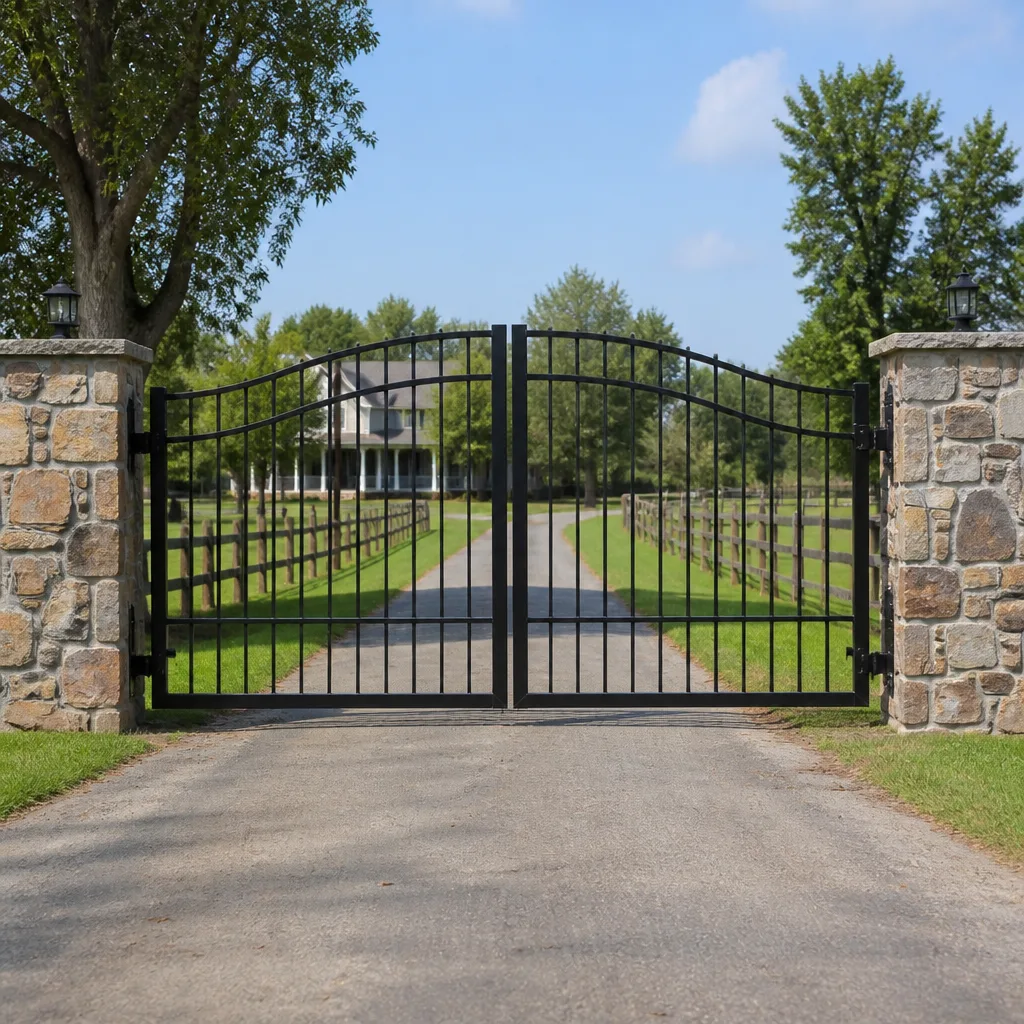 Farm & ranch
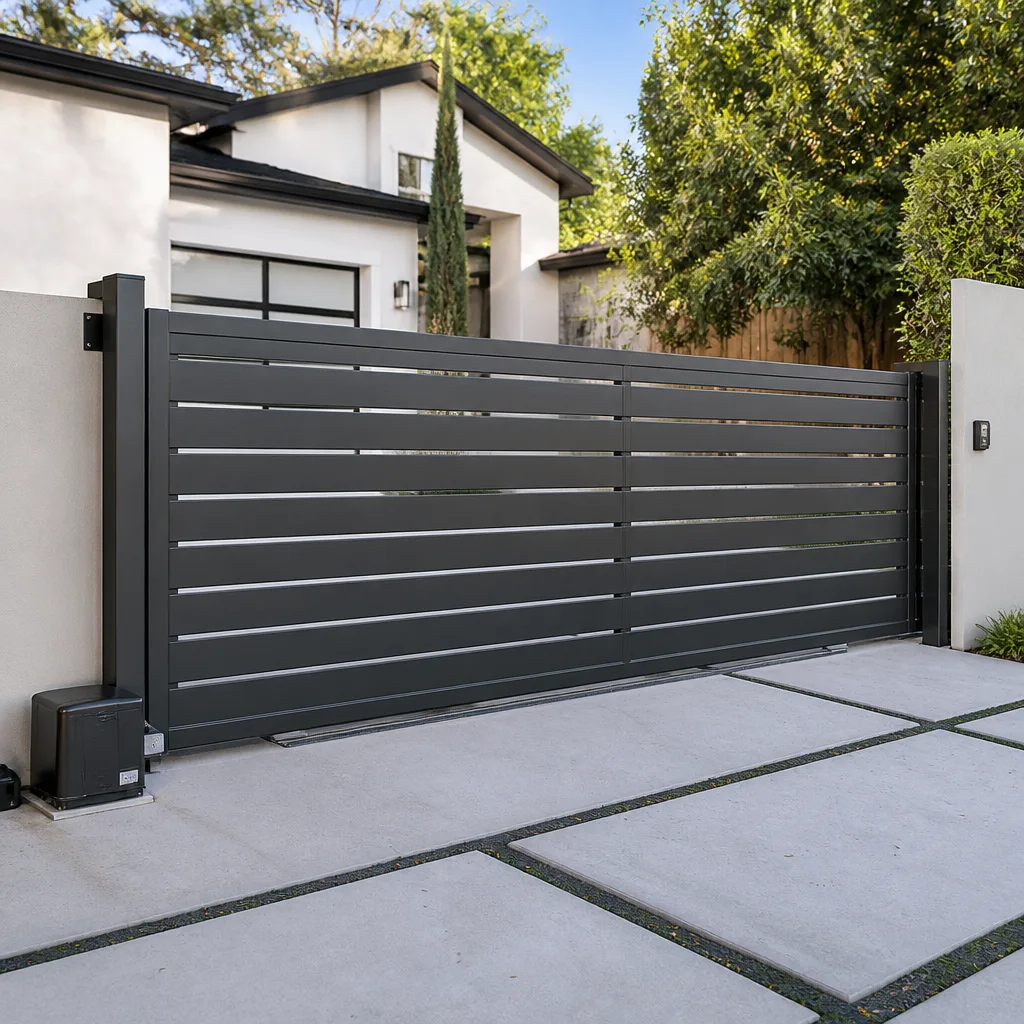 Sliding driveway gates
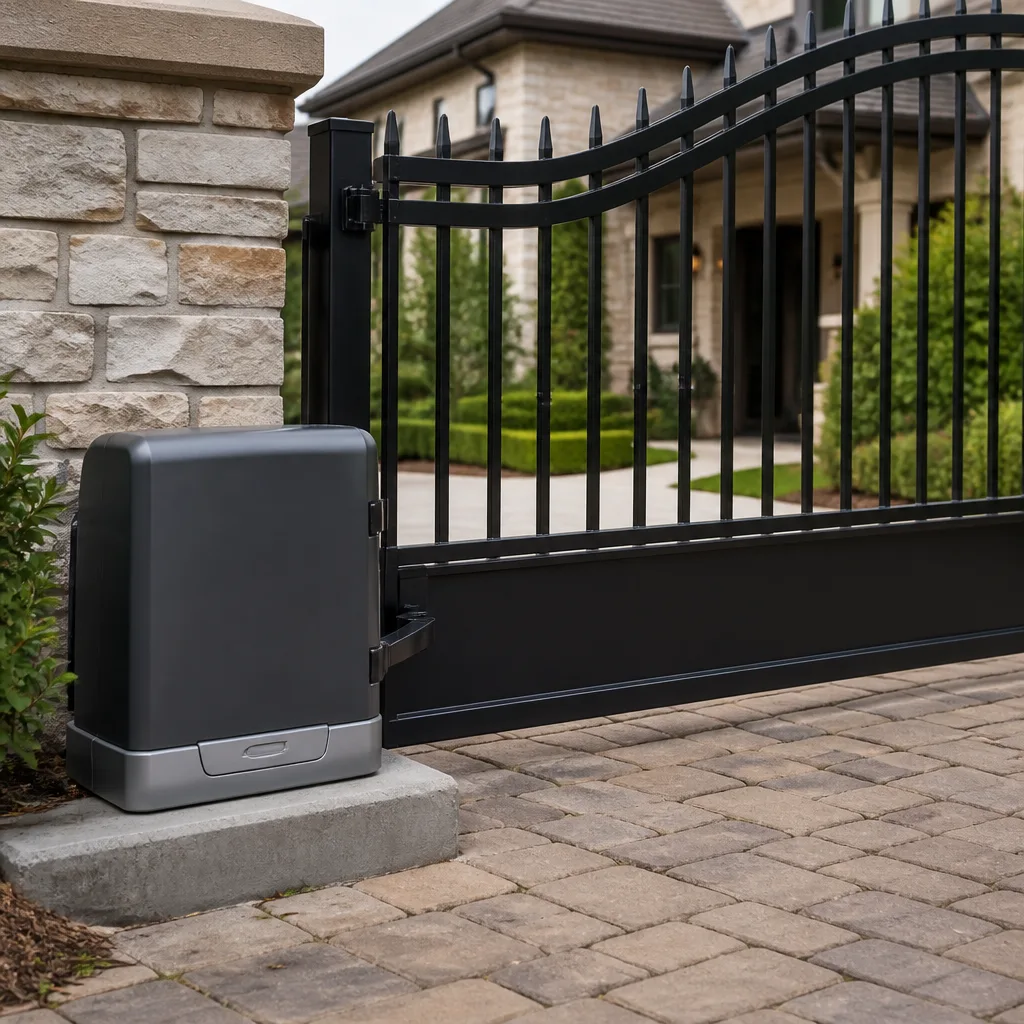 LiftMaster operators
Free on-site gate assessment - hinges, posts, and your LiftMaster or Nice gate operator checked before anything is quoted
The assessment is free and the quote is the invoice.
Get your free estimateSeasonal Gate Repair Care for Brooklyn: Year-Round Homeowner’s Guide
The gate that jams in August was probably damaged in February. Freeze-thaw cycles heave post footings in winter, the shift goes unnoticed through spring, and by the time Brooklyn’s humid July air rolls in, the latch is misaligned just enough to stick. We’ve spent sixteen years watching this exact pattern play out across Brooklyn’s brownstone walkways, backyard fences, and driveway gates. This guide maps each season’s damage to the repair it eventually causes, so you can catch the problem while it’s still a five-minute fix instead of a full post reset. You’ll learn what Brooklyn’s specific weather does to gate metal, post anchors, and latch mechanisms, and what to do about it in the month it actually matters.
Quick Answer
Seasonal gate care in Brooklyn means four distinct tasks: a neutralizing wash each April to strip road salt, a chain re-tension each July after heat expansion, a latch lubrication each November before the first freeze, and a footing check each February while the ground is frozen. Most gate failures trace back to one of these four tasks being skipped. A homeowner who follows this calendar will prevent the majority of seasonal breakdowns and extend a gate’s working life by years.
Styles & brands we work with
Table of Contents
- Winter Freeze Damage: How Brooklyn’s January and February Weather Breaks Gate Posts
- Spring Salt Stripping: The April Wash That Prevents Galvanic Corrosion
- Summer Heat Expansion: Re-Tensioning Electric Gate Chains in July
- Fall Winterizing: The November Latch Lubrication That Stops Seizure
- How One Season’s Damage Becomes the Next Season’s Breakdown
- The Brooklyn Gate Inspection Calendar: Month-by-Month Checklist
- What to Do Yourself and What to Leave to a Pro
- Common Mistakes to Avoid
- When to Call a Professional
- Frequently Asked Questions
Winter Freeze Damage: How Brooklyn’s January and February Weather Breaks Gate Posts
Brooklyn’s winter does not announce itself with drama. It works slowly, through dozens of nights that dip below freezing and dozens of days that climb back above it. Every one of those cycles does something small to a gate post footing. Water seeps into the space between the concrete and the steel, freezes, expands by about nine percent, and pushes outward. Then it thaws and contracts, leaving a slightly larger gap than before. After 40 or 50 of these cycles, which is a normal Brooklyn winter, that gap has widened enough for the post to shift a few millimeters.
A few millimeters does not sound like much. But a gate is a lever. A post that leans three millimeters at its base can translate to a latch that misses its strike plate by half an inch at the catch point. That is the difference between a gate that closes and a gate that needs a shove with the hip.
What to check in February: When the ground is frozen solid, walk out to your gate and look at the post from a low angle. Sight down the line of the post against the fence line. If the post leans even slightly out of line, or if you can see a hairline crack in the concrete collar at its base, water has been getting in. You can also press the gate gently at the latch end. A well-seated gate feels solid all the way through; one with a failing footing feels like it moves at the base before the upper portion does.
We inspect Brooklyn gate post footings all winter, and we tend to find the worst damage on gates set into older concrete walkways where the concrete has already spalled from decades of salt exposure. The footing is only as stable as the concrete around it. If you spot movement, call before spring. Repairs done while the ground is frozen are actually cleaner because the surrounding soil is stable and the concrete work sets with less shifting.
For more on what a full gate repair involves in Brooklyn, see our Gate Repair in Brooklyn page.
Spring Salt Stripping: The April Wash That Prevents Galvanic Corrosion
Brooklyn sidewalks see road salt from the first November freeze through late March. That salt does not stay on the sidewalk. It gets kicked up by boots, splashed by passing cars, and sprayed by snow-melt puddles. It lands on the lower six inches of your gate, sits there through the winter, and begins a slow chemical reaction with the metal.
Here is the part most homeowners miss: the worst corrosion happens on mixed-metal gates. If your gate has an iron frame with aluminum infill panels, or steel hinges on an aluminum post, you have a galvanic pair. Salt water acts as an electrolyte between the two metals, and one of them, usually the steel, corrodes faster than it would on its own. We see this on iron-and-aluminum gates across Brooklyn more than anywhere else we work, because the salt load here is heavier than in the suburbs and the air is wetter thanks to the rivers and the harbor.
What to do in April: Once the last freeze has passed and the street sweepers have cleared the bulk of the winter grit, give the bottom rail of your gate a proper wash.
- Spray the gate with plain water from a garden hose, focusing on the bottom rail and the hinge area. Do not use a pressure washer, which can force salt deep into bolt holes and hinge pins.
- Mix two tablespoons of baking soda into a gallon of warm water. Rub the lower rail and hinge plates with a soft brush and the solution. The mild alkalinity neutralizes the acidic residue road salt leaves behind.
- Rinse thoroughly. Then inspect the painted surface for any chips, scratches, or bubbling. Bare metal exposed just one summer will develop rust spots by September.
- If you find bare spots, touch them up with a marine-grade metal primer and paint. Do it on a dry day above 50 degrees Fahrenheit.
For gates from Elite and Mighty Mule, the factory finishes are generally good, but no finish survives a Brooklyn winter unscathed at the lower edge. If the corrosion has already gotten into the hinges, you may need a professional look. We can assess what is surface and what is structural on our Gate Repair in Brooklyn visits.
Summer Heat Expansion: Re-Tensioning Electric Gate Chains in July
Brooklyn’s summer heat does something specific to chain-driven electric gates. The chain that runs between the operator motor and the gate leaf expands in the heat. It does not expand much, maybe a quarter-inch over an eight-foot run, but that small amount changes how the gate moves. The chain hangs slightly loose. The slack makes the gate jerk at the start and end of each cycle. Every jerk sends a shock load through the gear train inside the operator.
The damage is never immediate. The gate still opens and closes. The jerk just gets a little worse each week. Then, in October, when the temperature drops and the chain contracts again, the loose-fit sprocket has worn down the gear teeth. That’s when the motor starts grinding, and by November you’re calling for a costly gearbox replacement that could have been prevented with a fifteen-minute adjustment in July.
How to check in July: On the hottest week of the month, run your gate and watch the chain. It should stay snug against the sprocket through the entire cycle. If you can see it lift off the sprocket teeth at the start of the cycle, or if you hear a metallic tick when the gate reverses direction, the chain has gone loose.
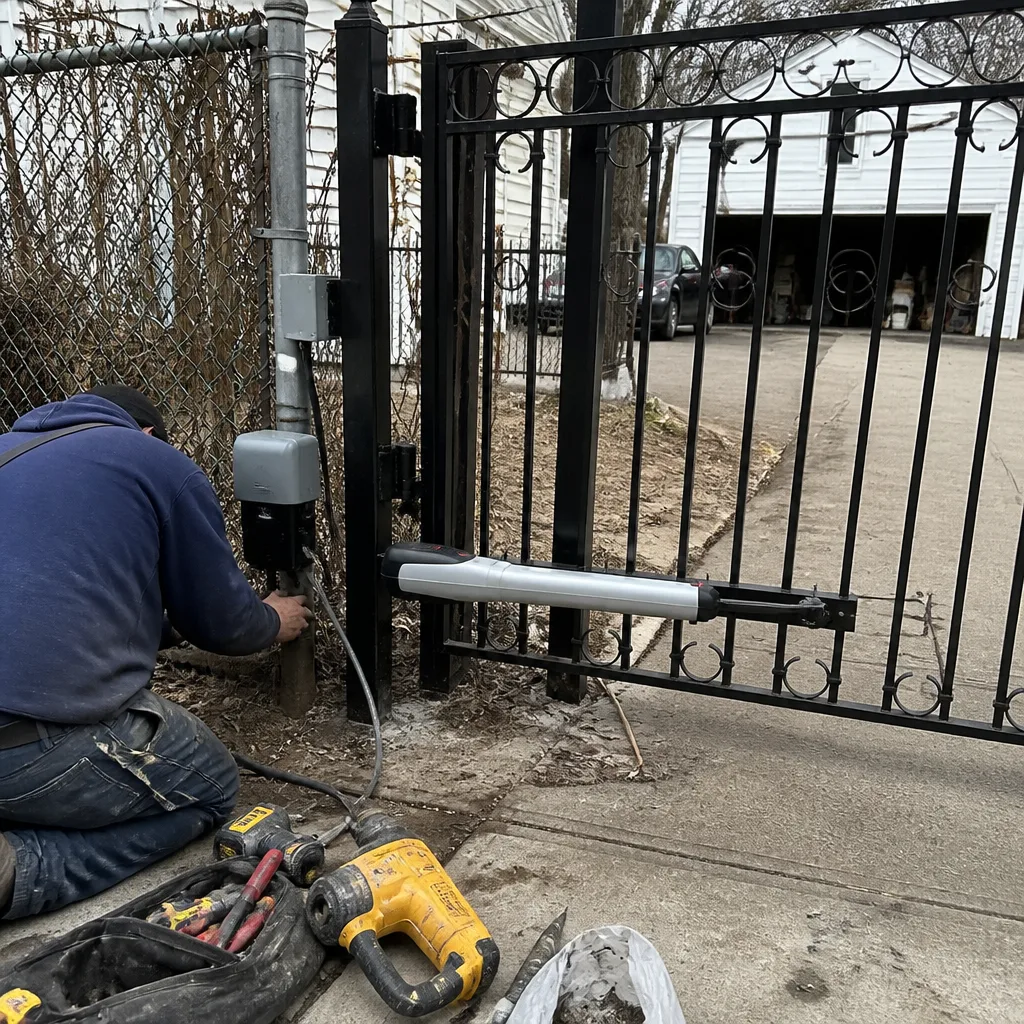
Re-tensioning involves loosening the operator mount bolts, sliding the motor back a fraction of an inch, retightening, and testing. It’s a simple job on FAAC, LiftMaster, and many other models. But the bolts on an outdoor operator are often rusted, and the mount plate may have shifted on its own. If any of that sounds like more than you want to wrestle with on a Brooklyn summer afternoon, our Electric Gate Repair in Brooklyn service handles it.
For a new installation done right, with the motor positioned correctly from the start, see Gate Installation in Brooklyn.
Fall Winterizing: The November Latch Lubrication That Stops Seizure
The latch is the part of the gate that takes the daily abuse. It gets slammed, pulled, leaned on by kids, and pushed by wind. In Brooklyn’s fall and winter, it gets wet and cold. When a latch seizes, it’s almost always because the internal grease has thickened in cold weather and the mechanism no longer moves freely. The failure feels sudden, but the cause is gradual. One morning in December the latch just will not budge, and the gate is frozen shut.
The fix that lasts is a specific lubricant weight, applied at the right point, on a schedule. Do not use WD-40. It’s a water displacer, not a long-term lubricant, and it washes out of the latch in the first rain. Do not use graphite powder on a latch that is already greasy; graphite mixes with old grease into a paste that makes things worse.
What works: a white lithium grease in a spray can or a tube. It’s thick enough to stay put through a Brooklyn winter, light enough to work into the latch internals, and it won’t run out of the mechanism when the weather warms up. We use this on the Cedarwell latch mechanisms we install because it holds up through both the January freeze and the July heat.
November lubrication routine:
- Wipe the latch face and the strike plate with a dry rag. Remove any dirt or old grease buildup.
- Spray a small amount of white lithium grease directly into the keyhole and into any visible pivot points on the latch body.
- Work the latch handle open and closed ten or twelve times to move the grease into the internal parts.
- Wipe off any excess from the latch face so it does not attract grit.
- Repeat this once more in mid-January if we hit a long cold snap. Two applications per season is usually enough.
If the latch is already sticking in cold weather, a lubrication may not be enough. The internal springs may have weakened, or the strike plate may have drifted out of alignment. See our Latch and Post Gate Repair Brooklyn home page for a look at what a full latch service covers.
How One Season’s Damage Becomes the Next Season’s Breakdown
Most homeowners think of gate problems as isolated events. The hinge breaks, so you call someone. The latch jams, so you call someone. But the more gates we service in Brooklyn, the more clearly we see the cause-and-effect chains that link one season to the next. The gate that fails in August did not fail in August. It failed over a six-month period, and the breakdown just happened to become visible when the weather shifted.
Here are the chains we see most often in Brooklyn:
- Winter frost heaves the post, summer humidity sticks the latch. The post shifts a few millimeters in February. In July, the humidity swells the wooden fence sections attached to the gate, pushing the gate slightly toward the post. The latch, which was already off center by a fraction, now cannot seat. The gate jams. The owner blames the humid day, but the real damage was done in the freeze.
- Spring salt corrodes the hinge, fall winds rip the gate loose. Salt sits on the hinge plate through the winter and spring, corroding the pin and its sleeve. By September, the hinge has lost some metal. October brings nor’easter wind gusts, and the weakened hinge shears. A hinge replacement in April would have cost far less than an emergency call in October.
- Summer heat loosens the chain, fall cold contracts it and strips the gears. The chain sags through July and August. The sprocket teeth wear against the chain link sides. October temperatures drop, the chain shrinks, and the fit on the worn sprocket is now too tight. The motor strains, the gearbox grinds, and the operator dies.
The Brooklyn Gate Inspection Calendar: Month-by-Month Checklist
This calendar assumes a standard Brooklyn backyard or walkway gate, whether manual or electric. If your gate is electric, add the July chain check to the list. For manual gates, the same seasonal logic applies to the latch, hinges, and post footing.
February: The Freeze Inspection
- Check the post for lean or base movement while the ground is frozen.
- Look for new cracks in the concrete collar at the post base.
- Test the gate’s resistance. It should feel solid top to bottom.
- If the latch is harder to operate in cold weather than it was in October, plan a lubrication.
April: The Salt Wash
- Wash the lower rail and hinge area with water and a baking-soda solution.
- Inspect for bubbling, chipping, or bare metal around the lower third of the gate.
- Touch up any bare metal with primer and paint on a dry day.
- Check hinge pins for rust blooms and stiffness.
July: The Heat Check
- Run an electric gate through a full open-close cycle on the hottest week of the summer.
- Watch for chain slack, jerky starts, or ticking during reversal.
- Check that the gate does not bind against the post or fence in the humidity.
- If the gate is manual, verify that the latch still seats without a push.
November: The Winterizing Pass
- Clean and lubricate the latch with white lithium grease.
- Check that the gate closes completely without leaving a gap for wind to work on.
- For electric gates, confirm the operator senses the full closed position correctly.
- Clear any leaf buildup from the gate track and guide rollers.
What to Do Yourself and What to Leave to a Pro
This guide is written for a homeowner who wants to handle the small things and know when the big things need a trained hand. Some tasks are genuinely safe and simple. Others look simple but hide risk.
Safe to do yourself:
- The April salt wash described above. It takes 20 minutes.
- The November latch lubrication. White lithium grease is inexpensive and easy.
- Visual inspections of the post, hinge, and chain. You are looking for change, not making repairs.
- Touch-up painting on bare metal spots, as long as the gate is otherwise sound.
Leave to a pro:
- Any post reset. A post that has shifted needs excavation, re-seating, and concrete work. Do it wrong and the gate will never ride right.
- Electric gate chain re-tensioning on an operator with rusted mount bolts. Forcing a rusted bolt can shear it, and then the job gets much bigger.
- Hinge replacement on a heavy gate. A gate under spring tension or one that weighs more than 80 pounds can cause real injury if it slips during a hinge swap.
- Any repair involving the gate operator’s logic board or limit switches. These are not user-serviceable on most LiftMaster, FAAC, or Mighty Mule models.
Our Gate Installation in Brooklyn team handles the full scope of new gate work, from post setting to operator wiring, and the written price is always in front of you before any work starts.
Common Mistakes to Avoid
- Skipping the April wash. Brooklyn’s salt load is heavier than most areas, and the corrosion it causes is cumulative. One skipped season doesn’t ruin a gate, but two or three will.
- Using WD-40 as a latch lubricant. It washes out in the first rain and leaves the latch dried out and more prone to seizure than before.
- Ignoring a slight post lean. A post that’s leaning just a little is in the early stages of failure. The fix is far easier before the lean becomes visible to the eye.
- Re-tensioning an electric chain without checking the sprocket first. A worn sprocket will just eat the new chain adjustment, and the operator will fail in the fall regardless.
- Painting over rust without treating it. Rust that is painted over continues to spread underneath. The paint just hides the problem until the metal fails.
- Waiting for the gate to fail before calling for repair. Most Brooklyn gate failures are the endpoint of a long, visible chain of minor damage. Catching the early signs saves money and down time.
When to Call a Professional
Call a professional when the post moves, the gate sags enough to drag on the ground, or an electric operator starts grinding, jerking, or failing to respond. These are not seasonal shifts; they are mechanical failures in progress. A gate that will not close is also a security issue and a safety issue for kids and pets, not something to put off until the weekend.
Latch and Post Gate Repair Brooklyn offers free estimates in Brooklyn, and every visit starts with a written price before any work begins. Call (934) 649-3673 and a live person will answer, day or night.
Frequently Asked Questions
Twice per winter is the right rhythm for Brooklyn’s freeze-thaw season: once in early November and once in mid-January if we’ve had a long cold snap. Use white lithium grease, not a light oil or WD-40. If you’re unsure which lubricant your latch needs, call (934) 649-3673 and we’ll point you to the right one.
Yes, and more so on mixed-metal gates than on single-metal ones. The salt water from sidewalk treatments acts as an electrolyte between steel and aluminum parts, accelerating galvanic corrosion. An April wash with water and baking soda is the most effective countermeasure.
In many cases, yes, especially for latch, hinge, and alignment issues. Larger repairs like post resets or operator replacements may take a second visit. Call (934) 649-3673 for a straight answer on timeline, and you’ll have a written price in hand before any work starts.
It covers every repair and installation we do. If the work is not right, we make it right. No fine print, no argument. If you think a weather-related repair has failed within the year, call us and we’ll review it.
Yes. Our technicians are trained on LiftMaster, FAAC, BFT, Linear, Viking, Ghost Controls, DoorKing, Elite, and Mighty Mule equipment, and we service these brands throughout Brooklyn.
A basic seasonal inspection with latch lubrication typically runs between $95 and $175 depending on gate size and whether it is electric or manual. A full maintenance visit with chain re-tensioning and hinge service runs between $180 and $320. You’ll always get a written price before we start. Call (934) 649-3673 for an exact quote.
The Bottom Line
Brooklyn’s seasonal weather does not damage gates all at once. It works in chains: winter freeze shifts a post, summer heat binds a latch that was already off-center; spring salt eats a hinge, fall wind finishes it off; July heat slacks a chain, October cold strains the gears to failure. The homeowner who understands these chains can interrupt them early, with a February footing check, an April salt wash, a July chain look, and a November latch lubricate. Each takes less than half an hour, and each prevents a repair that would cost hundreds. When a job is beyond the seasonal checklist, Latch and Post Gate Repair Brooklyn is one call away at (934) 649-3673.
Written by Cody Beckman, Owner at Latch and Post Gate Repair Brooklyn, serving Brooklyn since 2009.
See the difference
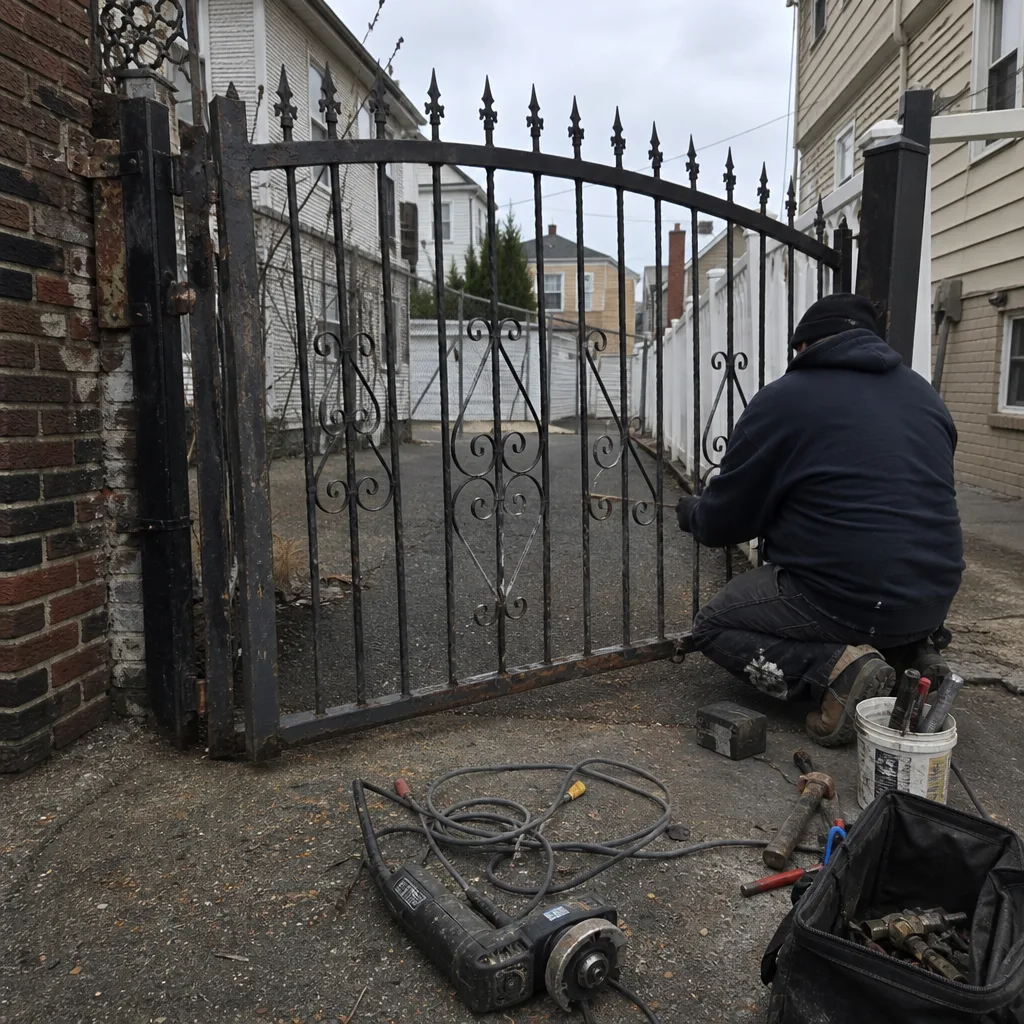 Before
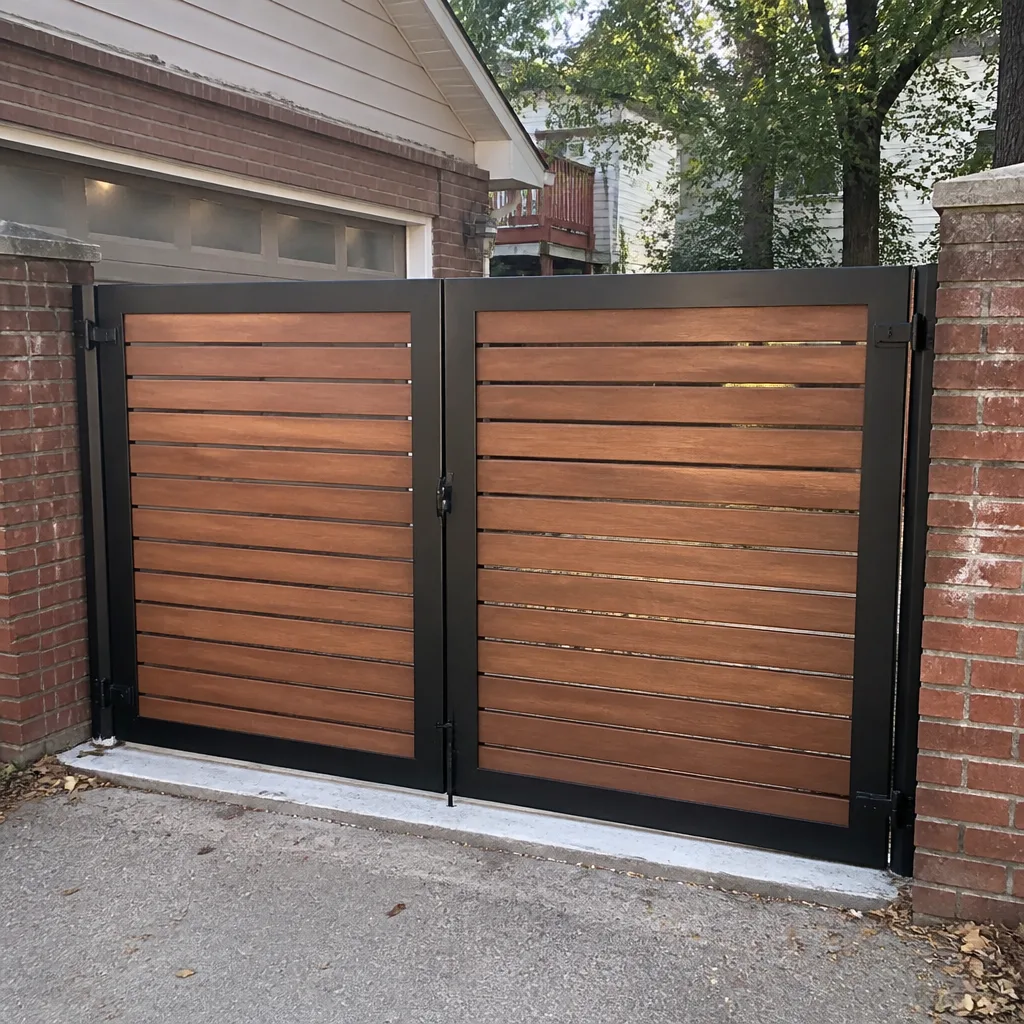 After
After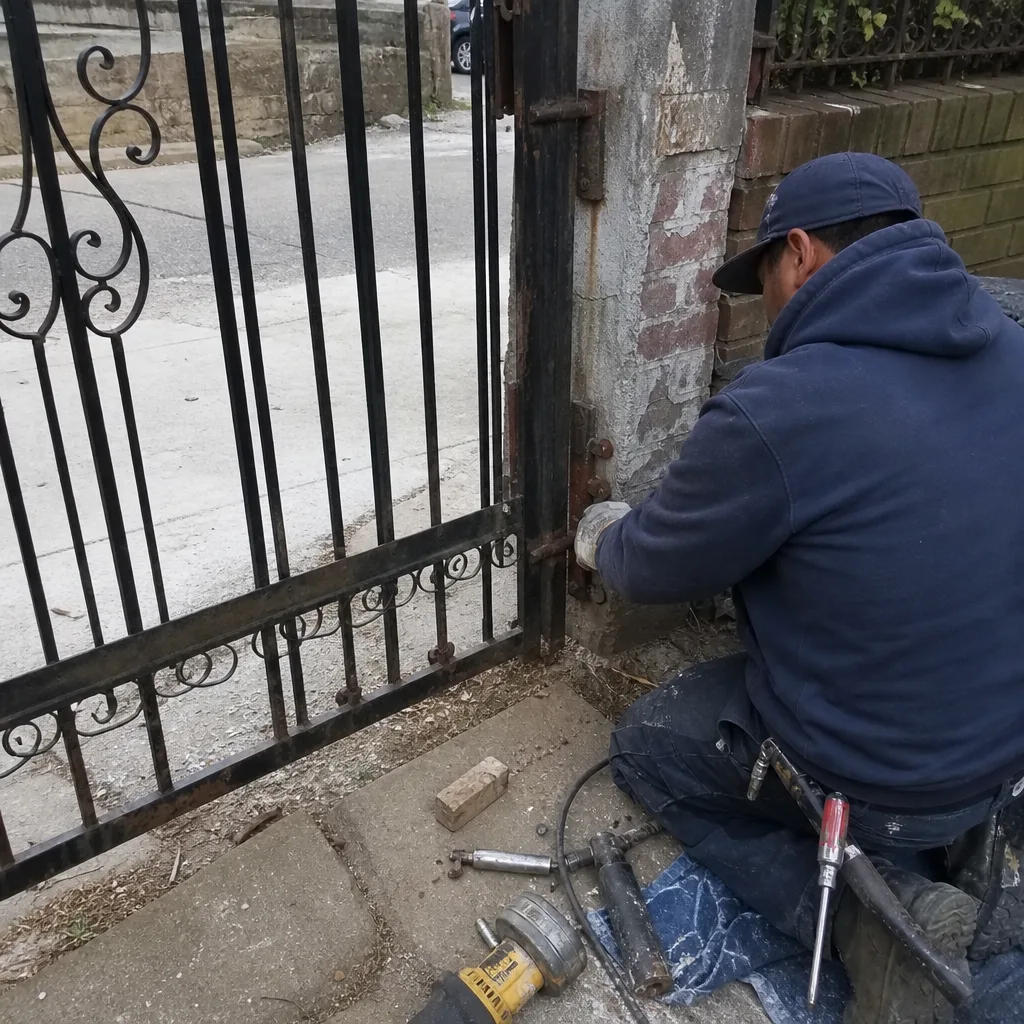 Before
 After
After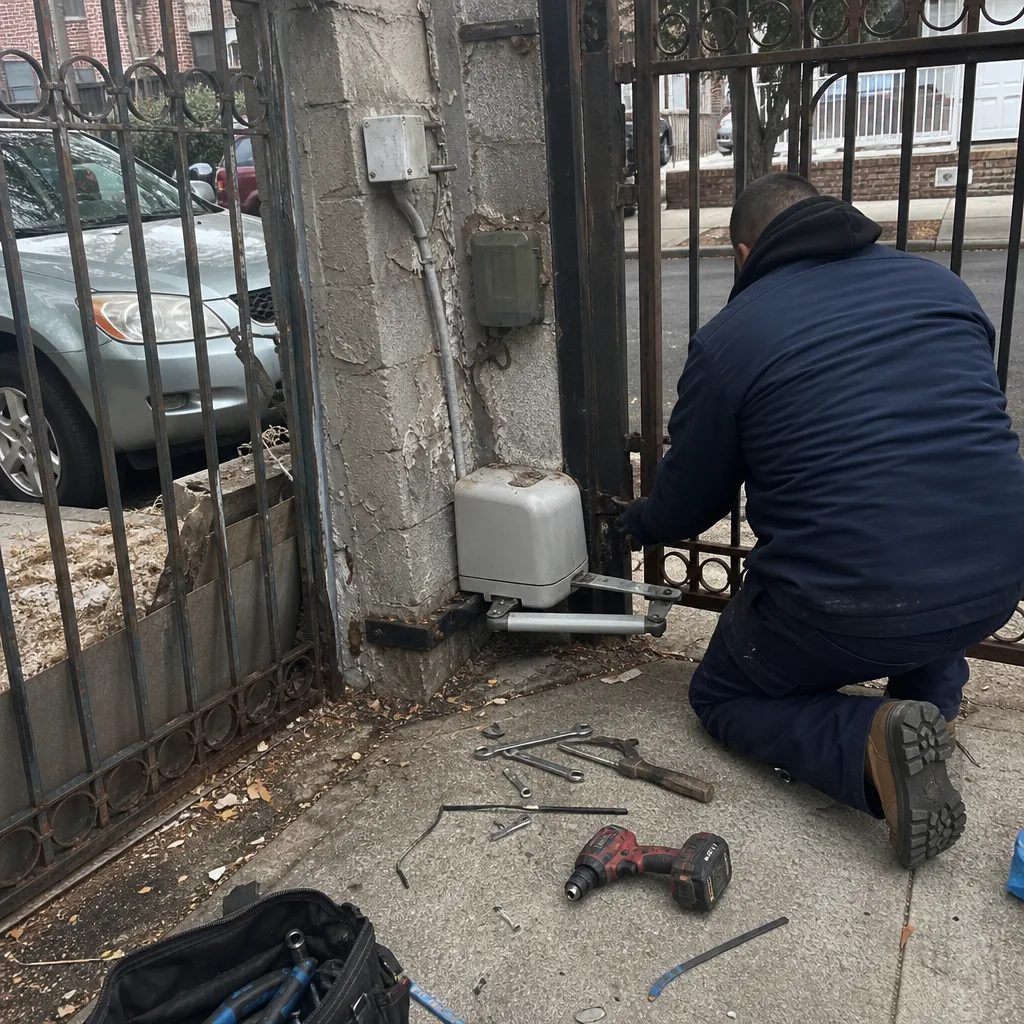 Before
 After
After