
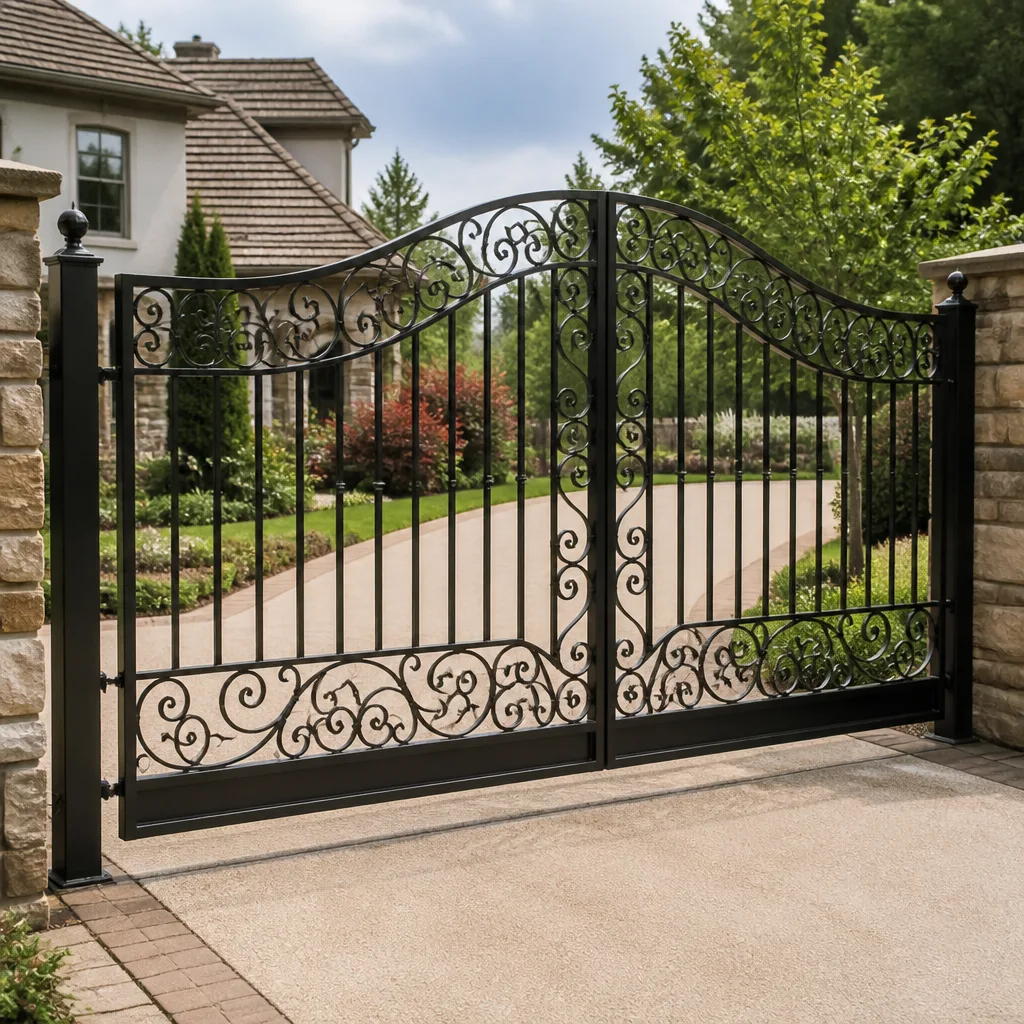
 Wrought iron
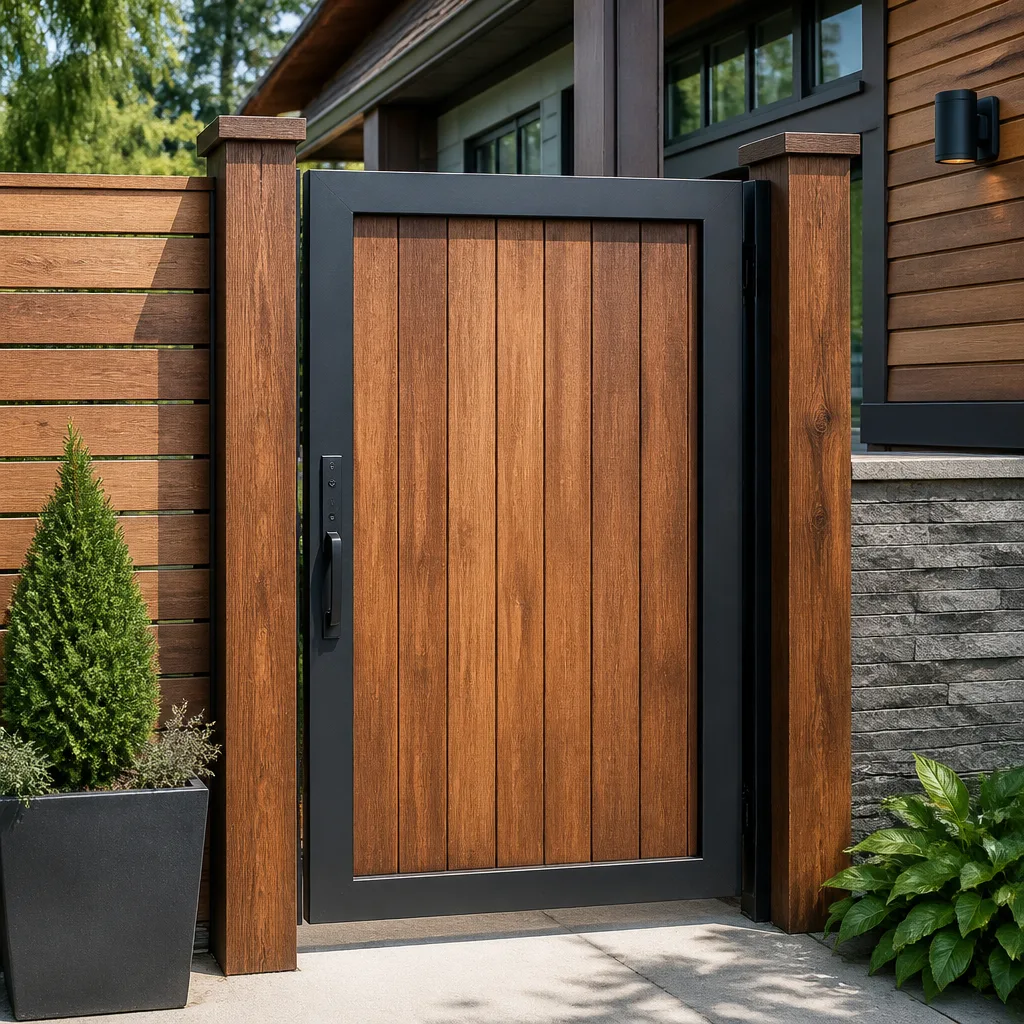 Wood & steel frame
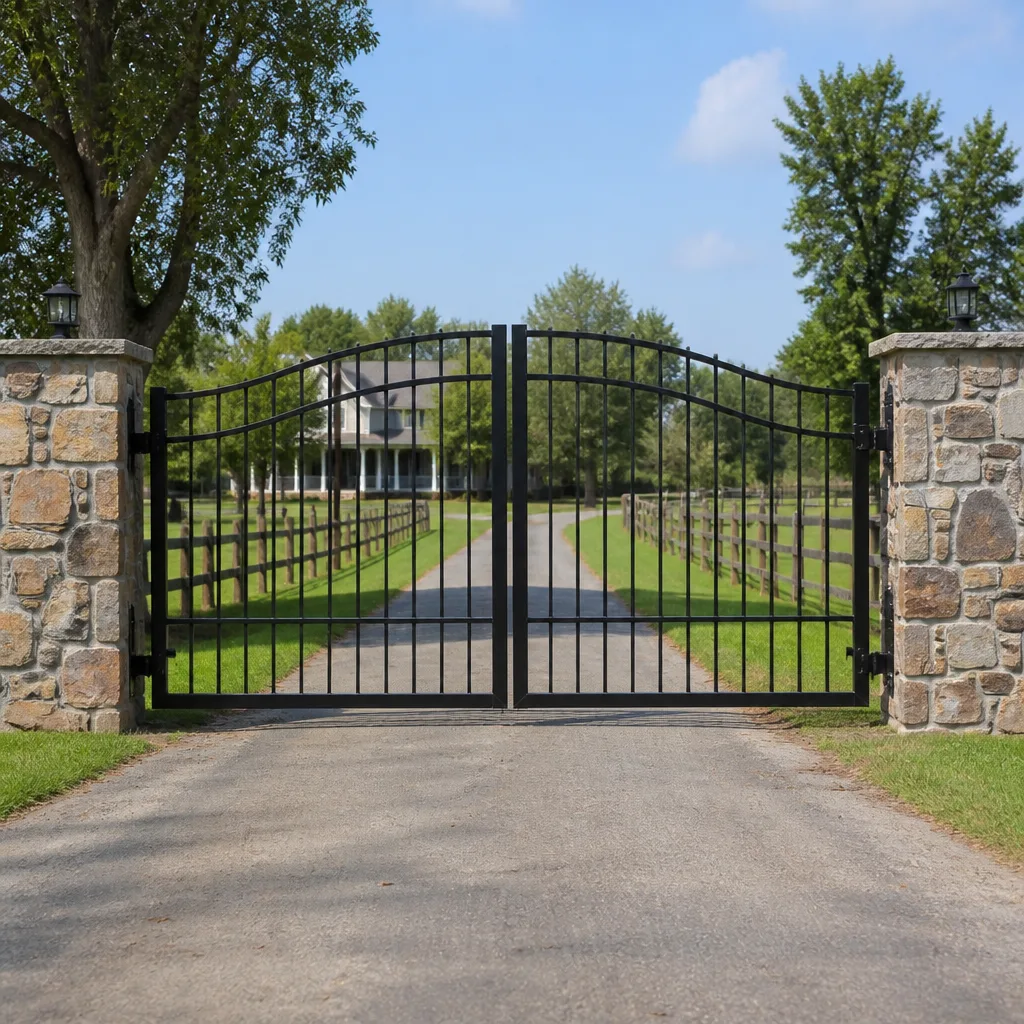 Farm & ranch
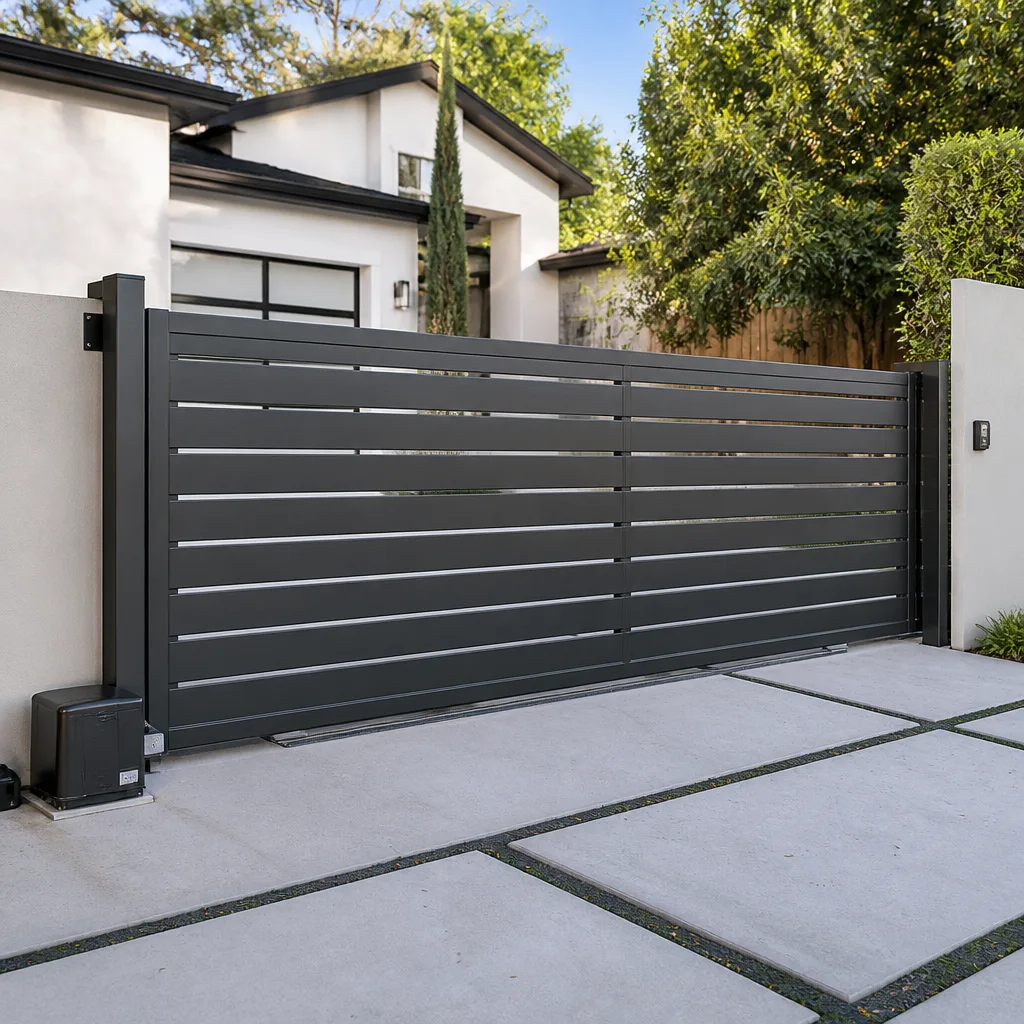 Sliding driveway gates
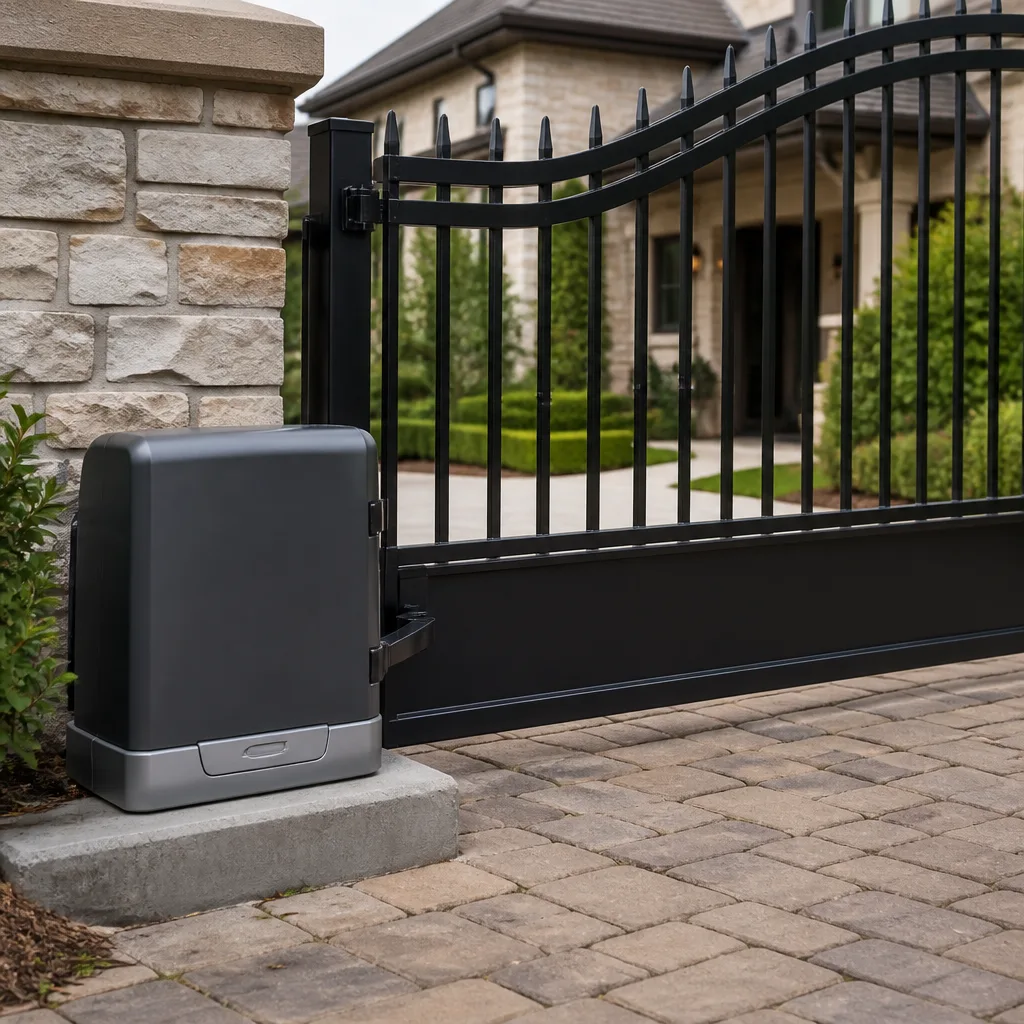 LiftMaster operators
Free on-site gate assessment - hinges, posts, and your LiftMaster or Nice gate operator checked before anything is quoted
The assessment is free and the quote is the invoice.
Get your free estimateFAAC Gate Motor Replacement: The Brooklyn Owner’s Guide
We stock and install FAAC-compatible gate motor replacements throughout Brooklyn, with most installed jobs running between $780 and $1,450 depending on your model and whether we’re replacing just the motor head or the full operator assembly. Most FAAC swing gate operators we replace can be done the same day we diagnose the problem, since our trucks carry the common 400, 412, 415, 770, and C720-series parts. The way Brooklyn families usually find us: the gate beeps or hums but won’t move, or it starts opening six inches and then quits, especially after a cold snap or a nor’easter soaked the housing.
The motors inside FAAC operators are built well, but they work against salt air from the harbor, freeze-thaw cycles that stress the capacitor, and the constant start-stop load of a gate that weighs more than the builder ever intended. Here’s what you need to know before you pay for a replacement.
Which FAAC Models This Applies To
FAAC has been building hydraulic and electromechanical swing gate operators for decades, and the replacement path depends on which generation you own. The older 400-series (402, 412, 415, 422) uses a hydraulic pump and piston setup. The newer C-series and S-series (C720, C721, S450H, S700H) moved to 24V electromechanical motors with built-in control boards. We’ve replaced both in driveways from Bay Ridge to Williamsburg, and the failure pattern is different for each.
Here’s the compatibility gotcha most Brooklyn owners hit: FAAC part numbers on the motor body don’t always match the control board part number inside the housing. The motor can be replaced independently, but if your board is a 450 MPS or 455D, the new motor’s wiring harness may not plug in without an adapter. We match both parts before quoting. On the OEM-versus-aftermarket question: for FAAC 400-series hydraulic units, we generally recommend genuine FAAC pistons and seals because the tolerances are tight and the aftermarket copies we’ve tested in Brooklyn’s temperature swings leak within a year. For 24V C-series motors, there are two quality aftermarket options that hold up just as well and save you $120 to $180, and we’ll show you both prices side by side.
A practical note: the motor’s identity plate is usually stamped on the underside of the housing or on the motor flange itself. We’ll read that before we order anything, so you’re not paying for a part that’s close but not right.
Styles & brands we work with
Signs Your FAAC Gate Motor Replacement Is Failing
- Gate hums but doesn’t move. The motor is receiving power but the capacitor has failed or the hydraulic fluid is too low to build pressure. In late fall, Brooklyn garages and utility closets drop below the temperature where old FAAC capacitors lose their charge. That’s why we see a wave of these calls in November.
- Gate opens six to twelve inches and stops. The motor’s thermal overload is tripping because the gate’s weight or hinge resistance is too high for the motor. This isn’t always a dead motor. Sometimes the real culprit is a rusted hinge on a forty-year-old iron gate near Park Slope that’s asking the motor to do twice the work it was sized for.
- Intermittent operation, worse on cold mornings. FAAC hydraulic units are sensitive to fluid viscosity. If the operator works fine at noon and groans at 7am, the piston seals are worn and the motor is working against sludge and bypass fluid. That’s a motor-and-piston replacement signal.
- Loud grinding or clicking from inside the housing. On the electromechanical C-series, this is often the gear train stripping because the limit switch wasn’t stopping the motor at full travel. Replacing just the motor without resetting the limits will kill the new unit within weeks, so we always recalibrate trip points as part of the install.
- Burning smell after the gate runs. The motor windings are overheating. This is the one symptom I tell Brooklyn homeowners to treat right away, because a winding failure can take a good control board down with it, and that’s a lot more expensive than a motor swap.
See the difference
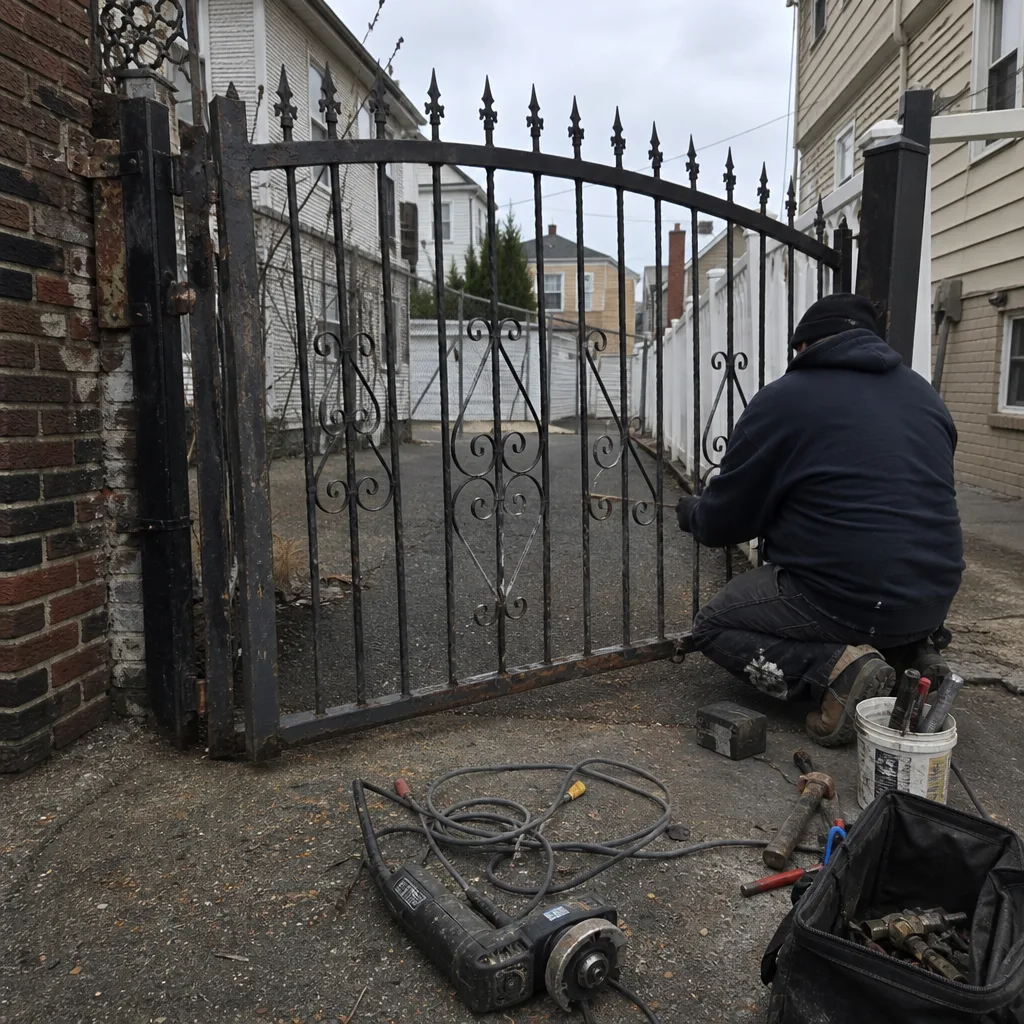 Before
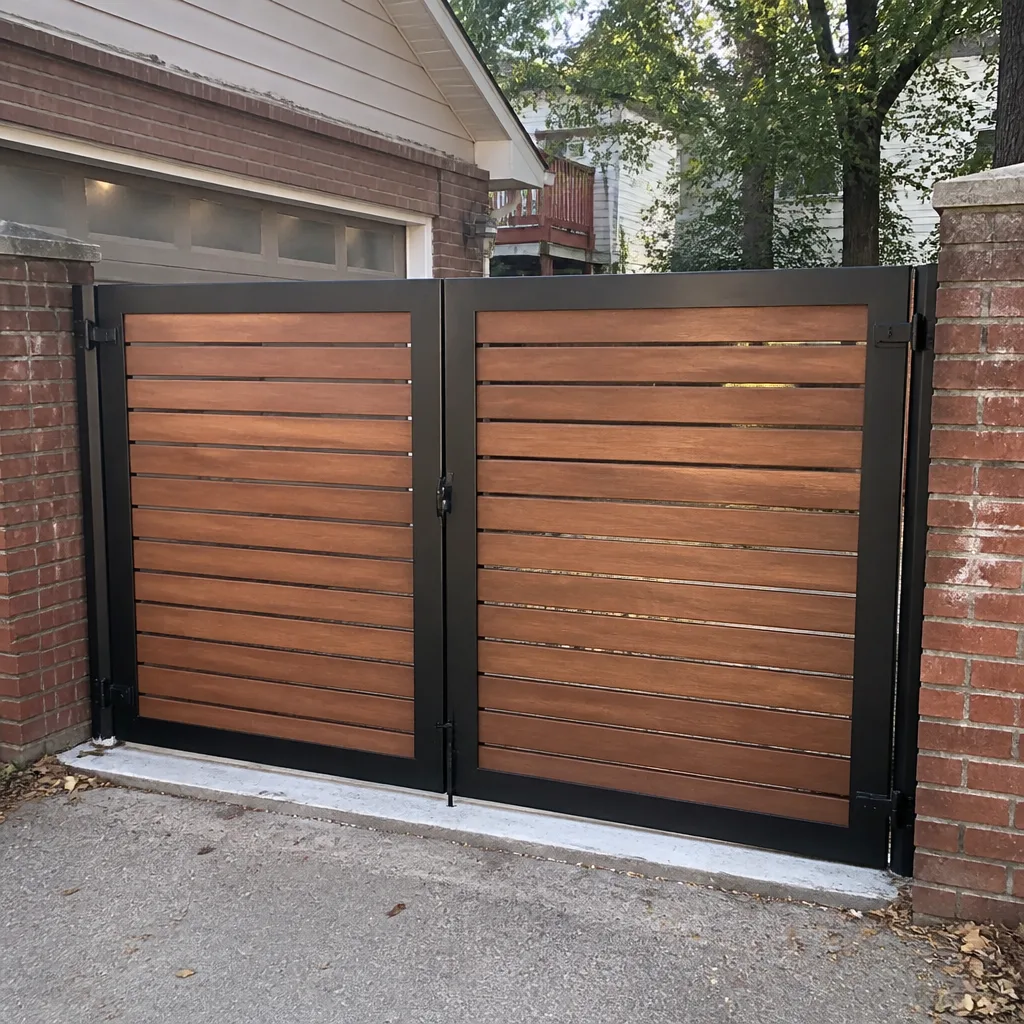 After
After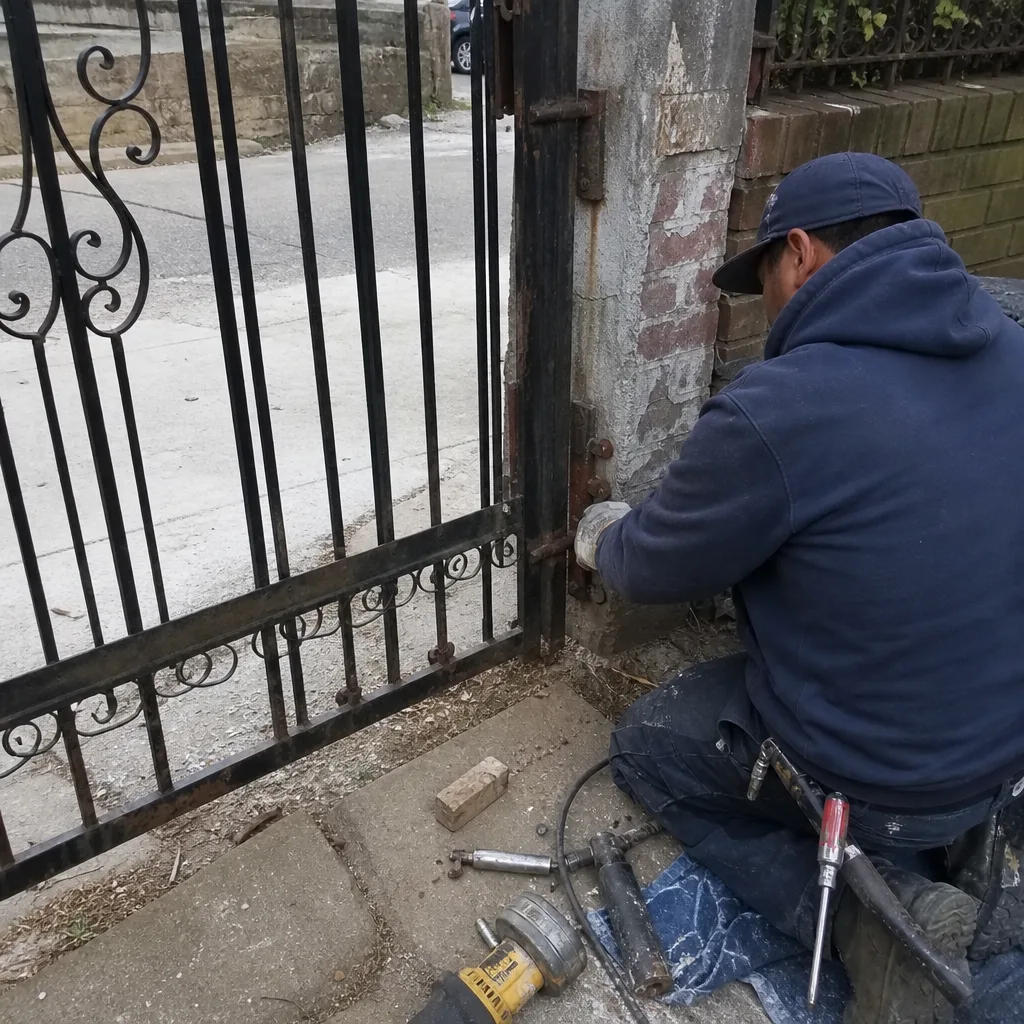 Before
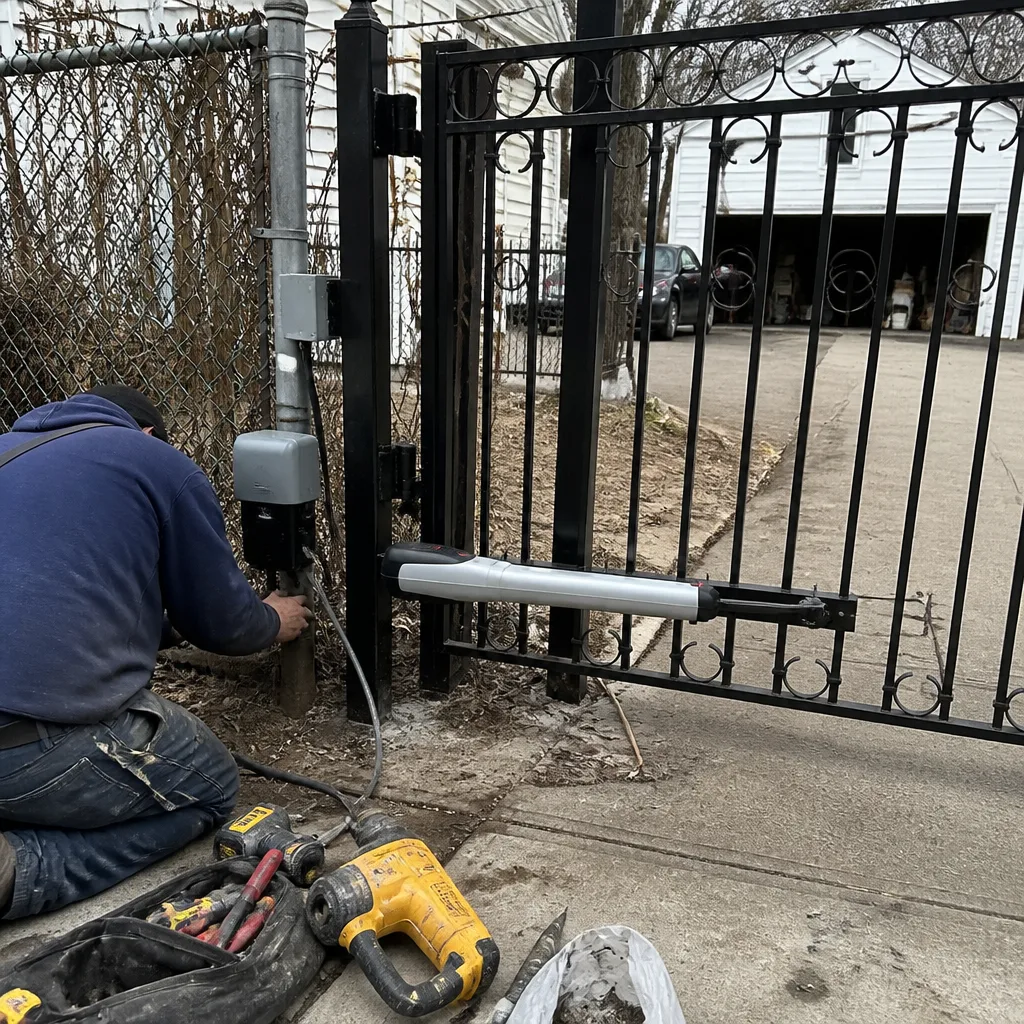 After
After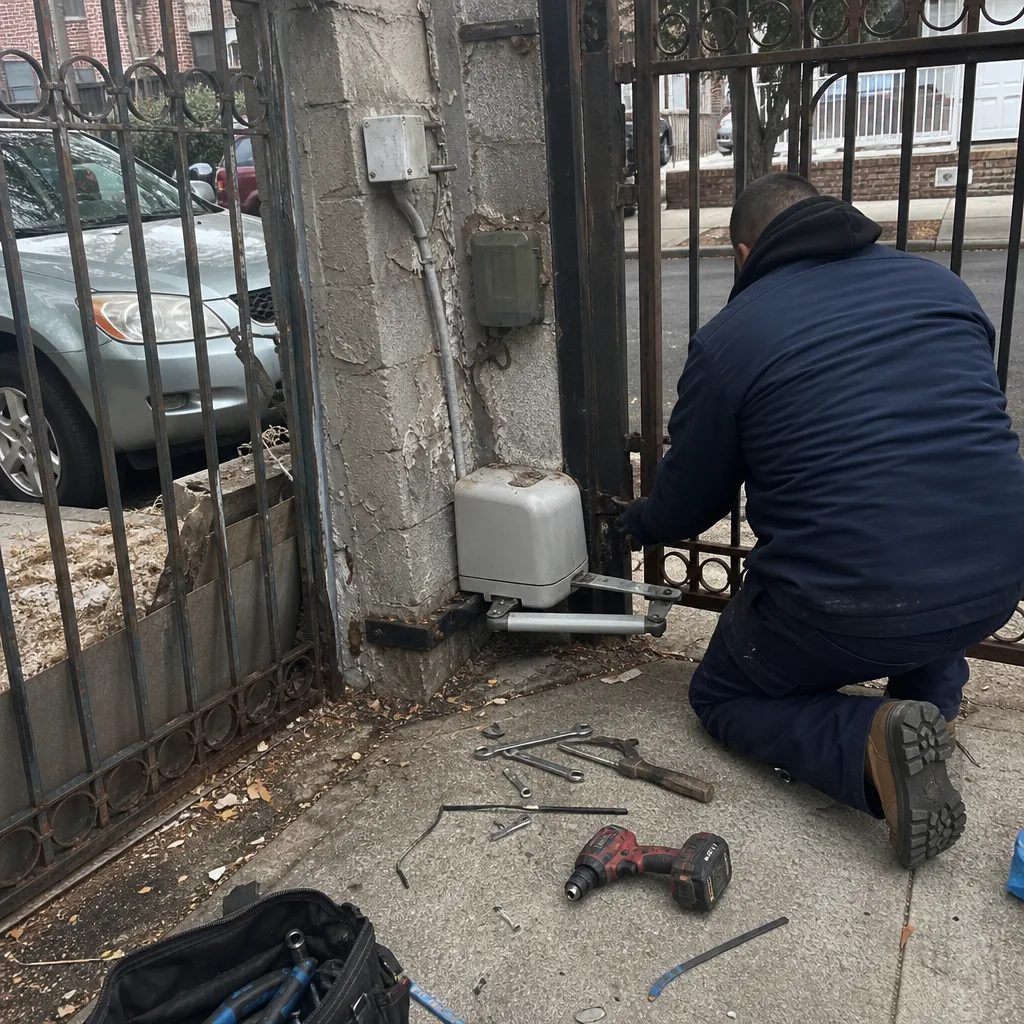 Before
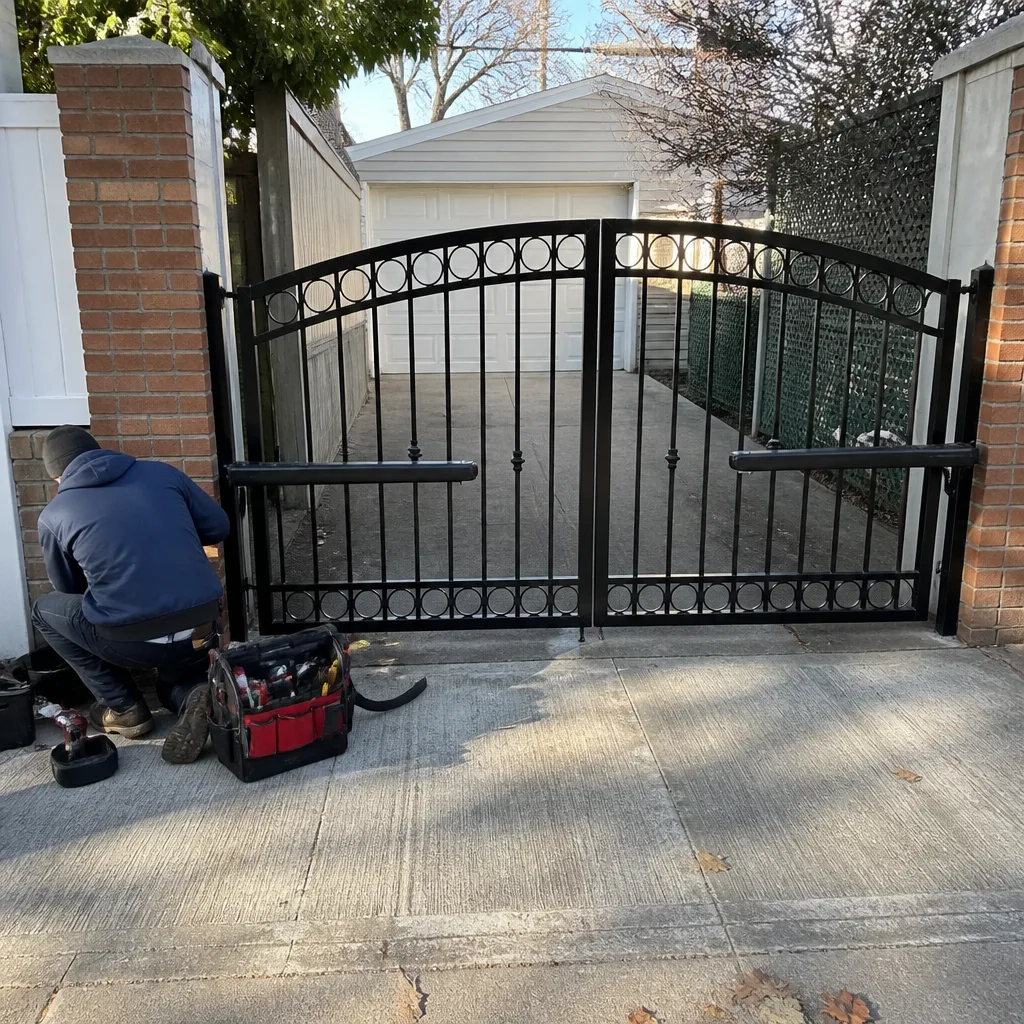 After
AfterReplacement Cost & What’s Included
In Brooklyn, a FAAC swing gate motor replacement lands between $780 and $1,450 installed, and the bigger number isn’t just a bigger motor. It’s an older 400-series unit where we’re also replacing the piston, fresh hydraulic fluid, and the capacitor. A straight C-series motor swap, which covers most gates installed after 2010, runs closer to $780 to $950. What drives the range: whether we’re doing a motor-only replacement or a full internal service kit, how far you are from our Brooklyn crew’s route, and whether your control board needs a firmware-level limit reset to talk to the new motor correctly. You’ll get the exact line-item price in writing before we touch anything, and the 365-Day Done Right Promise covers the work. Write it down, take a photo of it, and if the gate misbehaves within the year, we come back and make it right, no argument.
DIY or Call Us?
Here’s the honest split. What you can safely check yourself: whether the breaker for the gate is on, whether the manual release lever is engaged, and whether the gate’s path is clear of leaves or a misaligned roller. Those three things solve a fair number of “motor is dead” calls without a service charge.
What you shouldn’t do yourself: open a FAAC housing and start swapping parts. These units run on 24V at the control board and 120V at the main feed, and the two touch points sit inches apart inside the housing. A capacitor that still holds a charge can bite you even with the breaker off. There’s also a real risk of losing the gate’s limit calibration, and a gate that doesn’t stop at the right point can hurt someone or damage a car. Not worth it. If you’ve checked the breaker, release, and path and the gate still won’t move, call our Brooklyn crew at (934) 649-3673. We’ll tell you up front whether it sounds like a motor, a board, or something cheaper, and we’ll confirm with a written quote before any work begins.
FAQs
Most FAAC motors in Brooklyn last 8 to 12 years, but salt air from the harbor, winter freeze-thaw cycles, and heavy gates can cut that shorter. Hydraulic 400-series units often reach 12 to 15 years with regular fluid changes; 24V C-series motors typically land around 8 to 10 years because the capacitors and gears work harder in cold weather. If yours is past the 10-year mark and acting up, a replacement is usually better money than a patch. Call (934) 649-3673 and we’ll tell you straight which side of that line your unit is on.
Sometimes. A failed capacitor, a stuck solenoid, or contaminated hydraulic fluid can be fixed without replacing the motor itself, and we’ll always check for those lower-cost repairs first. But if the windings are burned or the gear train is stripped, the motor is done. We show you what we found before we recommend anything, and you’ll have the written price for either path before you decide.
Most FAAC motor replacements in Brooklyn take 60 to 90 minutes on site, assuming the gate itself isn’t fighting us. Limit recalibration and a full cycle test add another 30 minutes or so. If we have the part on the truck, it’s one visit; if you have an uncommon model, we’ll order it and return to finish, usually within a few days.
Yes. We keep FAAC 400-series hydraulic motors, C-series 24V motors, capacitors, pistons, and control board adapters stocked for the models Brooklyn homes use most. For rarer FAAC models, we can typically source the part within two or three business days and schedule your install as soon as it arrives.
Written by Cody Beckman, Owner, Latch and Post Gate Repair Brooklyn at Latch and Post Gate Repair Brooklyn, serving Brooklyn and nearby areas.