
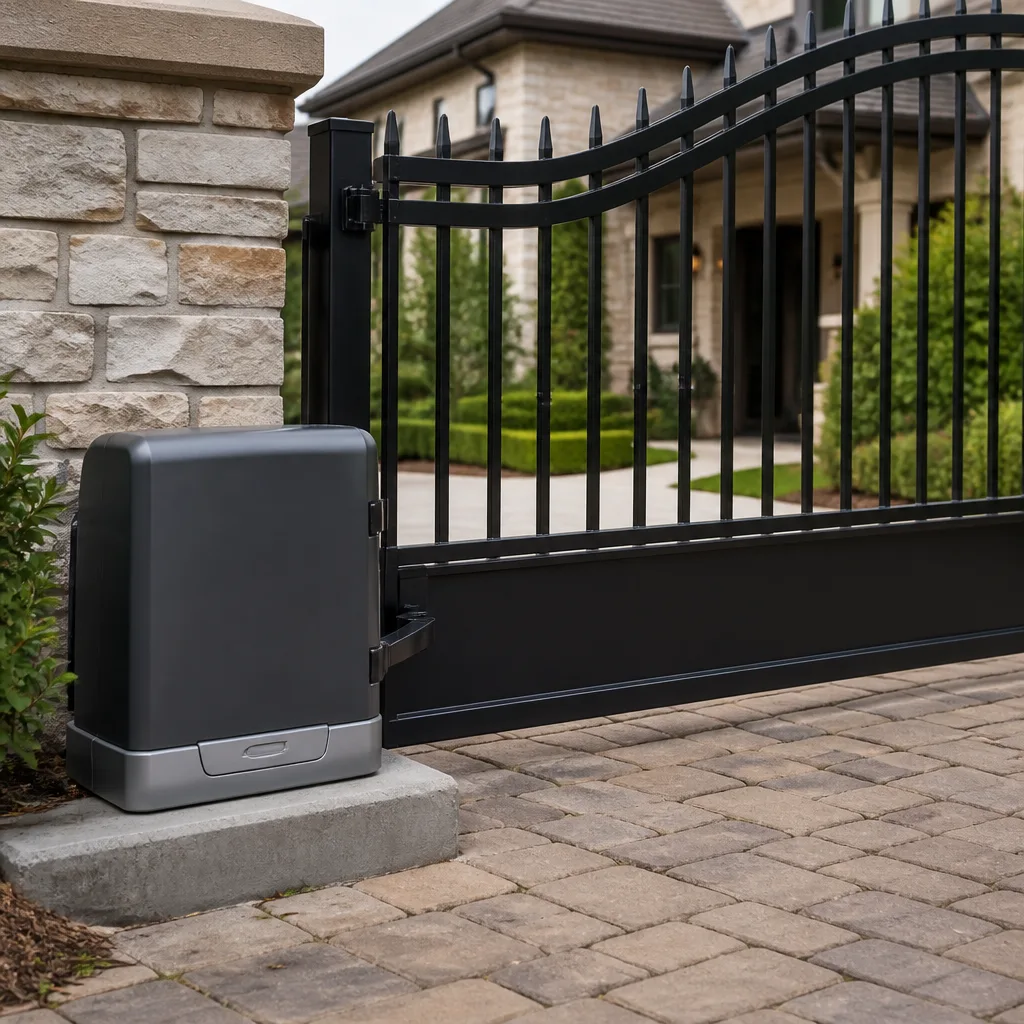
 LiftMaster operators
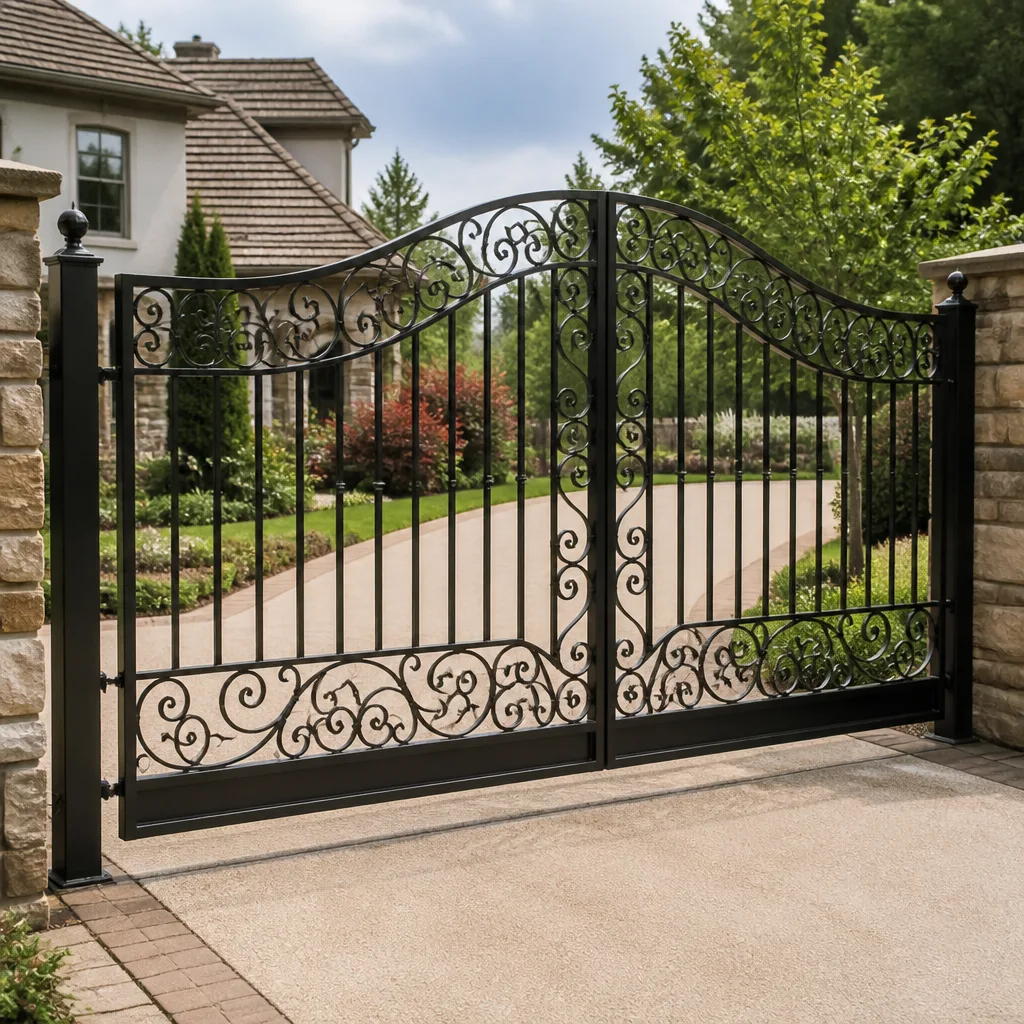 Wrought iron
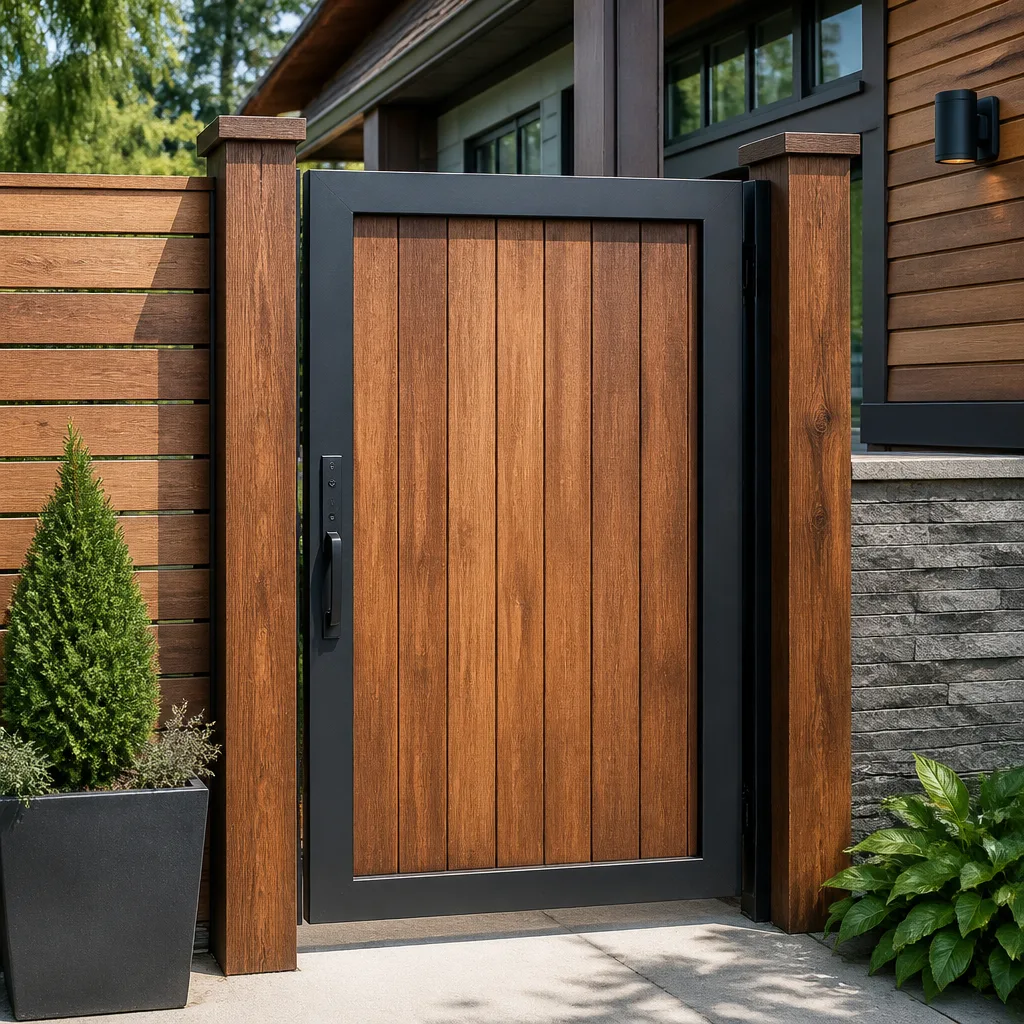 Wood & steel frame
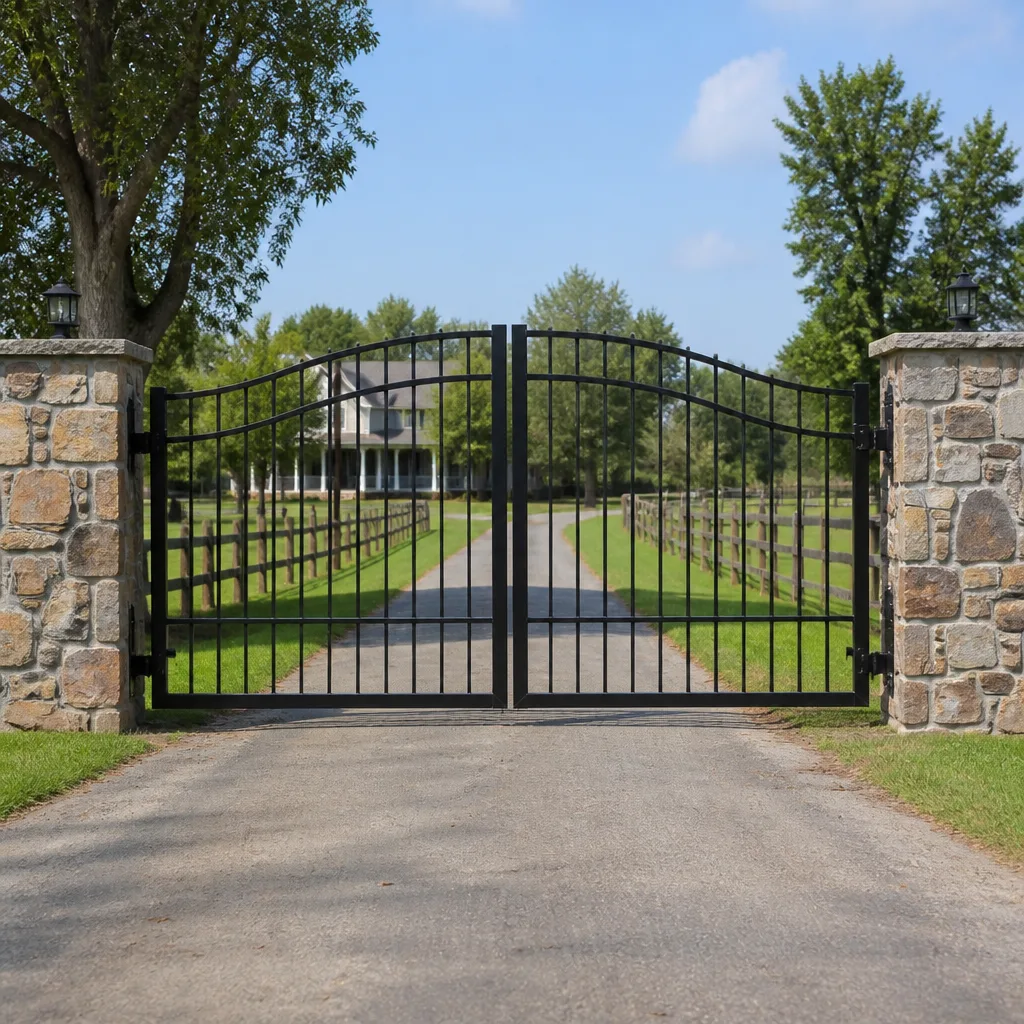 Farm & ranch
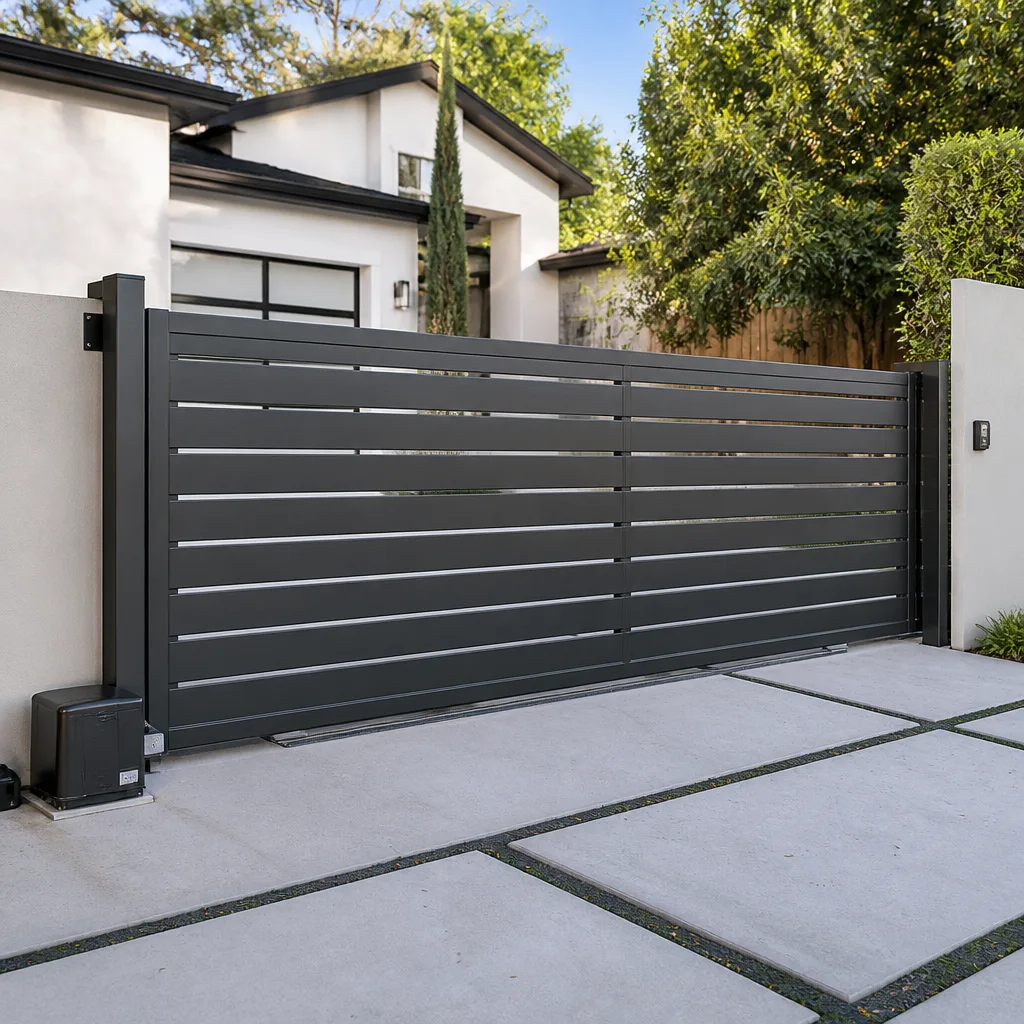 Sliding driveway gates
Free on-site gate assessment - hinges, posts, and your LiftMaster or Nice gate operator checked before anything is quoted
The assessment is free and the quote is the invoice.
Get your free estimateLiftMaster Welding & Fabrication: The Brooklyn Owner’s Guide
We stock, fabricate, and install LiftMaster-compatible welded steel components for gate frames, hinge plates, and operator mounting brackets across Brooklyn, with most replacements running $280 – $640 installed depending on the part and the gate’s weight. The typical call starts when a homeowner notices the gate sagging at the hinge side, a crack running through a weld point near the operator arm, or a bracket that’s pulled loose from the post. On a job like this, we quote the fabrication and the labor as one written number before any work begins, and we carry a welder and steel stock on the truck so the swap usually happens the same visit.
Here’s the thing about welded gate parts: they rarely fail all at once. They fatigue. The weld looks fine until one morning the gate opens six inches lower than it used to, or the LiftMaster operator strains against a hinge that’s no longer square. That’s the moment to call before the gate drags across the driveway and chews up the bottom rail.
We’re an independent Brooklyn shop, not affiliated with LiftMaster, but we’ve been welding and fabricating LiftMaster-compatible gate hardware since 2009 as part of the Cedarwell family of gate specialists. Cody Beckman, our owner, grew up in Los Angeles and learned metalwork at Los Angeles Trade-Technical College before spending nearly two decades on gate repair and fabrication full-time. He keeps a small vegetable garden on his back porch and has strong opinions about which tomato varieties are actually worth the effort, which tells you something about how he approaches a weld: patient, particular, and unwilling to rush.
Which LiftMaster Models This Applies To
Welding and fabrication work for LiftMaster equipment falls into three areas: the gate’s own welded steel structure, the hinge plates and pivot points, and the mounting hardware that connects the LiftMaster operator arm to the gate leaf.
For slide gates, the critical welded parts are the V-track support brackets and the drive chain anchor plates. LiftMaster slide operators like the SL3000 and SL585 series mount to a pad and push or pull the gate through a steel bracket bolted or welded to the gate frame. If that bracket was originally a bolt-on and the bolts have wallowed out the holes after years of Brooklyn freeze-thaw cycles, welding a fresh plate and re-drilling gives the operator a solid pull point again. We see this most often on the brownstone blocks near Prospect Park, where iron slide gates from the 1980s and 1990s are common and the original brackets were never meant to take twenty years of road salt and humidity.
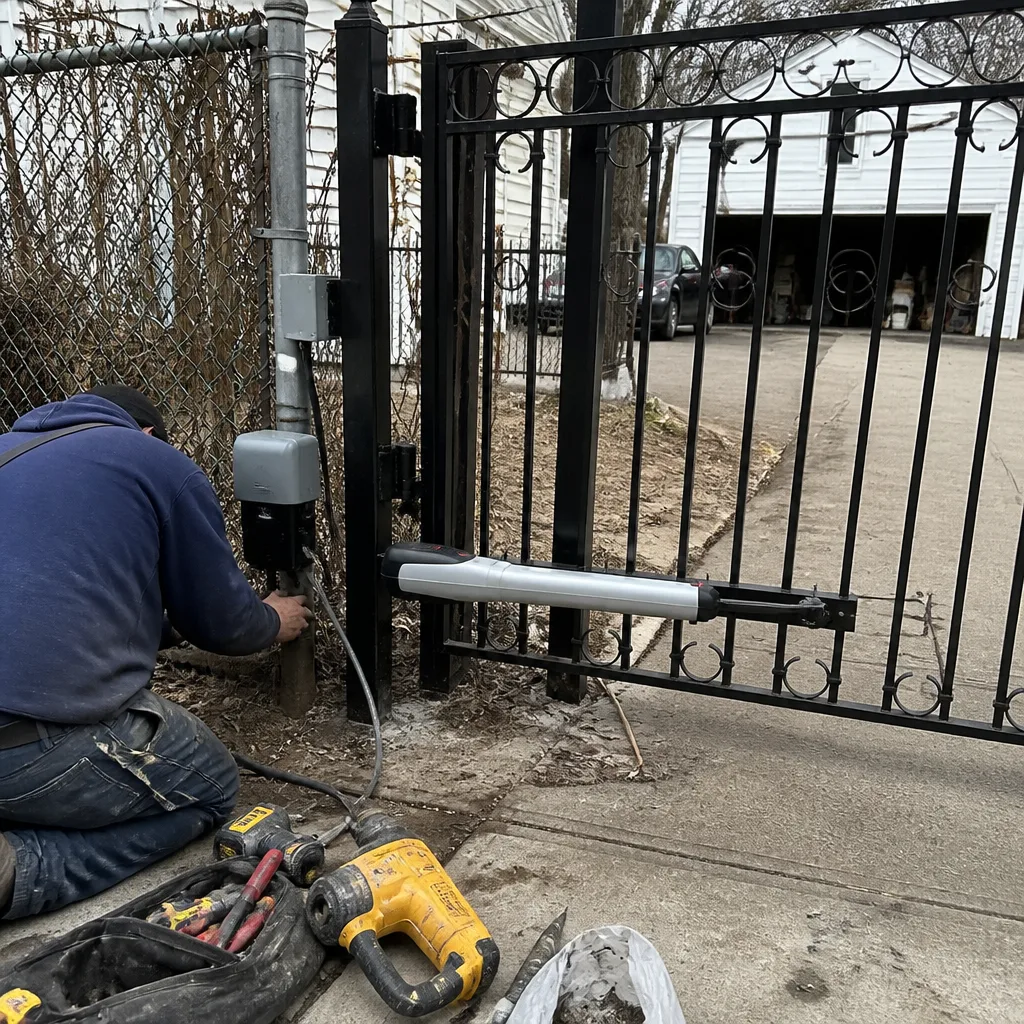
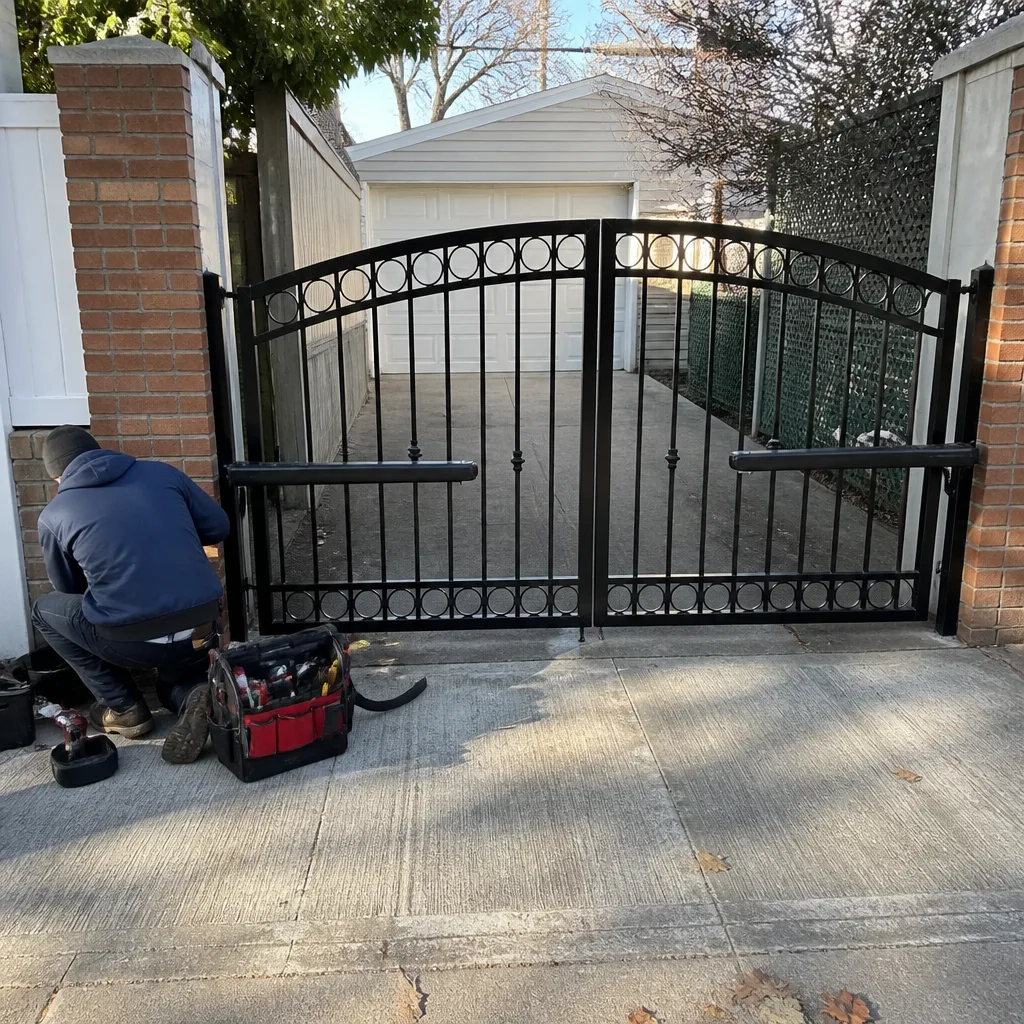
For swing gates, the usual welding candidates are the leaf’s welded tube frame joints, the hinge pin brackets, and the post-to-hinge weld. A LiftMaster swing actuator like the LA400 or LA412 bolts to a steel post and the gate leaf. If the post bracket was welded on by a previous installer and has begun to crack at the heat-affected zone, we cut the old bracket off, grind the post clean, and weld on a new bracket with gusset plates so the load spreads over a larger area.
How to identify what you’ve got: look at the gate frame itself for a manufacturer’s sticker or stamped number. If it’s gone, measure the tube or channel steel thickness with calipers. LiftMaster’s own gate hardware typically pairs with 2-inch square tube at 11-gauge (roughly 1/8 inch) or heavier, but many Brooklyn gates were custom-built by local ironworkers using 14-gauge and thinner. That matters because welding a heavy LiftMaster bracket to thin tube will tear the tube wall. If the steel is under 11-gauge, we add a backing plate or reinforce the rail before we weld the bracket on. That’s the kind of compatibility gotcha that doesn’t show up on a spec sheet.
On the OEM-versus-aftermarket question: for structural gate parts like hinge plates and operator brackets, we fabricate from fresh steel to the exact dimensions of the original rather than hunting down a LiftMaster-branded plate. The original was often a cast or stamped piece that’s discontinued or backordered. A properly gusseted fabricated plate in 1/4-inch mild steel will outlast the original in Brooklyn’s salt-and-freeze winters. For geometry-critical parts like the operator’s internal drive components, we stay with genuine LiftMaster replacements. The distinction is simple: if it’s inside the LiftMaster housing, use LiftMaster’s part. If it’s on the gate itself, we can usually fabricate something better.
Styles & brands we work with
Signs Your LiftMaster Welding & Fabrication Is Failing
- The gate sags at the hinge side. A sagging gate means a hinge weld or hinge plate has stretched or cracked. The gate still opens, but the bottom rail is now facing the concrete and will start scraping within weeks.
- A crack runs through a weld point near the operator arm. You’ll see it as a dark hairline line in the paint or bare steel. That crack is the weld letting go. It will spread, and when it does, the operator arm can bend or snap.
- The bracket that holds the LiftMaster operator to the gate or post is loose. If you can wiggle the bracket by hand, the bolts or welds are done. The operator is now pushing against a part that’s already moving. Every open-close cycle makes it worse.
- A new rattle or vibration when the gate runs. Vibration on a LiftMaster slide or swing setup usually means a mount point is no longer rigid. The motor is fine; the steel it’s bolted or welded to is not.
- Rust scale or flaking at the bottom hinge weld. On Brooklyn gates, water pools at the bottom hinge cup, sits there, and rots the weld from the inside out through winter. If you can chip off rust with a flathead screwdriver, the section likely needs cutting out and re-welding.
See the difference
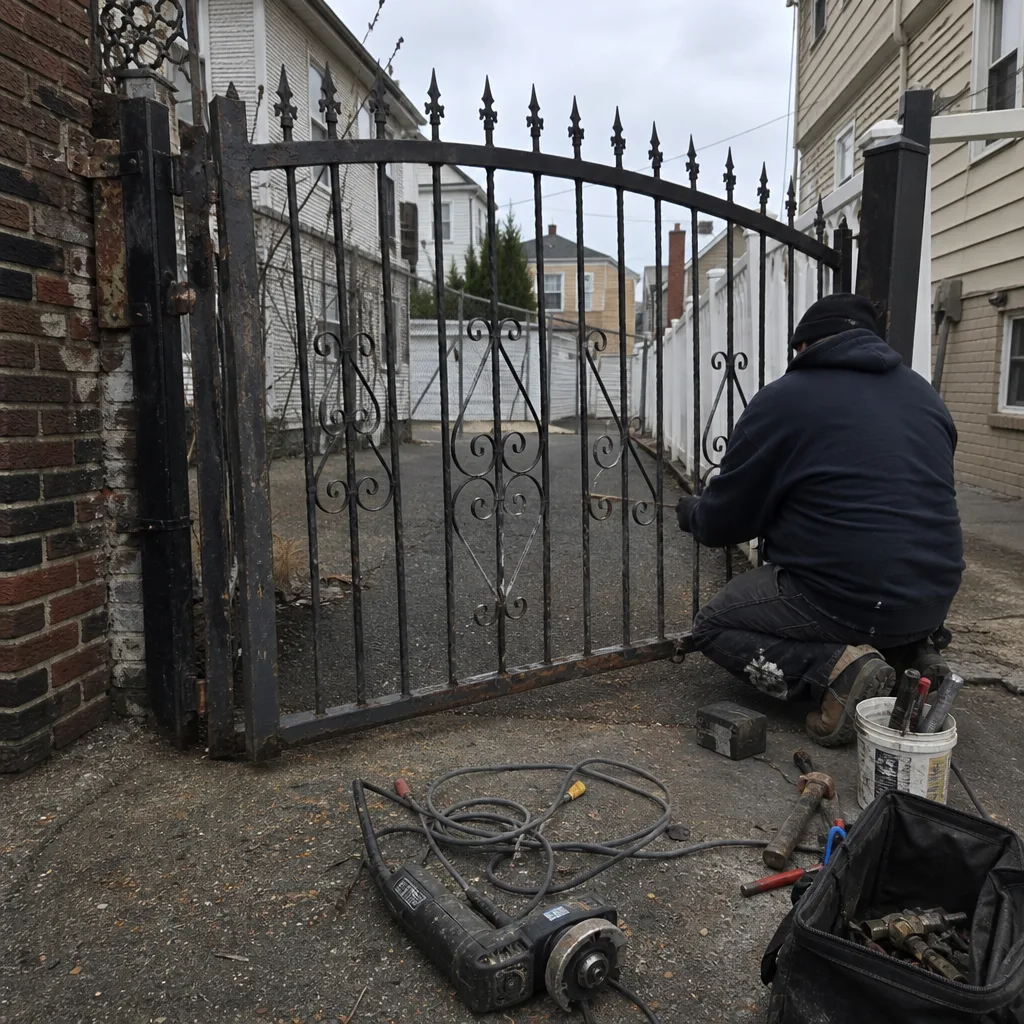 Before
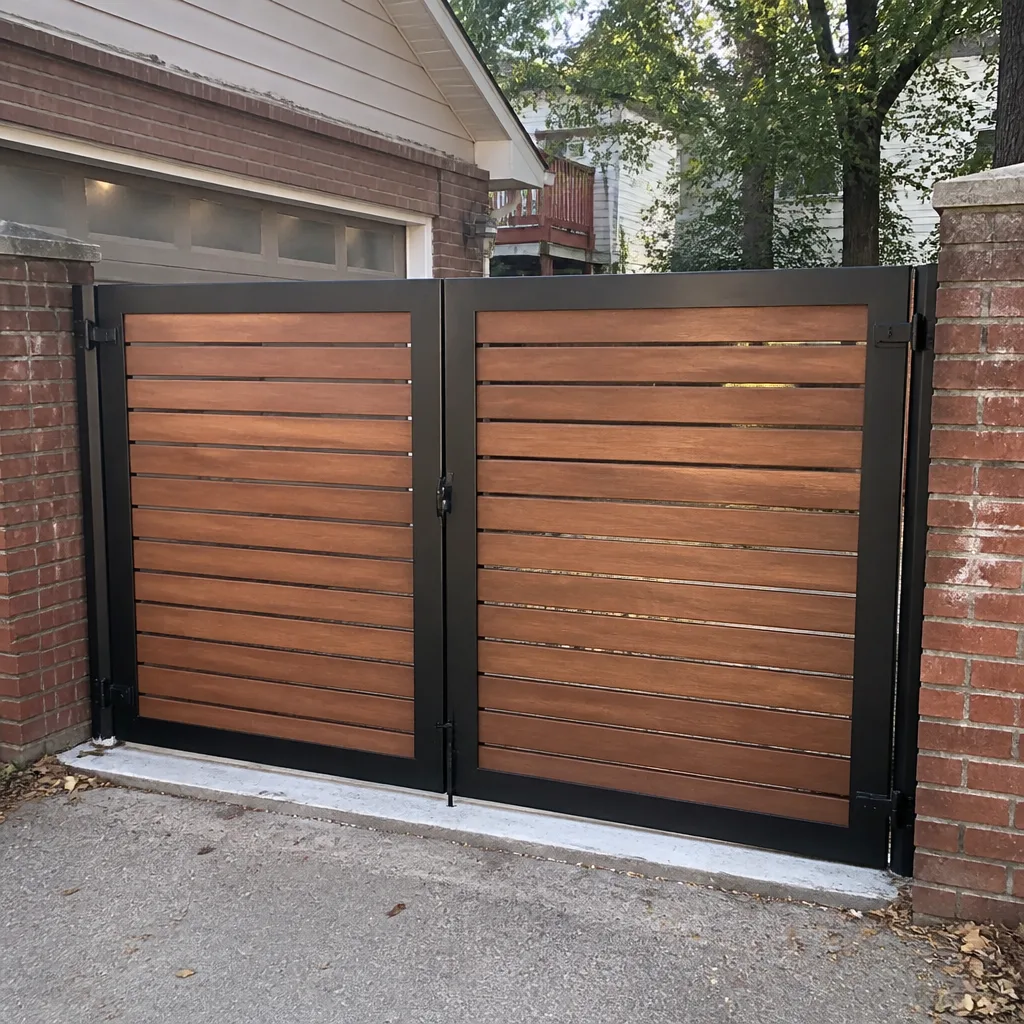 After
After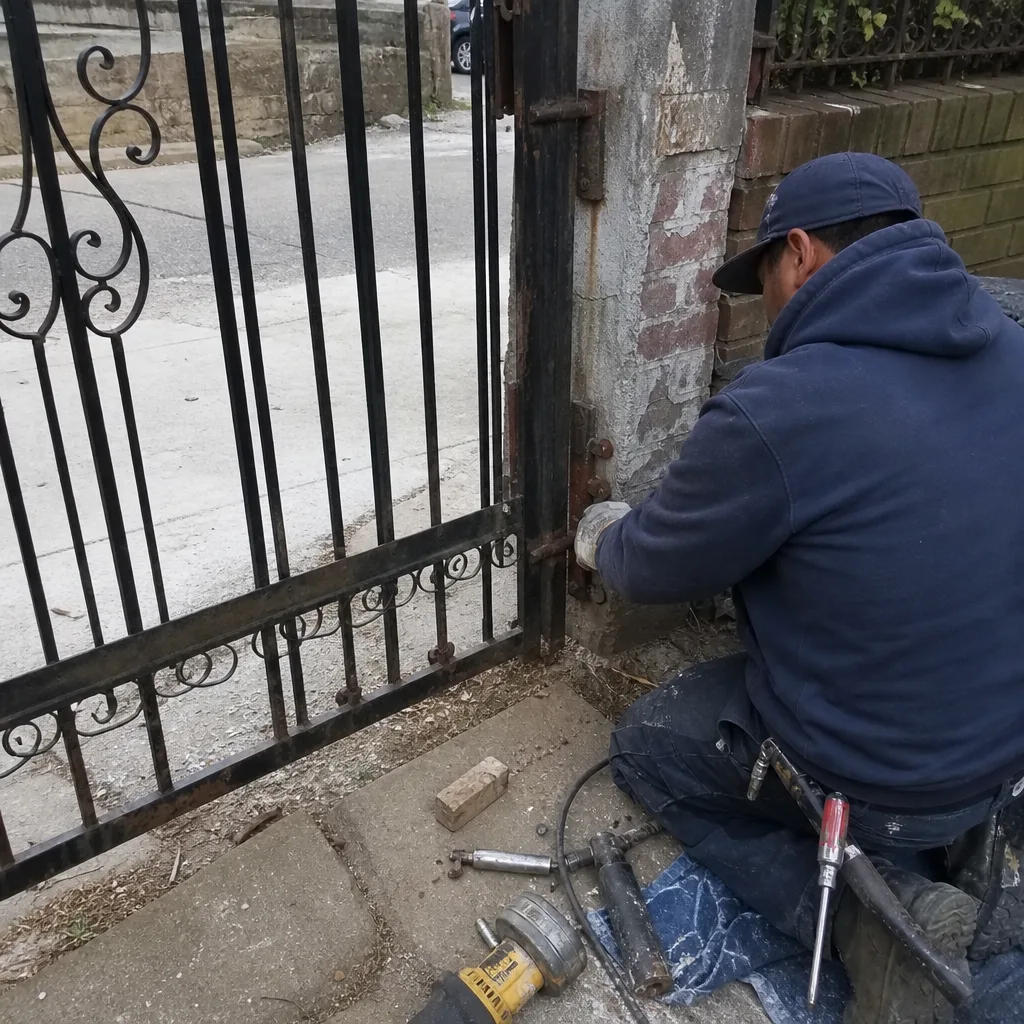 Before
 After
After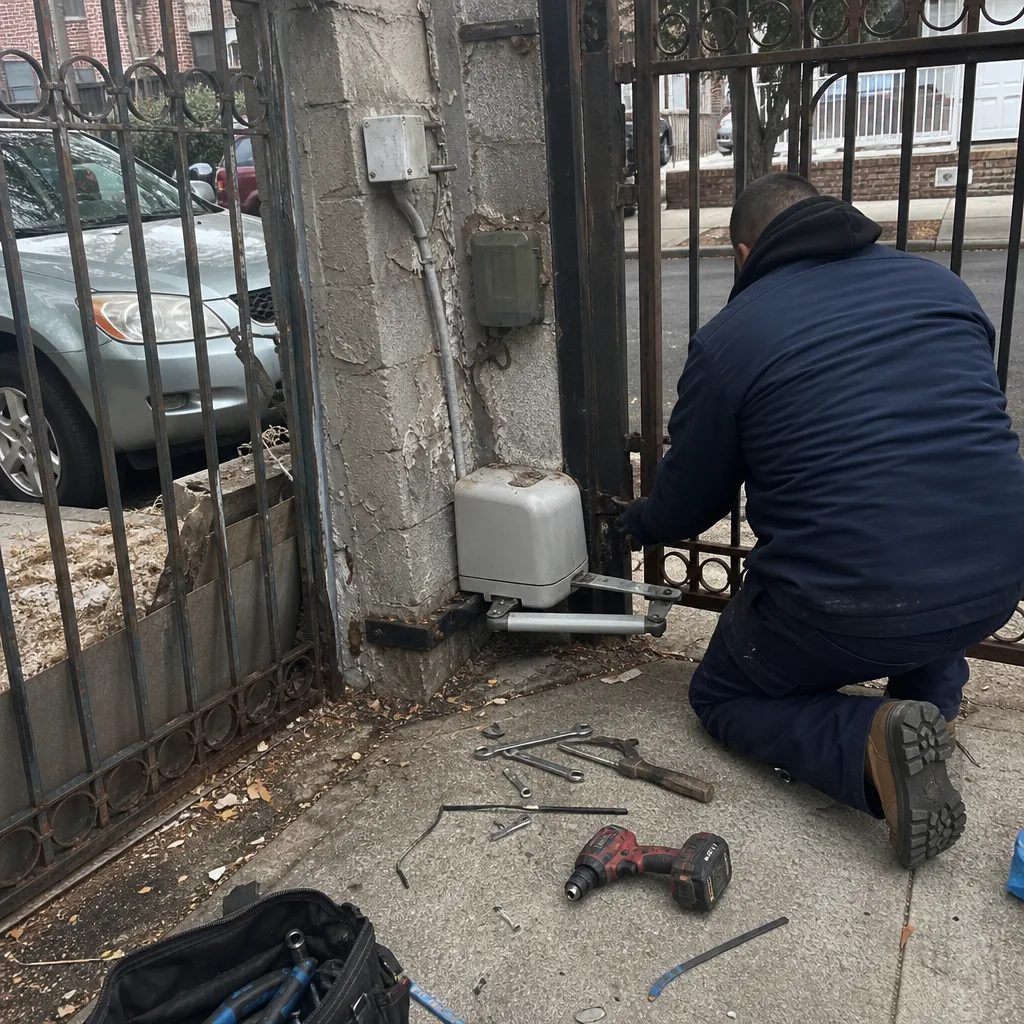 Before
 After
AfterReplacement Cost & What’s Included
In Brooklyn, most LiftMaster-related welding and fabrication replacements run between $280 and $640 installed. The range depends on three things: how much steel has to be cut out, how heavy the gate is, and whether we need to bring additional power to the site for the weld. A simple hinge plate replacement on a pedestrian gate lands near the low end. A full lower rail splice on a 14-foot iron driveway gate with the LiftMaster operator pulled and re-mounted lands near the top.
We don’t do time-and-materials surprises. The price you see before we start includes the fabrication, the welding consumables, the grinding cleanup, and the finish coat where needed. You’ll see the exact number in writing before we touch anything.
Every weld we make falls under the 365-Day Done Right Promise: if the repair or fabrication isn’t right, we make it right. No argument, no fine print.
DIY or Call Us?
Here’s the honest split. You can and should inspect your gate for cracks, loose brackets, and rust scale. A flashlight and five minutes will tell you a lot. You can also check that the LiftMaster operator is bolted tightly to its pad or post bracket.
What you should not do is weld on a gate yourself if you don’t have the equipment and experience. Welding around a LiftMaster operator means disconnecting power and pulling the unit clear so you don’t fry the control board with stray current. It means knowing whether your tube steel is thick enough to take the heat without blowing holes through it. It means supporting the gate’s weight before you cut a hinge. A gate that’s not supported when the last hinge weld is cut can come down hard and hurt someone. A gate that sticks today doesn’t fix itself by next week, but it usually isn’t as complicated as it looks either. When the job needs a welder, call (934) 649-3673. We’ll give you a straight answer on what’s fixable and what’s worth replacing, and the quote is free.
FAQs
A properly fabricated and welded repair on a LiftMaster system in Brooklyn typically lasts 10 to 15 years before the next point fails, assuming the gate is maintained and the steel is coated against winter salt. The original welds that failed were often under-spec from the start. Our replacements use heavier plate and gussets than the original, which usually outlasts the factory work. Call (934) 649-3673 and we can tell you what your specific gate is likely to need.
Yes, in most cases a broken weld or cracked bracket can be cut out, ground clean, and re-welded without replacing the gate. The exceptions are when the surrounding steel has thinned from rust to the point that welding will blow through it. If that’s what we find, we’ll show you exactly what’s beyond saving and quote a section replacement rather than a new gate. Call us for an honest assessment: (934) 649-3673.
Most single-point fabrication jobs on a LiftMaster gate, like a hinge plate or bracket replacement, take 2 to 3 hours including cooling and finish coat. A full rail splice or post replacement takes half a day. We carry a welder, steel stock, and common LiftMaster mounting hardware on the truck, so many jobs are completed in one visit. Call (934) 649-3673 for a time estimate on your specific part.
Yes, we stock common steel plate, square tube, gusset material, and LiftMaster-compatible mounting hardware on the truck, along with grinding and finishing supplies. For non-structural LiftMaster components, we also stock parts for Mighty Mule, Ghost Controls, and DoorKing operators. If we don’t have what your gate needs, we’ll fabricate it or source it that week. Call (934) 649-3673 and tell us what you’re looking at.
Written by Cody Beckman, Owner, Latch and Post Gate Repair Brooklyn at Latch and Post Gate Repair Brooklyn, serving Brooklyn and nearby areas.