
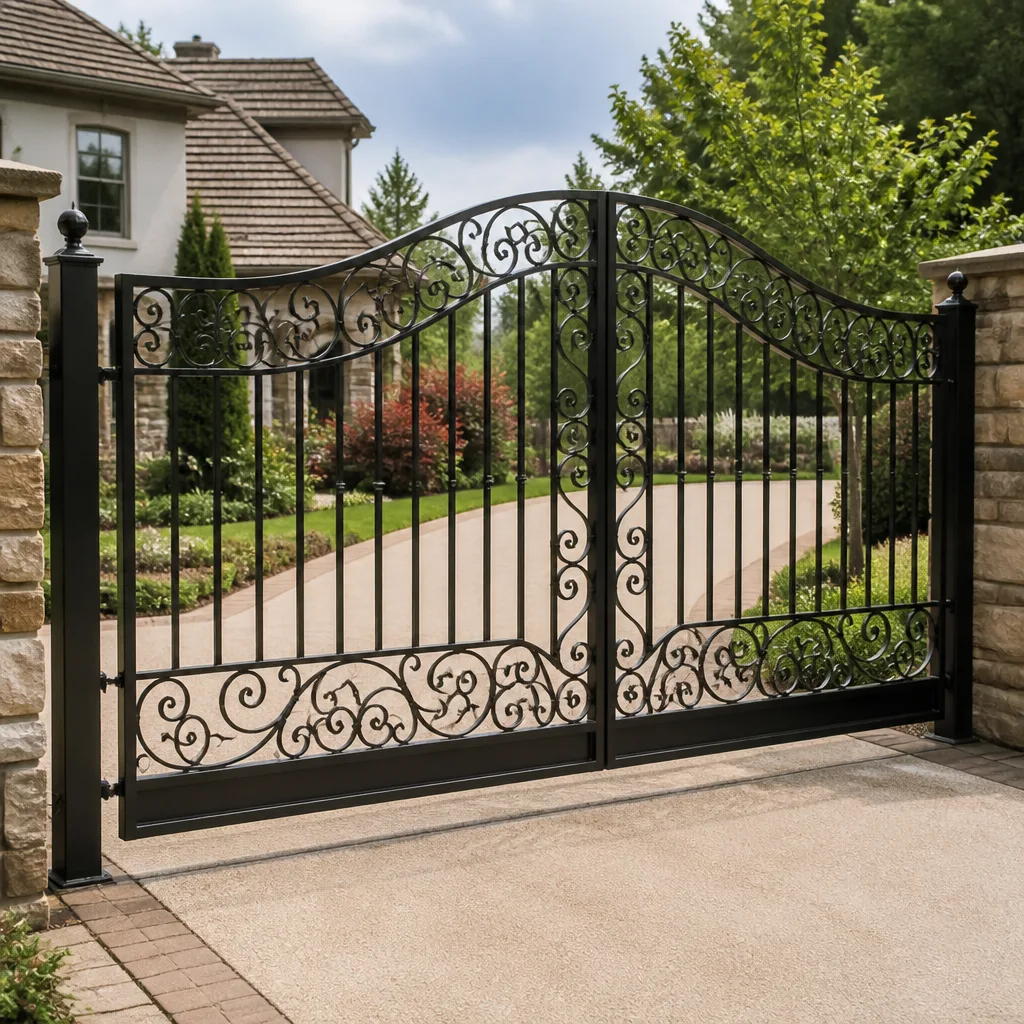
 Wrought iron
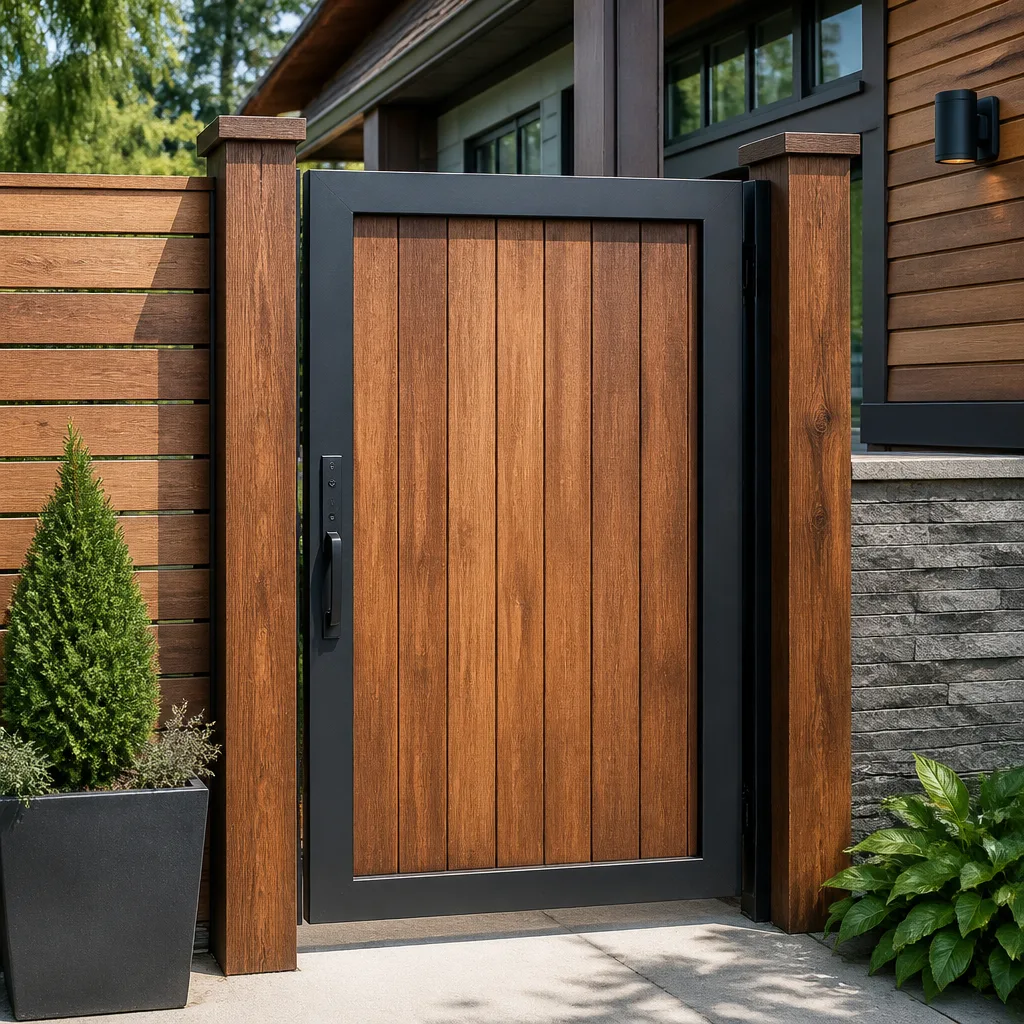 Wood & steel frame
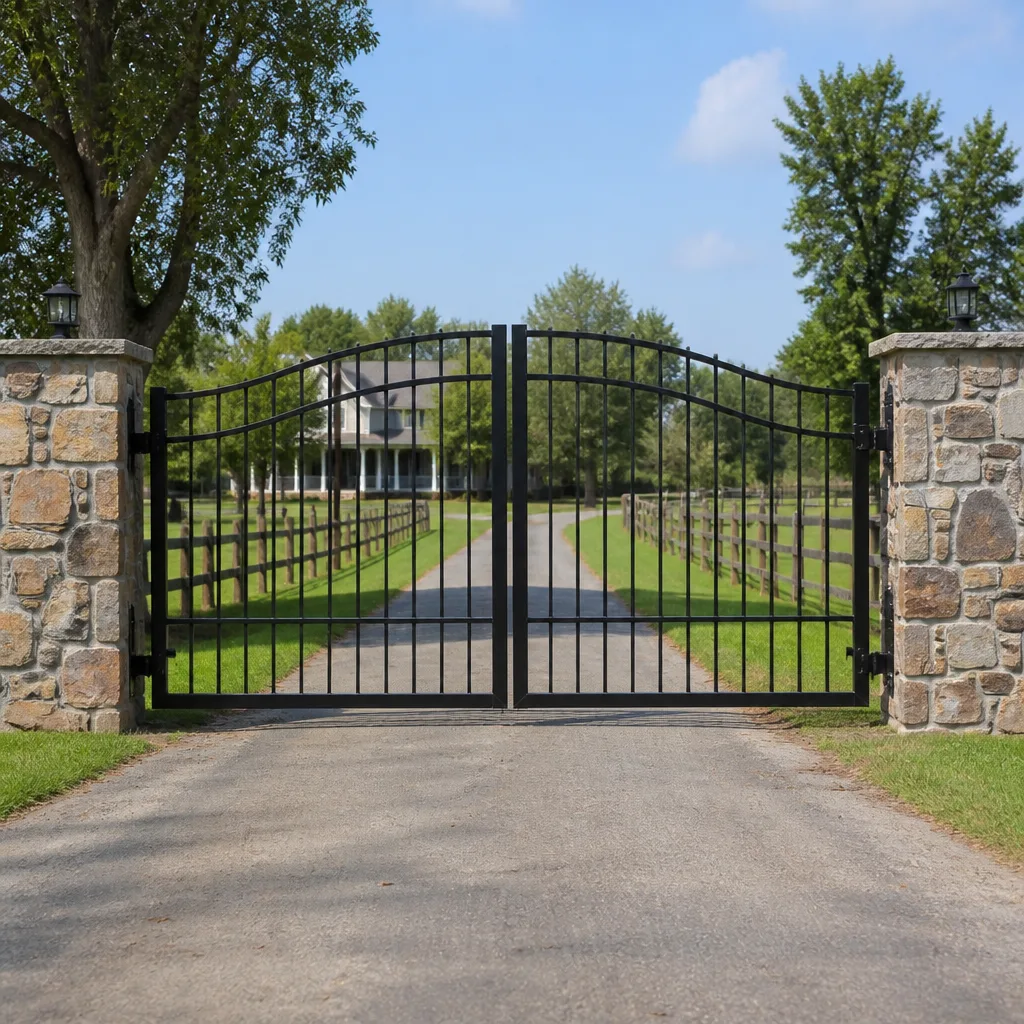 Farm & ranch
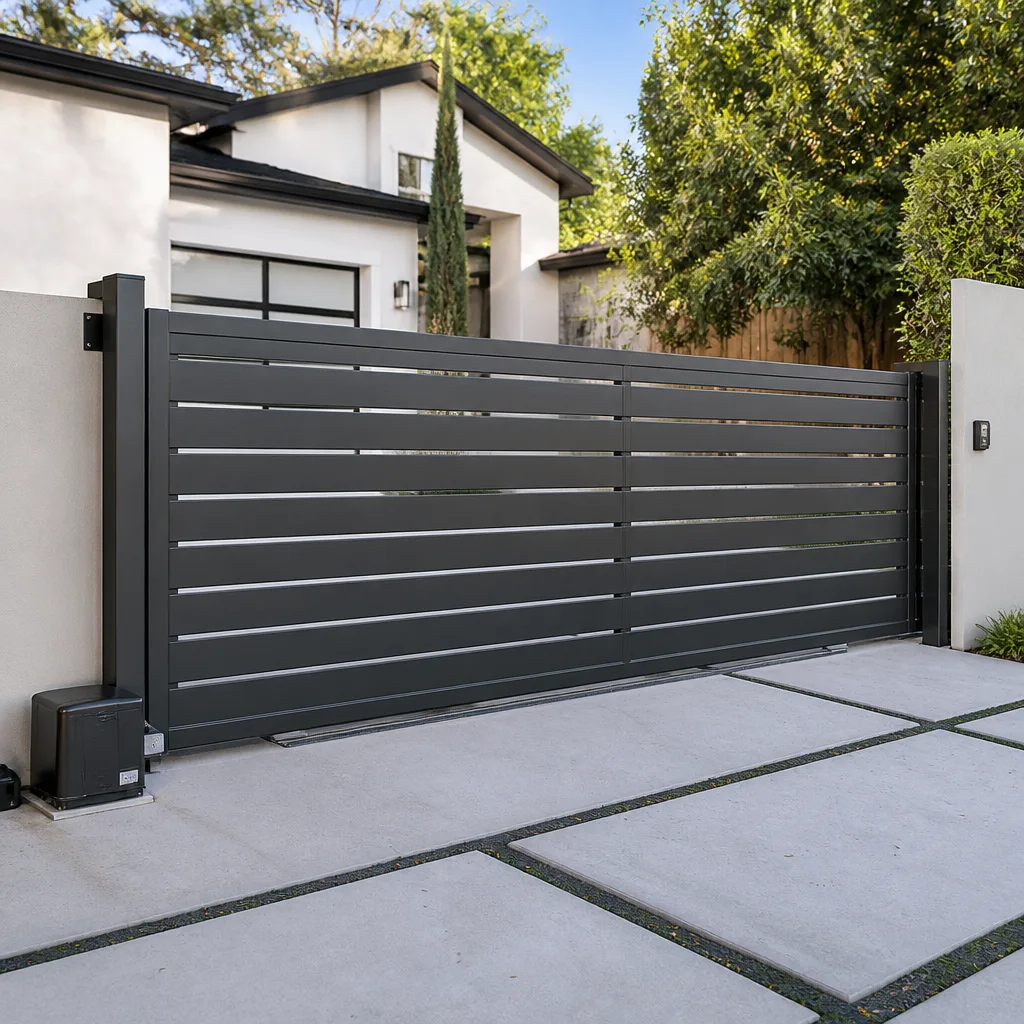 Sliding driveway gates
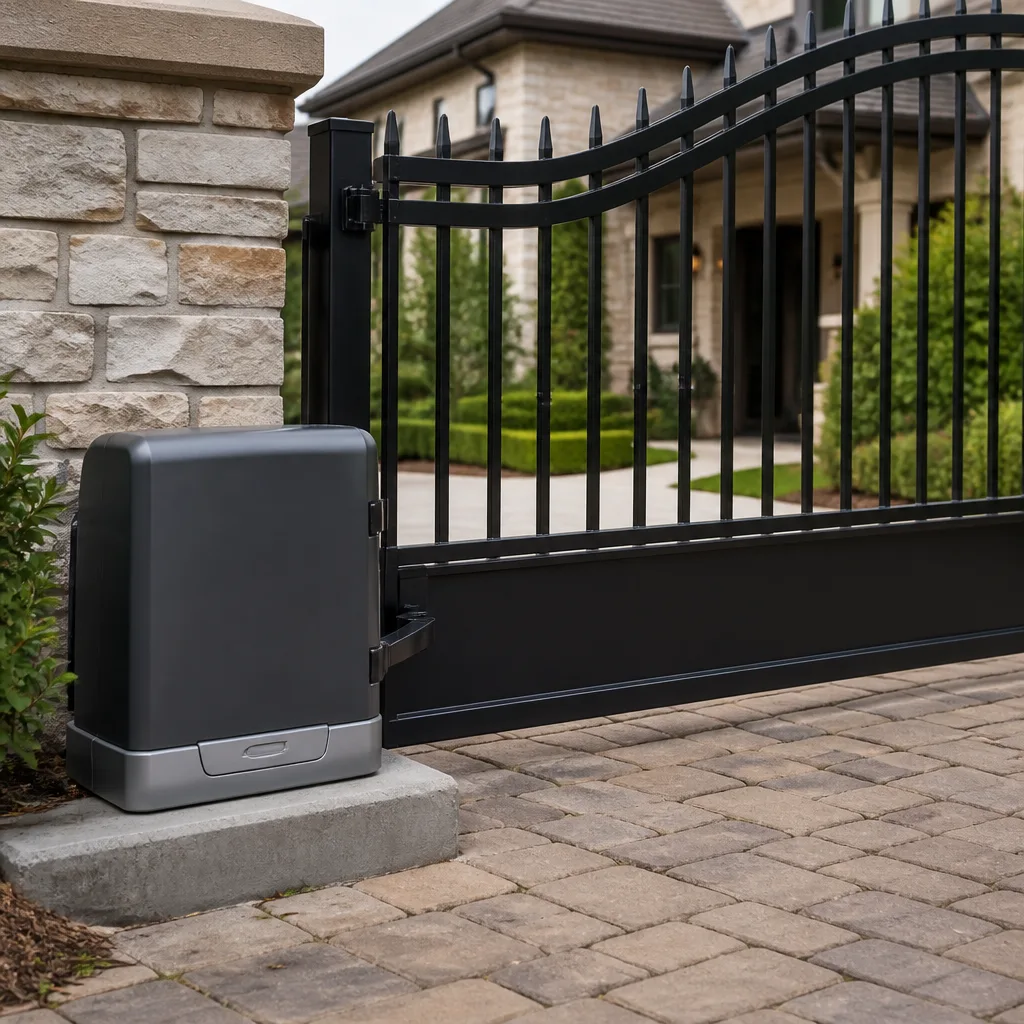 LiftMaster operators
Free on-site gate assessment - hinges, posts, and your LiftMaster or Nice gate operator checked before anything is quoted
The assessment is free and the quote is the invoice.
Get your free estimateLinear Welding & Fabrication: The Brooklyn Owner's Guide
If your Linear gate hinge, bracket, or frame member has cracked, snapped, or torn loose from its mounting point, we carry the welding and fabrication capability to restore it. Most Linear welding and fabrication jobs in Brooklyn run between $180 and $450, depending on whether we're re-welding a single bracket in place or fabricating a replacement plate from scratch. We stock common Linear mounting hardware on the truck, and most weld repairs are completed the same day we arrive.
Owners usually discover a failed weld the moment the gate starts sagging at one corner, dragging across the driveway, or making a sharp metallic clank when it opens. Linear operators are solid machines, but their steel brackets and hinge plates take a beating from Brooklyn winters, road salt, and years of gate cycles. The good news is that a cracked bracket is one of the most repairable failures a gate can have, and the fix usually costs a fraction of a full operator replacement.
We are an independent gate repair company, not affiliated with Linear or Nortek. What that means for you is simpler: we weld and fabricate for the equipment families in Brooklyn actually own.
Which Linear Models This Applies To
Linear swing gate operators, most commonly the SL series (SL-1, SL-2, SL-3, SL-4) and the heavier LS line, all rely on welded steel or cast-aluminum hinge brackets that bolt to the gate frame and post. The Linear slide gate line – Models SLD-1, SLD-2, SLD-3, and the commercial SLR series – uses a different set of steel idler brackets and guide roller plates that also crack under load. If your operator is a Linear LRA or LRB residential swing arm, the arm-to-gate clevis bracket is the usual weld failure point.
Identifying the right part comes down to two things. First, the model nameplate on the operator housing tells us which series you have. Second, we measure the bracket itself. Linear has used both 1/4-inch and 3/8-inch plate over the years, and matching the thickness matters. A bracket we fabricate to the wrong thickness will either be too weak to hold or too stiff to bolt flat. If you still have the original installation manual, the parts breakdown pages 6 through 9 list the bracket reference numbers.
On the OEM versus aftermarket question: Linear still lists replacement hardware for most current models, and we use OEM parts whenever the bracket has Linear-specific hole spacing or a captive nut arrangement. For older units where the factory part is discontinued or backordered, a properly fabricated replacement from matching-grade steel plate does the same job, often faster. We tell you which route we're taking and why before any work starts.
Styles & brands we work with
Signs Your Linear Welding & Fabrication Is Failing
- Visible crack running through a bracket or hinge plate. You'll usually see a hairline fracture starting at a bolt hole or along the bend radius. The crack the metal tore at that specific spot spot is the stress concentration, and it will keep growing. We catch these in the hairline stage all the time on brownstone block gates near Prospect Park.
- Gate sags at the operator end. When the Linear operator bracket loosens or its weld begins to separate, the gate loses its support on that side and droops. You'll see the gate scraping or catching where it never did before.
- Noticeable vibration or chatter during travel. A bracket that's cracked but not yet separated lets the operator arm move slightly under load. That looseness shows up as a rattle or stutter when the gate runs, especially in cold Brooklyn weather when metal contracts.
- Loud metallic pop or clank when the gate starts or stops. That's usually the sound of a partially cracked weld loading and unloading. It's the gate telling you something is moving that shouldn't be.
- Mounting bolts that won't stay tight. If you've tightened the same Linear bracket bolts twice in a month, the bracket itself is likely warped or fractured underneath. Thread locker and a wrench won't fix a plate that's twisting.
See the difference
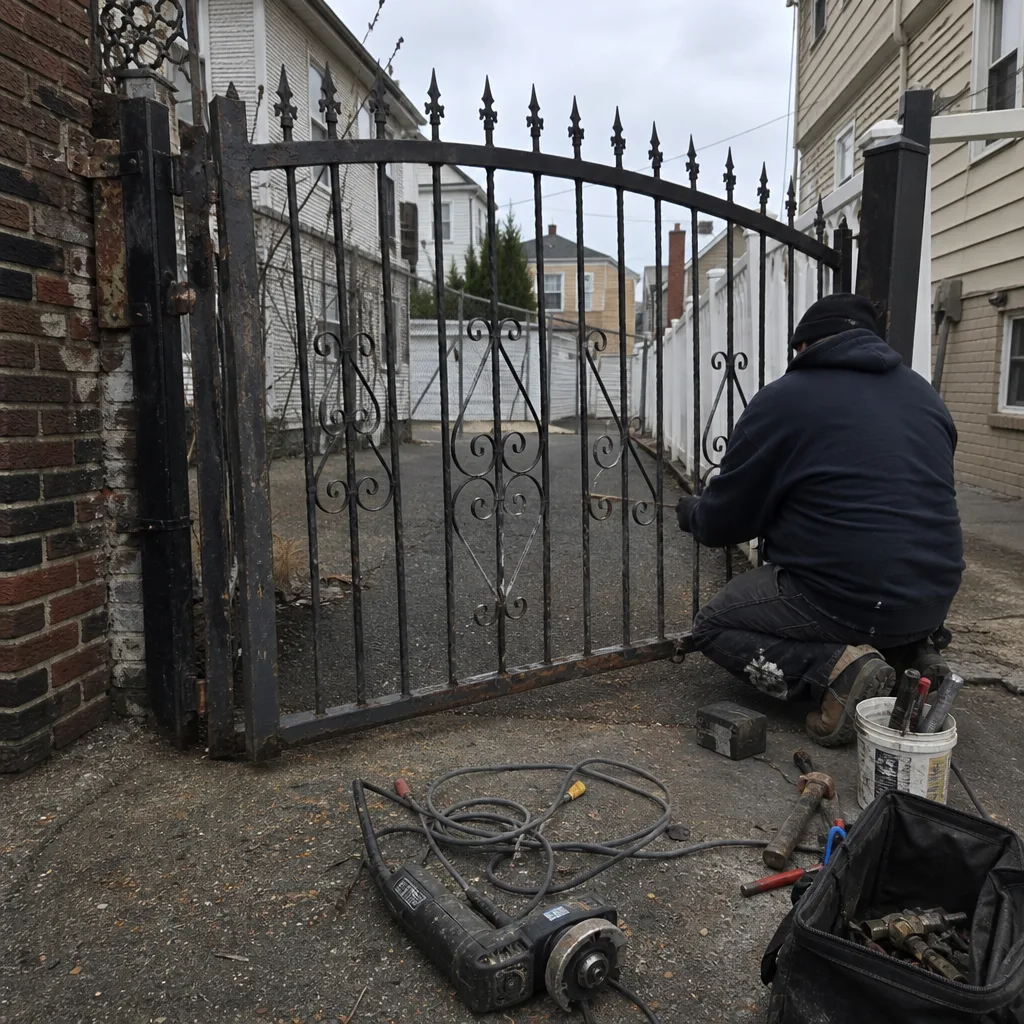 Before
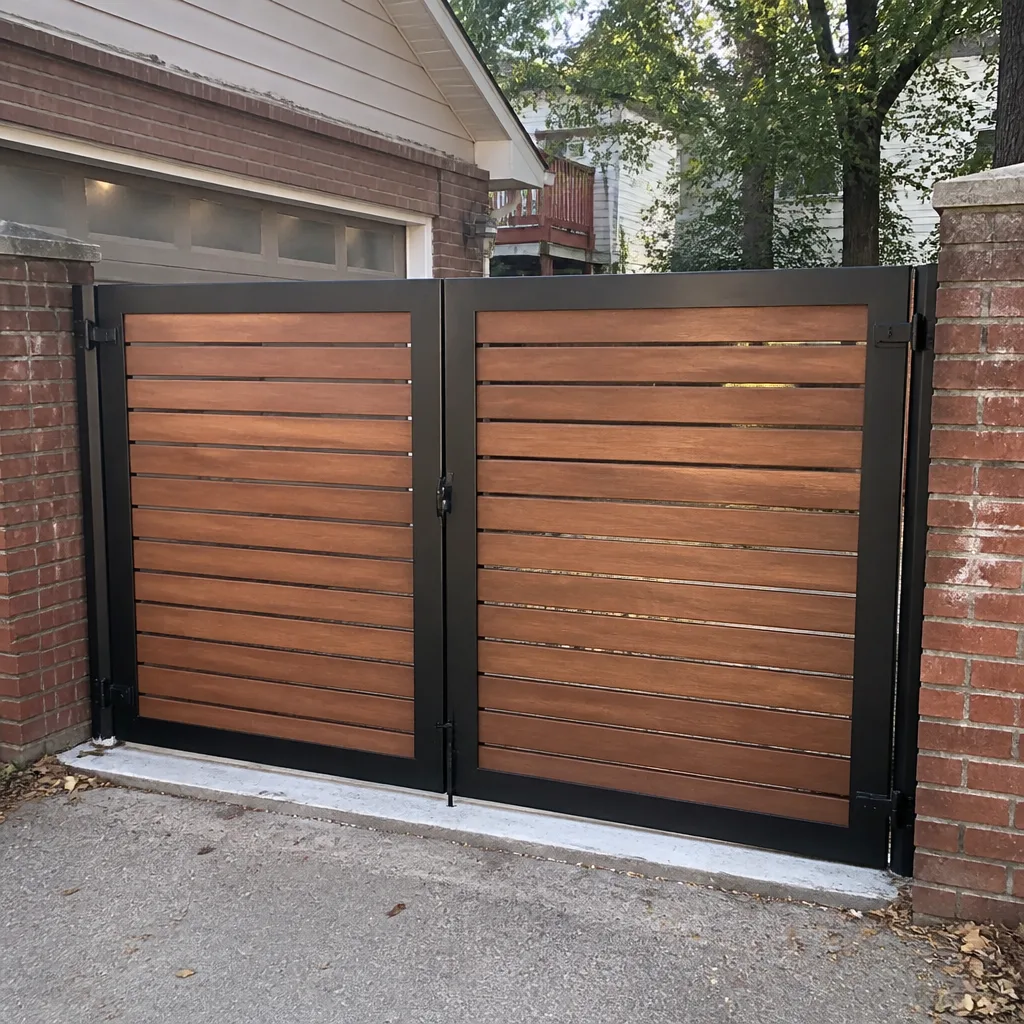 After
After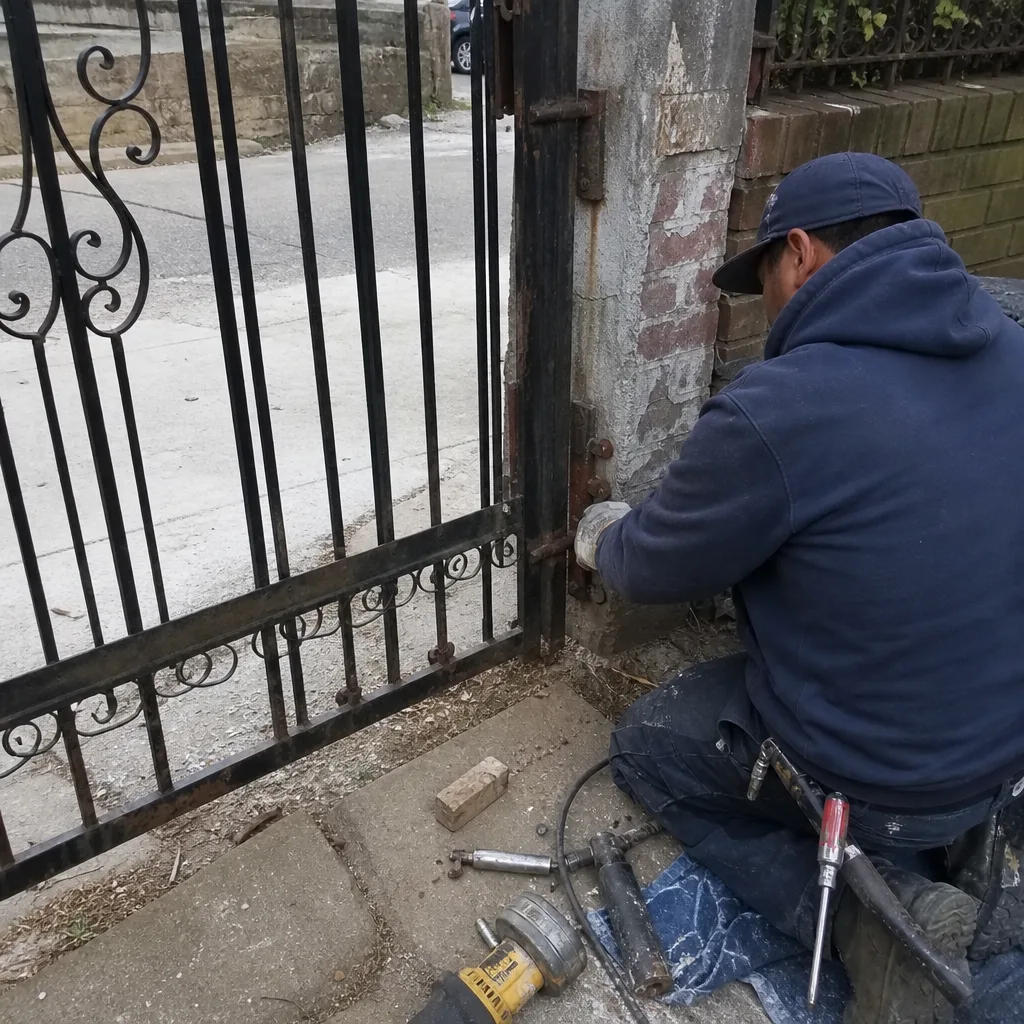 Before
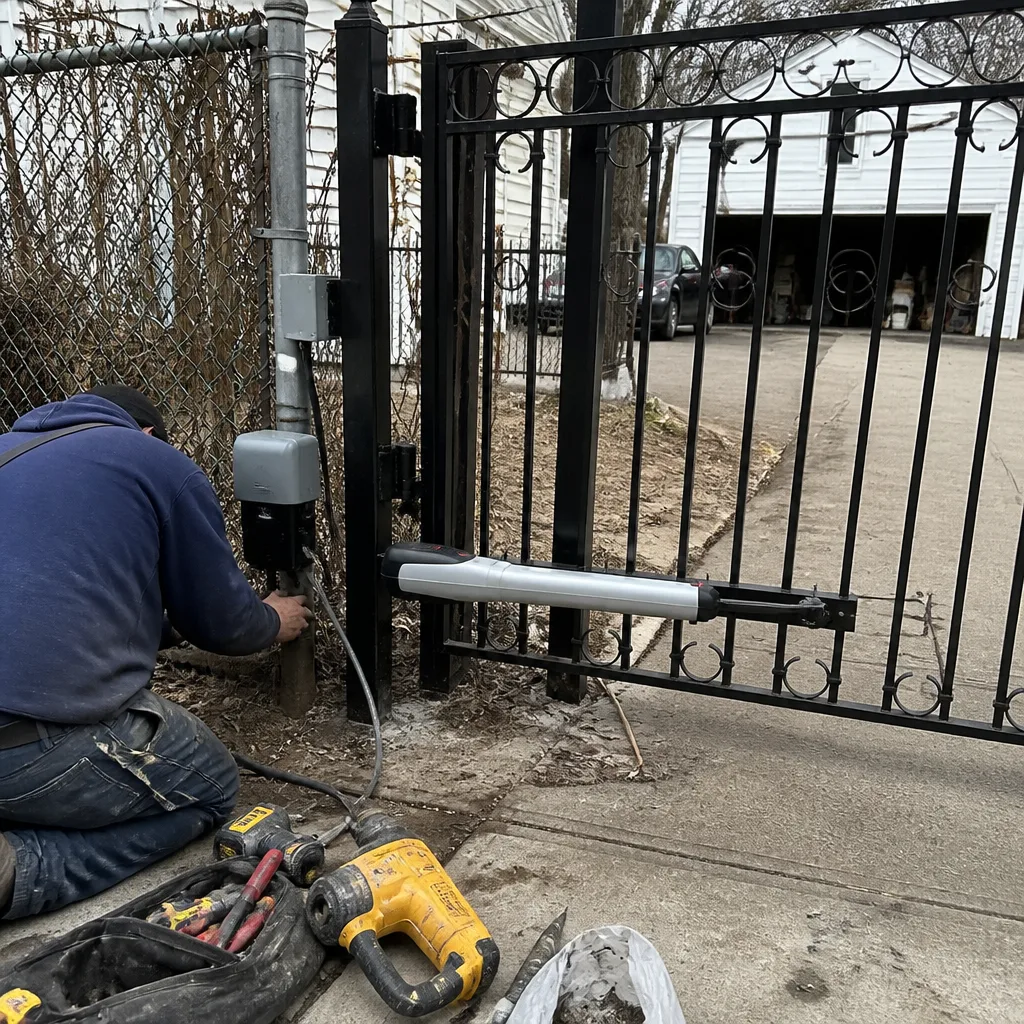 After
After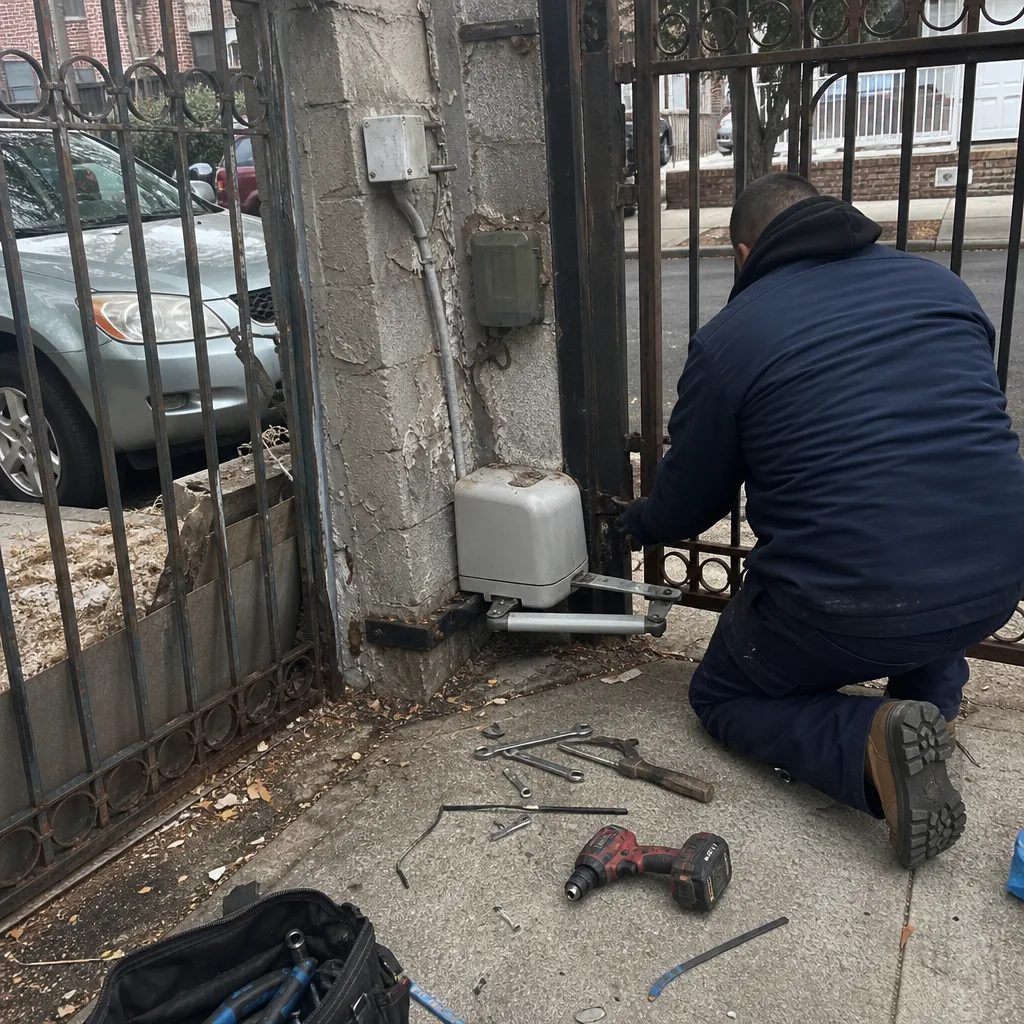 Before
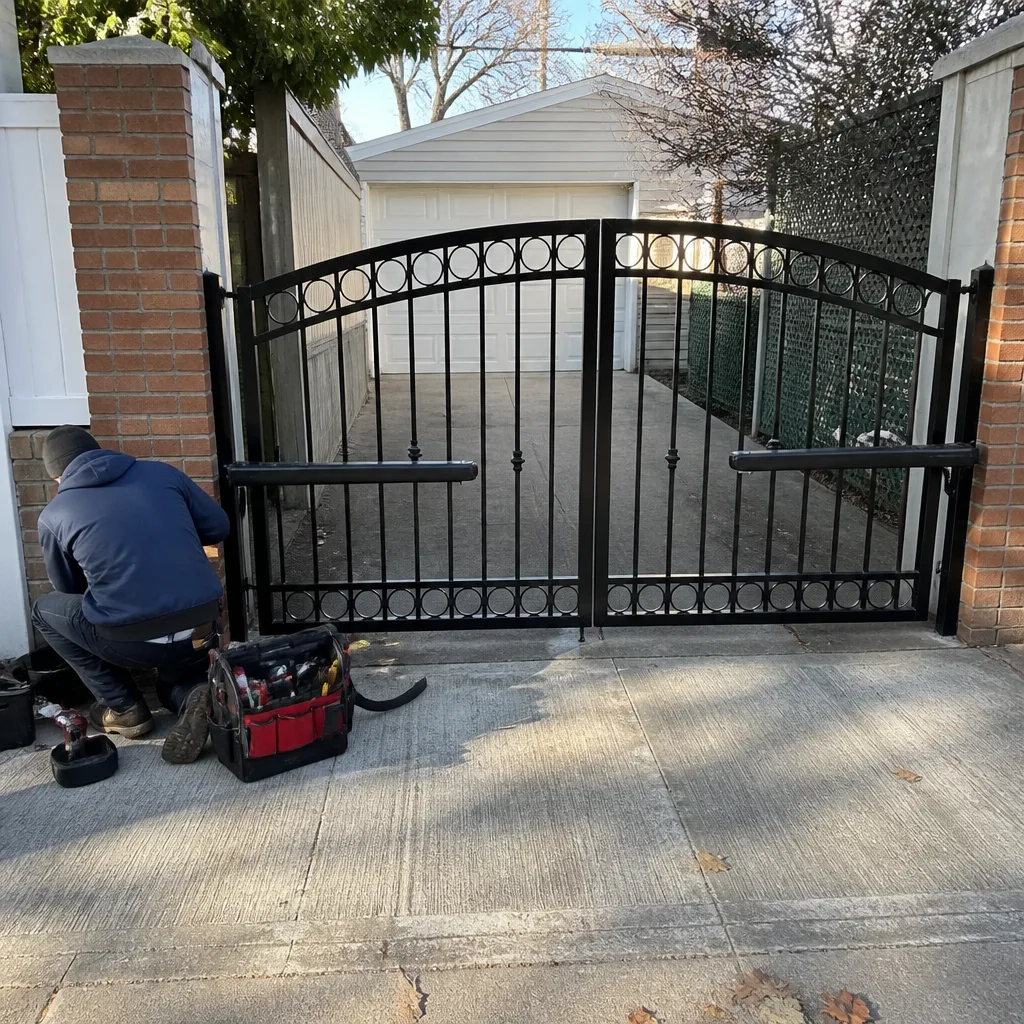 After
AfterReplacement Cost & What's Included
Most Linear welding and fabrication work in Brooklyn falls between $180 and $450 installed. A simple crack re-weld on a residential swing gate bracket runs around $180 to $260. Fabricating a new bracket or hinge plate from steel stock runs between $260 and $380, depending on the plate thickness and hole pattern. If we need to repair the gate frame itself, not just the bracket, you're looking at $350 to $450 for a typical job.
Every weld job includes our standard pre-work steps: we grind the area clean, pre-heat where the metal thickness calls for it, and use the right electrode for the base metal. We also clean the area afterward and hit the weld with rust inhibitor before we leave. You get the written price before we start, and the work is covered by the 365-Day Done Right Promise. If our weld fails inside a year, we come back and make it right, no argument.
What drives the range is mostly plate thickness and access. A bracket we can weld in place without removing the operator costs less than one that requires pulling the arm and working on a bench.
DIY or Call Us?
What you can safely do yourself is identify the problem and stop using the gate if the bracket is clearly cracked. Also wise: take a photo that shows the model plate and the damaged area, then measure the plate thickness with a ruler if you can reach it safely. That gives us a head start on the phone.
What you should not do is grind or weld it yourself. Welding requires the right equipment, the right settings for the metal, and safety gear. Welding near a wired Linear operator without disconnecting power and protecting the control board is how small cracks turn into fried circuit boards. A gate that sticks today doesn't fix itself by next week but it usually isn't as complicated as it looks either. Our Brooklyn truck carries the welder, the steel stock, and the replacement hardware to do the job in one visit. Call (934) 649-3673 and we'll tell you what we think over the phone, free.
FAQs
A properly installed Linear bracket should last 8 to 12 years in Brooklyn's climate before showing fatigue. The combination of salt air near the waterfront, winter road salt splash, and freeze-thaw cycling shortens that compared to warmer, drier markets. Bracket welds fail before the operator itself in most cases, which is why a repair usually extends the life of the whole system rather than replacing it.
Most cracks in Linear brackets can be repaired with a quality weld if the surrounding steel is still sound and the crack hasn't traveled through more than half the plate. If the metal is thinned from corrosion or already cracked in multiple spots, fabricating a new bracket is the better fix. We make that call on-site and show you what we're seeing before we start. For an exact look at your situation, call (934) 649-3673.
A typical single-bracket weld repair on a Linear gate takes between 60 and 90 minutes including setup and cleanup. Fabricating a new bracket from blank steel adds about 30 to 45 minutes depending on the hole pattern. Most Brooklyn callers have their gate working again the same day.
Yes, our trucks carry common Linear bracket hardware, steel plate stock in the common thicknesses, and replacement fasteners, so most jobs are completed without a second trip. If we need a Linear OEM bracket that's an unusual size, we source it from our Brooklyn supplier network, usually same week, not weeks out. Call (934) 649-3673 and we'll tell you if your bracket is one we already carry.
Written by Cody Beckman, Owner, Latch and Post Gate Repair Brooklyn at Latch and Post Gate Repair Brooklyn, serving Brooklyn and nearby areas.