
Last updated October 17, 2026
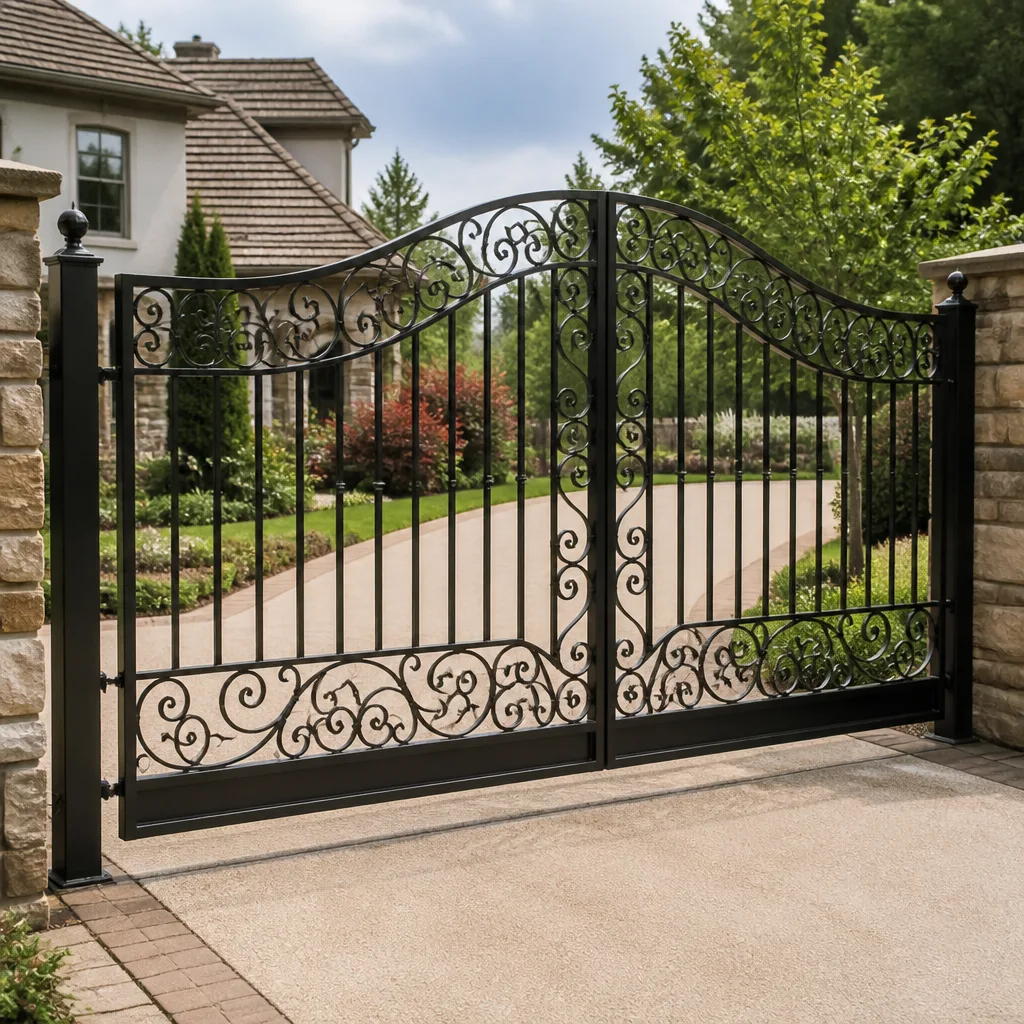 Wrought iron
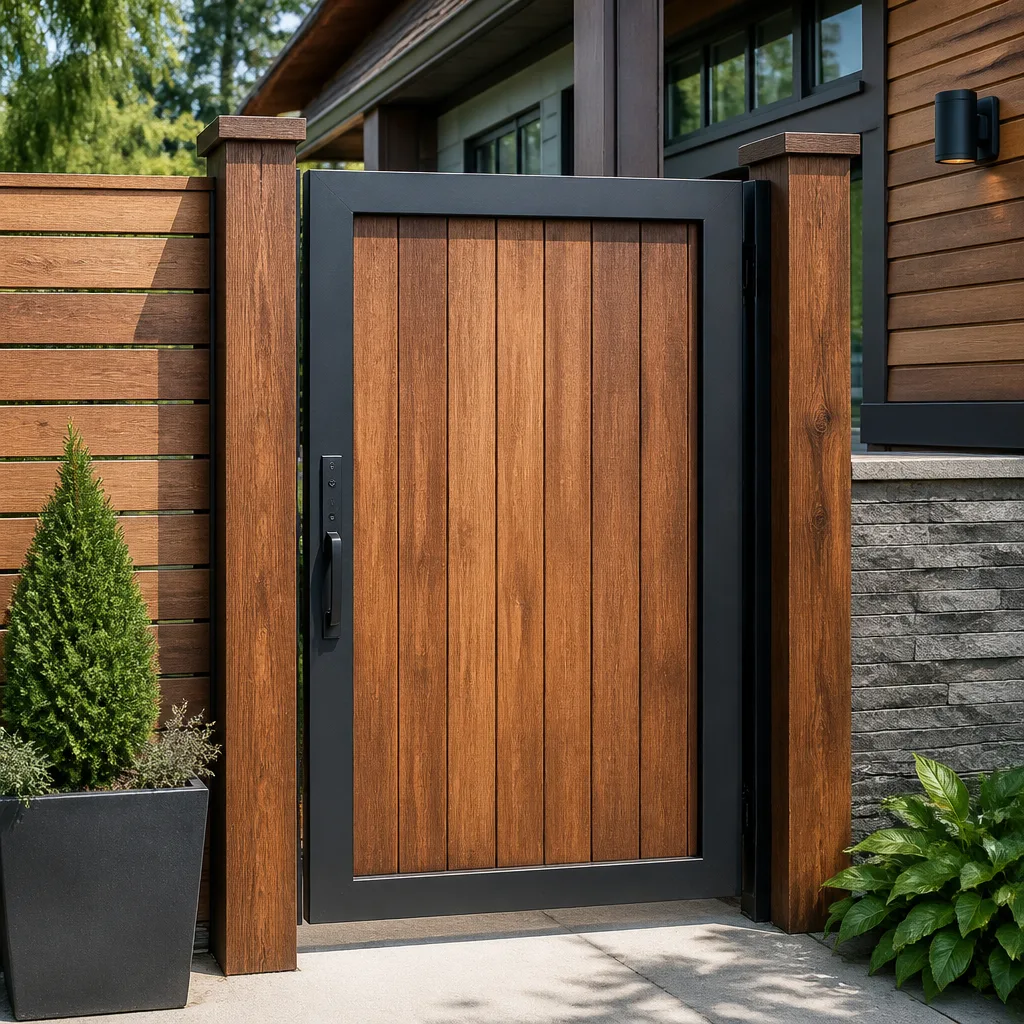 Wood & steel frame
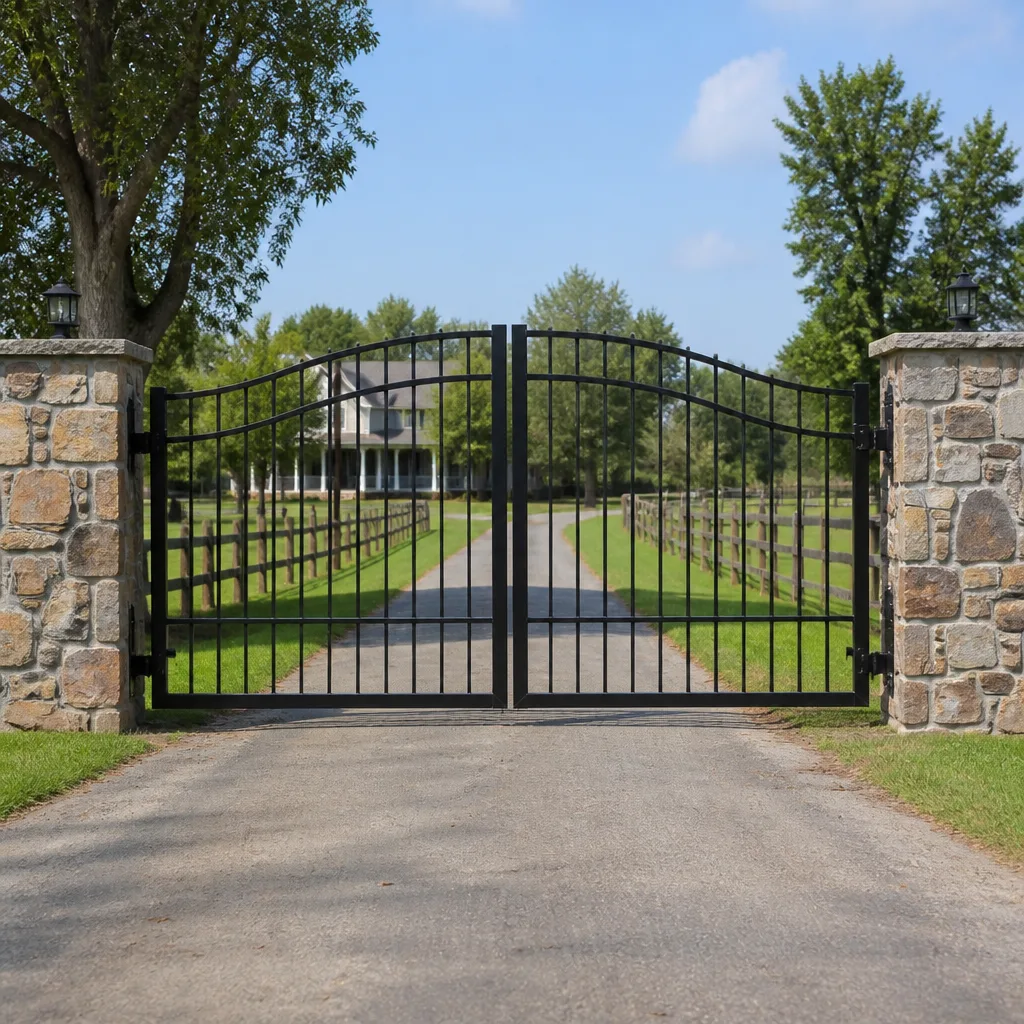 Farm & ranch
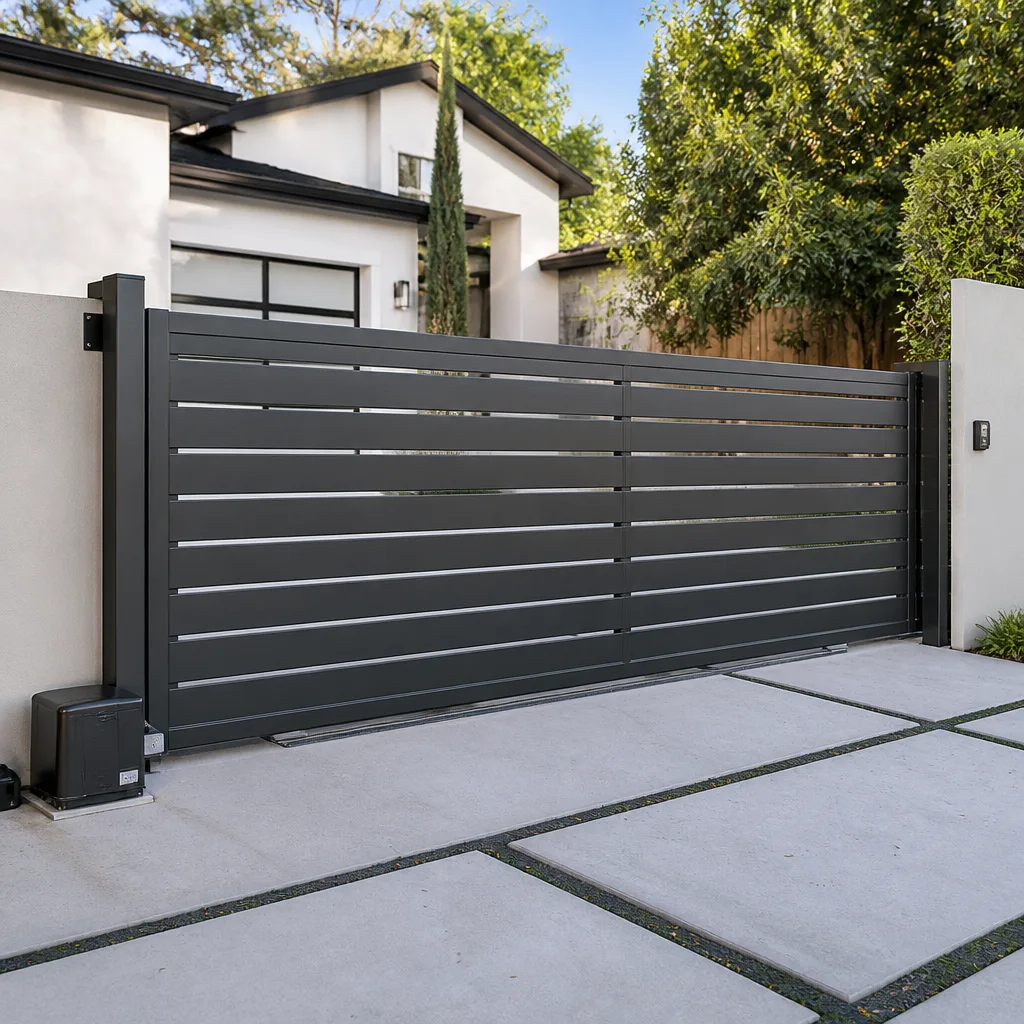 Sliding driveway gates
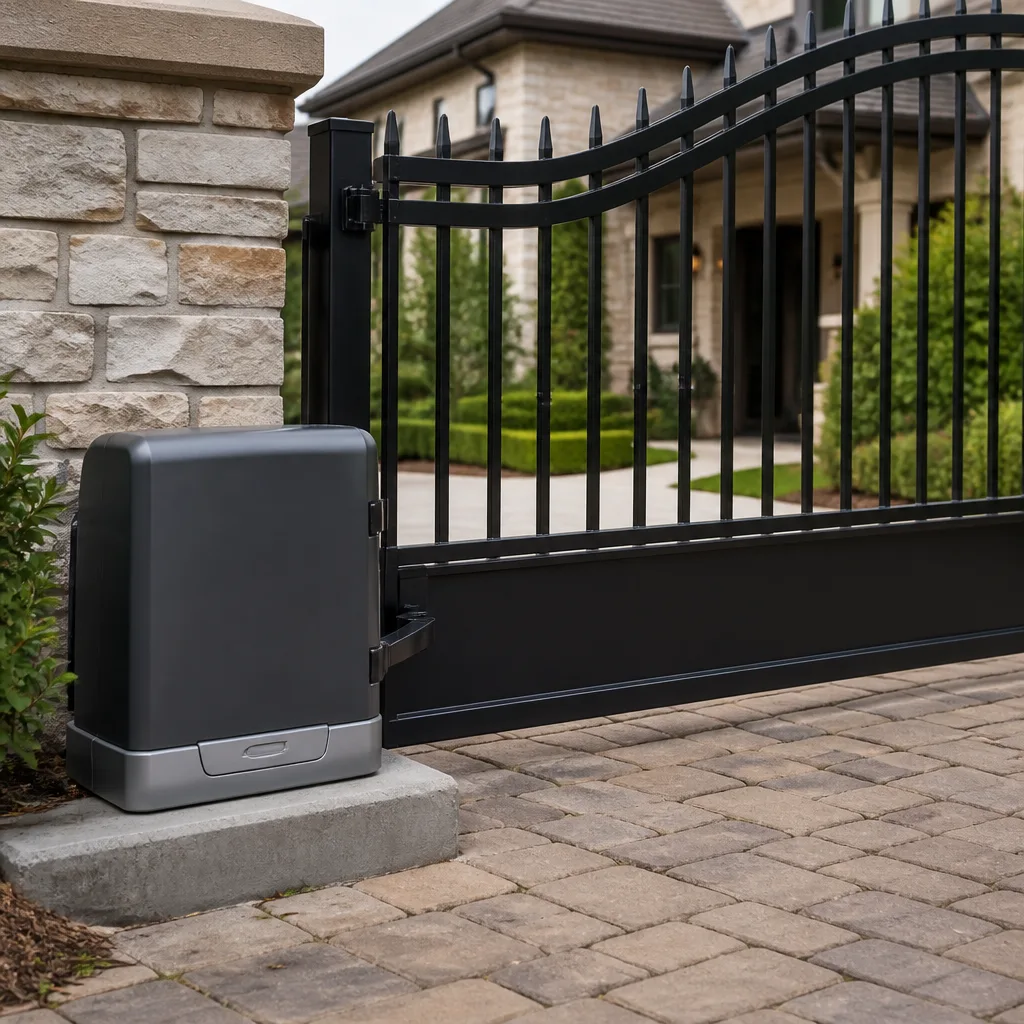 LiftMaster operators
Free on-site gate assessment - hinges, posts, and your LiftMaster or Nice gate operator checked before anything is quoted
The assessment is free and the quote is the invoice.
Get your free estimateThe Complete Guide to Gate Repair in Brooklyn
Most gate repair guides read like they were written by someone who has never stood on a Carroll Gardens stoop in February. Here’s the thing that surprises homeowners: the most common gate repair call in Brooklyn isn’t a snapped hinge or a rusted latch. It’s a gate that won’t close because the post shifted half an inch when the freeze-thaw cycle worked its way through the clay soil beneath the stoop. This guide covers every major repair category through that Brooklyn-specific lens, from brownstone ironwork on Park Slope stoops to salt-corroded hardware in Red Hook to chain-link lots in East New York. For a deeper look at whether to tackle issues yourself or call in help, see our DIY vs Professional Gate Repair: The Brooklyn Homeowner’s Decision Guide. You’ll learn what actually fails here, why it fails, what it costs to fix, and when a repair beats a replacement.
Styles & brands we work with
Quick Answer
Gate repair in Brooklyn typically costs between $85 and $1,200 depending on the failure, with most hinge replacements landing in the $85 – $140 range and full panel replacements running $600 – $1,200. For a detailed breakdown of how these numbers are calculated, see our Gate Repair Cost Breakdown: The Brooklyn Homeowner’s Reference for 2026. The most common issues are post shift from freeze-thaw cycles, salt-air corrosion on hinges and latches near the harbor, and worn automatic opener components on electric gates. Repairs are usually same-day or next-day jobs when a specialist is called.
Table of Contents
- How Brooklyn’s Microclimates Create Different Gate Failures
- Wrought Iron, Tubular Steel, and Ornamental Aluminum: Why the Metal Matters
- What Cedarwell Gate Hardware Is and Why Universal Parts Don’t Work
- Brooklyn Gate Repair Cost Breakdown: Line-Item Pricing
- Repair vs. Replace: How to Decide in Five Minutes
- Electric Gate Repair in Brooklyn: Openers, Sensors, and Safety Edges
- What a Documented Care Routine Looks Like (and Why Most Companies Skip It)
- What You Can Check Yourself and What You Should Never Touch
- Common Mistakes to Avoid
- When to Call a Professional
- Frequently Asked Questions
- The Bottom Line
How Brooklyn’s Microclimates Create Different Gate Failures
Brooklyn is not one climate. It’s a patchwork of microclimates shaped by proximity to the harbor, building density, and soil composition, and each one produces a distinct pattern of gate failure. A repair approach that works in Park Slope may be completely wrong for a gate three miles away in Red Hook.
Red Hook sits directly on the harbor, which means salt air works on hardware year-round. Zinc-plated hinges that last a decade in Ditmas Park corrode to a green crust in four years here. We’ve replaced hinge pins in Red Hook that looked like they’d been pulled from a shipwreck. The fix is straightforward: upgrade to stainless steel or marine-grade hardware, and specify a corrosion-resistant coating on any replacement parts. Skipping that upgrade means doing the same repair again in three to four years.
Park Slope and Carroll Gardens have their own problem: brownstone stoops built on clay-heavy soil. When February temperatures swing from 15 degrees at night to 45 degrees in the afternoon, the clay expands and contracts. Over time, that movement pushes gate posts out of plumb by a quarter to half an inch, which is enough to make the latch miss its strike plate entirely. The repair here is not just re-hanging the gate, it’s resetting the post in a properly compacted base, often with a concrete footing that extends below the frost line.
East New York and Brownsville have a high concentration of chain-link and tubular steel gates on larger lots. These gates are heavier than brownstone ironwork and place more stress on their posts and hinges over time. The most common failure we see there is sag at the latch end due to hinge wear combined with post lean. The fix usually involves a tension rod or a mid-rail adjustment, not just a hinge swap.
Cobble Hill and Brooklyn Heights have some of the oldest ornamental ironwork in the borough, some of it dating back to the late 1800s. Repairs on those gates require care that a modern fabrication shop won’t know to provide. You can’t just weld a new hinge onto 130-year-old iron with a generic MIG welder and expect it to survive a season. Understanding which microclimate your gate lives in is the first step in any repair conversation.
Wrought Iron, Tubular Steel, and Ornamental Aluminum: Why the Metal Matters
The three most common gate materials in Brooklyn are wrought iron, tubular steel, and ornamental aluminum, and confusing them during a repair leads to work that fails within a season or two. Each metal requires different tools, different techniques, and different replacement parts.
Wrought iron is the material of classic Brooklyn brownstone gates and railings. It’s strong, highly corrosion-resistant for its age, and usually quite heavy. Repairing it properly means either forge-welding or using a compatible low-carbon steel rod with preheating and slow cooling, because wrought iron has a fibrous grain structure that modern welding techniques can destroy. A quick wire-feed weld on a wrought iron hinge creates a brittle zone that snaps clean off the first winter after the repair. When we service a wrought iron gate, our technicians identify the specific alloy and original joinery before touching anything.
Tubular steel is the workhorse of newer Brooklyn installations, common on driveways and rear yard gates in neighborhoods like Midwood and Marine Park. It’s strong but vulnerable to internal rusting, especially in coastal zones like Sheepshead Bay and Gerritsen Beach, where salty road spray finds its way into the hollow tubes through weep holes. Repair work on tubular steel is usually straightforward: cut out the rusted section, weld in fresh tube, grind smooth, and coat. But it absolutely must be followed by interior rust treatment, or the repair just moves the failure point a few inches down the line.
Ornamental aluminum is increasingly common in new Brooklyn installations because it won’t rust and it’s lightweight. That weight advantage is also its weakness: aluminum gates dent, sag, and strip out at hinge points more easily than steel. A repair that calls for a steel hinge plate on an aluminum gate will create galvanic corrosion where the two metals touch. Aluminum repairs need aluminum-compatible fasteners and sometimes a welded aluminum patch, which is a different skill set entirely than steel welding. That’s one of the reasons a handyman with a general-purpose welder will struggle with a repair that a specialist handles in under an hour.
What Cedarwell Gate Hardware Is and Why Universal Parts Don’t Work
Most gate hinges, latches, and even opener mounting brackets sold at big-box stores are what the industry calls universal parts. They carry a list of “fits most” claims on the packaging and are designed to cover as many installation scenarios as possible. The problem is that a universal part almost always fits no gate properly.
Cedarwell gate hardware is a family of components engineered specifically for heavy-use residential and light-commercial gates in the kinds of conditions we get here in Brooklyn: freeze-thaw cycles, salt air, and tight stoop clearances. You’ll see Cedarwell hinges, latch assemblies, and post brackets specified on brownstone gates and modern installations alike. The reason it matters is not brand loyalty. It’s dimensional accuracy and material compatibility.
When a handyman installs a universal hinge on a gate that should carry a Cedarwell-spec hinge, two things tend to happen. First, the pivot geometry shifts slightly, which changes the gate’s sag over time and accelerates latch wear. Second, the metal in the universal part is often not stainless and begins corroding in a coastal zone like Red Hook or Brighton Beach within two years. A proper Cedarwell-spec repair, by contrast, uses the right alloy for the neighborhood and the right geometry for the gate. The result is a gate that swings true for a decade or more instead of two years.
This is not a pitch to buy a brand. It’s a recognition that Brooklyn’s gate stock and climate are specific enough that a parts-bin approach costs more over five years than a specialist repair does up front. We carry spec-matched Cedarwell hardware for most of the gates we service, which means one visit, one correct fix, and a gate that closes the way it did when it was installed.
Brooklyn Gate Repair Cost Breakdown: Line-Item Pricing
Every homeowner in Brooklyn has the same second question, right after “What’s wrong with my gate?”: “What is this going to cost?” At Latch and Post, our Gate Repair services are priced transparently from the start. Here is a transparent look at what we see in the Brooklyn market as of 2026, based on our own service area and the quotes we hear about from customers who called us after getting other estimates. These are real ranges, not padded list prices, and they include labor, which is the largest component of most gate repairs.
- Hinge replacement (single hinge): $85 – $140 including a stainless or spec-matched hinge and adjustment to restore proper swing clearance. For wrought iron gates, the price may reach the top of the range because of the additional care required.
- Latch or strike plate replacement: $75 – $130 including realignment so the gate actually latches closed. This is the most common repair after post shift.
- Post reset and re-anchoring: $250 – $500 including demolition of the old footing in some cases, compaction, fresh concrete below the frost line, and re-hanging the gate to plumb.
- Gate frame straightening and re-welding: $200 – $450 depending on the number of joints and amount of metal prep work required.
- Full panel replacement (fabrication and install): $600 – $1,200 for a standard pedestrian gate in tubular steel or ornamental aluminum. Custom wrought iron panels in historic districts can run higher due to fabrication time.
- Automatic gate opener diagnosis and repair: $150 – $400 including troubleshooting of the motor, control board, limit switches, and wiring connections. Replacement of a full opener unit runs $800 – $2,500 depending on brand and gate weight.
- Safety sensor or photo-eye replacement: $120 – $250 including alignment and testing.
These prices are for the Brooklyn market specifically. Labor rates in Manhattan and the more expensive parts of Long Island can run 20 – 40% higher. One thing that should never be a variable in Brooklyn: the final price you pay compared to the quote. We deliver a written price before any work begins, and that’s the number we honor. No surprise line items, no “while we were in there” additions. What we quote is what you pay.
Repair vs. Replace: How to Decide in Five Minutes
The repair-or-replace decision is emotional for many homeowners, but it should be mostly arithmetic. Here’s the decision process we walk through with Brooklyn customers, in order.
- Check the post, not the gate. Walk to the hinge-side post and give it a push. If it moves more than a quarter inch, the post is likely loose in its footing. That’s almost always a repairable condition, and it’s often the only thing wrong. If the post is cracked through at the base or rusted out below the soil line, replacement of that post is needed, but the gate can often be salvaged.
- Look at the hinge points. If the hinges are worn but the gate leaf is otherwise straight, repair is the obvious call. Hinge replacement costs $85 – $140 per hinge in Brooklyn, versus $600 – $1,200 for a new panel, so the math usually favors repair unless the gate itself is failing.
- Inspect the bottom rail. On tubular steel gates, lift the gate slightly. If the bottom tube crunches or feels soft, rust has worked its way through from the inside. That’s usually a replacement condition because the structural integrity of the whole panel is compromised. A welded patch job on a rusted-out bottom rail will fail within a season or two.
- Check the aesthetic standard. For ornamental aluminum and wrought iron, ask yourself one question: is the damage visible from the sidewalk, and does repairing it leave a visible scar that bothers you? If the answer is yes and the gate has multiple failing joints, replacement may deliver better value per year of service.
- Add up repair costs over five years. If the sum of anticipated repairs over five years exceeds 60% of a new gate’s installed cost, replacement usually wins. We’ll walk through this arithmetic with you, and we’ll quote both paths so you can decide with numbers, not vibes.
Brooklyn homeowners often get talked into full replacements by companies that don’t want to do small jobs. The truth is that most gate problems, especially post shift, hinge wear, and latch failures, are repairable for a fraction of the cost. And a repair done right on a 20-year-old brownstone gate often outlasts a replacement panel built to a price point.
Electric Gate Repair in Brooklyn: Openers, Sensors, and Safety Edges
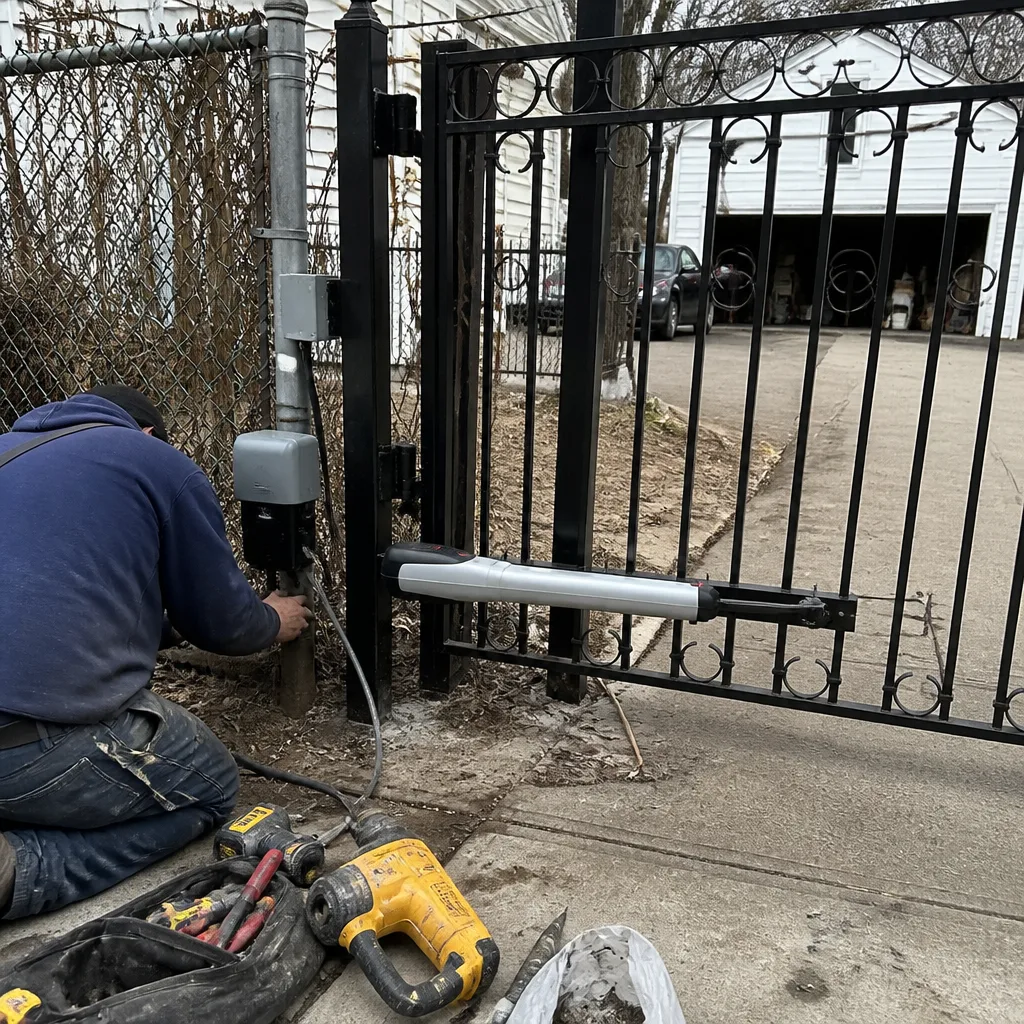
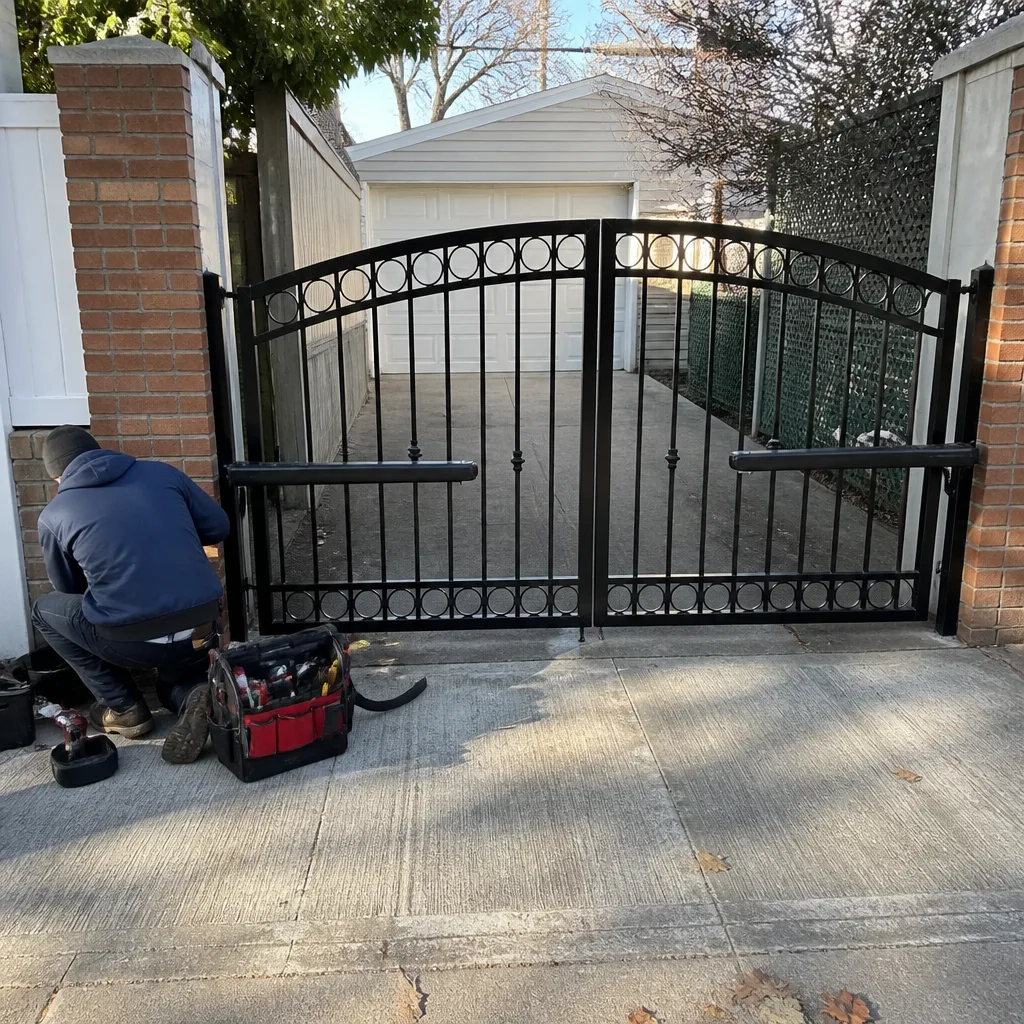
Electric gate openers add a layer of automation that most Brooklyn property owners prize for driveway gates and rear yard security gates. They also introduce a layer of failure points that mechanical gates don’t have: control boards, limit switches, safety sensors, and the wiring that connects them all. Our factory training covers the opener brands families actually own in Brooklyn: LiftMaster, FAAC, BFT, Linear, Viking, Ghost Controls, DoorKing, Elite, and Mighty Mule. If your opener is from one of these lines, the diagnosis and fix happen on the first visit in most cases.
The most common electric gate failure we see in Brooklyn is not a dead motor. It’s a sensor misalignment caused by post shift. The safety photo-eye mounted on the gate post and the one mounted on the latch post need to see each other in a clean line of sight. When frost heave moves a post by even half an inch, the sensors lose alignment and the gate refuses to close. That’s a simple fix, an adjustment, not a replacement, but a technician who doesn’t know Brooklyn’s post shift pattern will start replacing sensors that were never broken.
The second most common failure is water intrusion. Driveway gate openers in neighborhoods like Mill Basin, Gerritsen Beach, and Red Hook sit close to salt water or brackish water, and the control boards are not always housed in waterproof enclosures. Corrosion on circuit board contacts leads to intermittent operation, where the gate works one day and won’t respond the next. The fix is often a board-level cleaning and a waterproof enclosure upgrade, which is far cheaper than an opener replacement. We’re upfront with customers when a repair will buy a season versus five years, and we write that assessment down so there’s no memory gap.
Safety features deserve a word, because they’re the one thing you should never accept being inoperable. The electric gate in front of a Brooklyn driveway or the side gate around a Brownstone home is a hazard if the safety edges and sensors aren’t functioning. A gate that closes on a child or a pet is not a minor inconvenience. That’s a liability and a heartbreak, and it’s one of the reasons we test every sensor on every electric gate repair call, whether the customer asked us to or not. If we find a safety feature disabled or bypassed, we’ll say so and quote the repair. It’s not optional.
What a Documented Care Routine Looks Like (and Why Most Companies Skip It)
Most gate companies in Brooklyn operate with no written system for how they treat your home while they work. The technicians show up, do the repair, and leave. Whether they wore shoe covers, whether they put down a drop cloth, whether they cleaned up the metal shavings and concrete dust, depends on the mood of the tech that day.
We do it differently because we’re part of the Cedarwell family, and the Cedarwell Care Promise is non-negotiable across every independent Latch and Post location. Here’s what that means in practice on a gate repair call.
- Written price before any work starts. No verbal estimates, no “we’ll see how it goes.” You get a written price for the repair, and you decide before anything is touched. If you decline, that’s the end of it, no pressure.
- Shoe covers and drop cloths. If the tech needs to step inside your home, for an interior opener control panel or a wiring chase in a vestibule, shoe covers go on and drop cloths go down before a single step is taken. Your floors stay clean. That’s the point.
- Cleanup before departure, documented with a photo. The technician takes a photo of the cleaned work area and shows it to you before leaving. You don’t have to trust that the job site was cleaned. You can see it.
- Quiet tools when kids are asleep. We can schedule around nap time, and our technicians carry quieter tool options where the job allows. It’s a small thing that matters a lot to a parent whose baby just went down.
We also choose pet-safe lubricants where there’s a choice, because a gate latch in a home with a dog or cat will be touched by paws and licked occasionally, and the last thing a family needs is a petroleum-heavy grease on the neighbor’s tabby. This is not special service. This is the baseline. It’s how a careful neighbor would treat a family’s home, and that’s the standard we hold ourselves to on every call in Brooklyn.
What You Can Check Yourself and What You Should Never Touch
There’s a version of this guide that tells you to replace your own gate hinges and adjust your own opener sensors. For more guides & resources on maintaining your gate safely, explore our blog. We’re going to give you a more honest version, because some of this work is genuinely dangerous, and we’d rather tell you the truth than get a call from a family in our borough who found out the hard way.
What you can safely check:
- Test the gate’s swing by lifting the latch end. If it rises more than a quarter inch at the latch side, the hinges are wearing or the post is shifting. That’s information you can use when you call for a diagnosis.
- Listen for unusual sounds when an electric opener runs. A grinding sound usually means the drive gear is wearing. A clicking sound with no movement often means a power supply or limit switch issue. Note the sound and describe it to us over the phone.
- Look for visible rust at the bottom of the gate frame and around the hinge welds. Surface rust is rarely a structural problem. Flaking, pitting, or soft metal is a sign of internal failure.
What you should never do yourself:
- Never attempt to weld a broken gate hinge or joint. Wrought iron in particular will crack if welded improperly, and the weld itself involves extreme heat, sparks, and injury risk. This is a job for a trained professional with the right rod and the right technique.
- Never open the control box of an electric gate opener and start probing with a multimeter. Openers carry high-voltage components, and the capacitor in some units stores a charge even when power is disconnected. A wrong touch can cause serious injury.
- Never bypass a safety edge or photo-eye sensor to make a gate close. That sensor exists to prevent the gate from closing on a person, a pet, a bike, a stroller. Disabling it is against manufacturer specifications and local building safety expectations, and the risk is not worth the convenience.
The line between checking and fixing is the line between information and injury. Our technicians are factory-trained on the opener brands we service, and we’re licensed to do the work safely. If you’re not sure whether a job is safe to attempt, it isn’t. Call us and ask. The estimate is free, and the conversation costs nothing.
If you’re in the Brooklyn area and your gate is sagging, sticking, or refusing to open, read our detailed breakdown of Gate Repair in Brooklyn for a closer look at the most common fixes and what to expect on a service visit. We also have a full guide on Electric Gate Repair in Brooklyn that goes deeper into opener diagnostics, safety sensors, and brand-specific failure patterns. And if you’ve decided a new gate makes more sense than another repair, our Gate Installation in Brooklyn page walks through materials, design options, and the full installation timeline.
Common Mistakes to Avoid
- Calling a general handyman for a specialist gate repair. Handymen are wonderful for many jobs, but gate repair in Brooklyn involves material science, opener diagnostics, and post engineering that a generalist doesn’t see enough to master. We routinely fix gates that a handyman “repaired” two years earlier and left in worse condition than they found them.
- Using universal hinge and latch parts from a big-box store. These parts are not built for Brooklyn’s freeze-thaw cycles or salt air, and they rarely match the original gate geometry. The result is a repair that works for a season and then fails, costing more than a spec-matched repair would have on day one.
- Ignoring a sticky latch. A latch that’s starting to stick is a warning that the post is shifting or the hinge is wearing. Catching it early means a $75 – $130 latch adjustment instead of a $250 – $500 post reset. Brooklyn’s freeze-thaw cycles mean these failures accelerate, so an ignored sticky latch in December is a non-functional gate by March.
- Welding steel parts onto an ornamental aluminum gate. This creates galvanic corrosion where the two metals meet, and the “repair” will fail structurally within a couple of years. Aluminum needs aluminum-compatible fasteners and techniques. This is exactly the kind of mistake a specialist would never make.
- Waiting until the gate has fully failed to make the call. We understand the instinct to defer maintenance, but a gate that won’t close is a security issue, and an electric gate that won’t respond is a safety issue. The longer a failure goes unaddressed, the more potential secondary damage accumulates, and the more expensive the eventual repair.
- Hiring a company that won’t put the price in writing. A verbal quote is not a quote. It’s an opening position in a negotiation you didn’t agree to. Our price is written before work begins, and it doesn’t change unless the scope of the repair changes, in which case we get a new written approval before proceeding.
When to Call a Professional
Call a professional gate specialist when you notice any of these conditions: a gate that sags and scrapes the ground when you swing it, a latch that no longer catches properly, a post that wobbles or leans when you push on it, visible rust that flakes or pits the metal at the hinges or the bottom rail, or an electric gate opener that makes unusual sounds, operates intermittently, or won’t respond to the remote. Each of these is a symptom with a specific cause, and identifying that cause correctly on the first visit saves time and money.
We also recommend a professional inspection before buying a Brooklyn home with an existing gate, especially an electric driveway gate. A pre-purchase inspection can identify a misaligned sensor, a corroded opener board, or a post that’s about to fail, and that knowledge can be folded into the negotiation. Latch and Post Gate Repair Brooklyn offers free estimates in Brooklyn. Call (934) 649-3673 and a live person will answer, day or night.
Frequently Asked Questions
Most gate repairs in Brooklyn cost between $85 and $500, with hinge replacement at $85 – $140, latch work at $75 – $130, and post resetting at $250 – $500. Full panel replacement starts around $600 and can run to $1,200 or more for custom work. The exact number depends on the failure, the material, and the neighborhood’s specific conditions, which is why we put the price in writing before any work begins. Call (934) 649-3673 for an exact quote, and we’ll walk the gate with you.
In most cases, yes. We keep same-day and next-day availability for gate repairs across Brooklyn’s neighborhoods, and because every call is answered by a live person around the clock, you’ll know your window before you hang up. When the gate is an electric opener with a safety feature down, we make that a priority. Call (934) 649-3673 and we’ll get you on the schedule.
Wrought iron is a fibrous, low-carbon iron that requires careful welding technique and compatible rod material to avoid creating brittle joints that crack in Brooklyn’s freeze-thaw cycles. Tubular steel is a modern alloy that repairs more readily but needs interior rust treatment after any weld. Confusing the two during a repair is one of the most common causes of a repair that fails within a season.
We’re factory-trained on the opener brands families actually own around here: LiftMaster, FAAC, BFT, Linear, Viking, Ghost Controls, DoorKing, Elite, and Mighty Mule. If your opener is from one of those lines, we diagnose and repair it on the first visit in most cases. We don’t claim to service brands we’re not trained on, and we’ll tell you straight if your unit is one we don’t carry parts for.
Every repair and installation comes with the 365-Day Done Right Promise. If the work isn’t right, Latch and Post makes it right, no argument, no fine print. That’s true whether it’s a hinge replacement in Park Slope, a sensor alignment in Red Hook, or a full panel replacement in East New York. The promise is the same across every job.
Our technicians put down drop cloths and wear shoe covers before stepping inside your home, and they clean up the work area after the repair, including metal shavings, concrete dust, and old hardware removal. Before they leave, they show you a photo of the cleaned area. It’s part of the Cedarwell Care Promise: clean up like it’s our own home, and document that we did it.
The Bottom Line
Brooklyn gate repair is a different discipline from gate repair anywhere else. The borough’s mix of 19th-century ironwork, modern tubular steel, salt air, and freeze-thaw clay soil creates failure modes that a generic repair guide will miss. The right approach starts with identifying the material and the neighborhood’s specific conditions, then matching the repair to both. Most gate problems are repairable for a few hundred dollars when caught early, and the common thread through every successful fix is specificity: the right part, the right technique, and a technician who knows the difference between a Red Hook hinge and a Park Slope post. That’s the job we focus on at Latch and Post, and it’s the reason we put everything in writing before we touch a gate.
Written by Cody Beckman, Owner at Latch and Post Gate Repair Brooklyn, serving Brooklyn since 2009.
See the difference
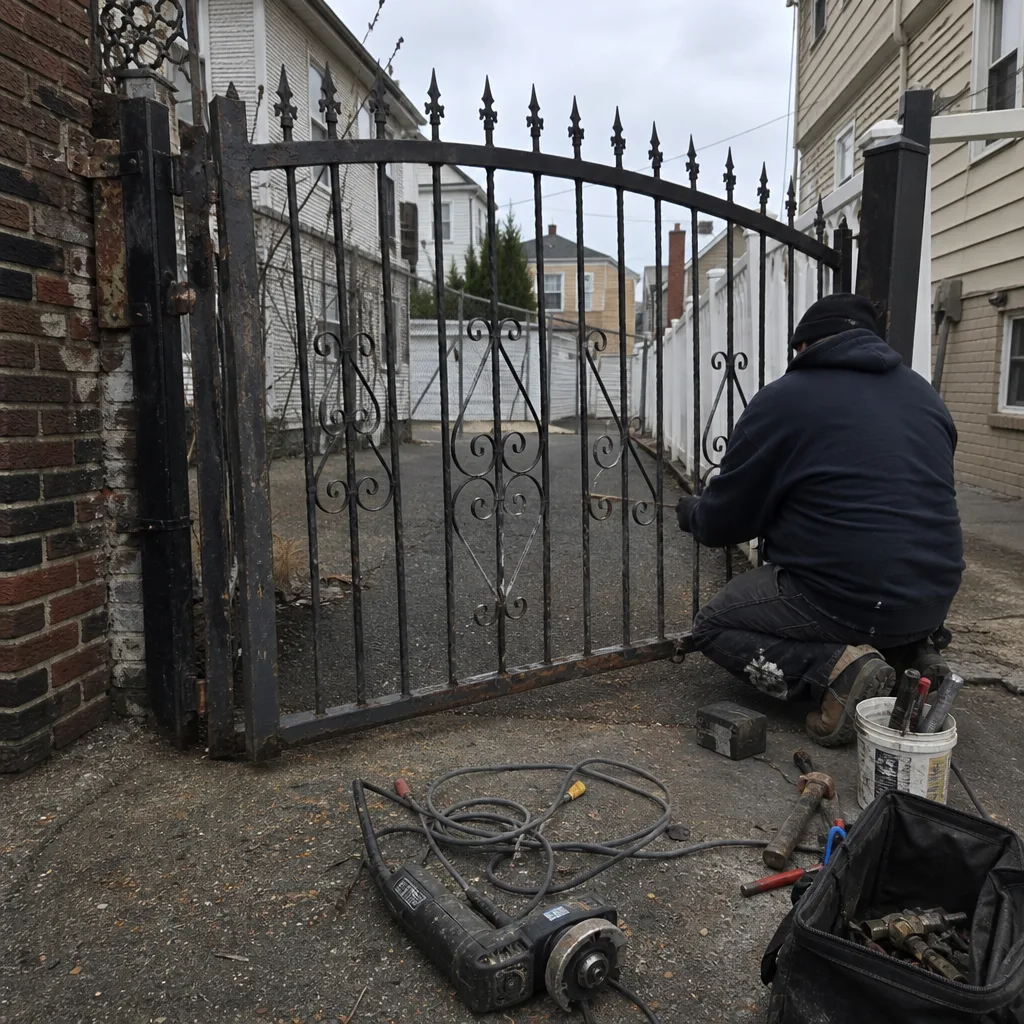 Before
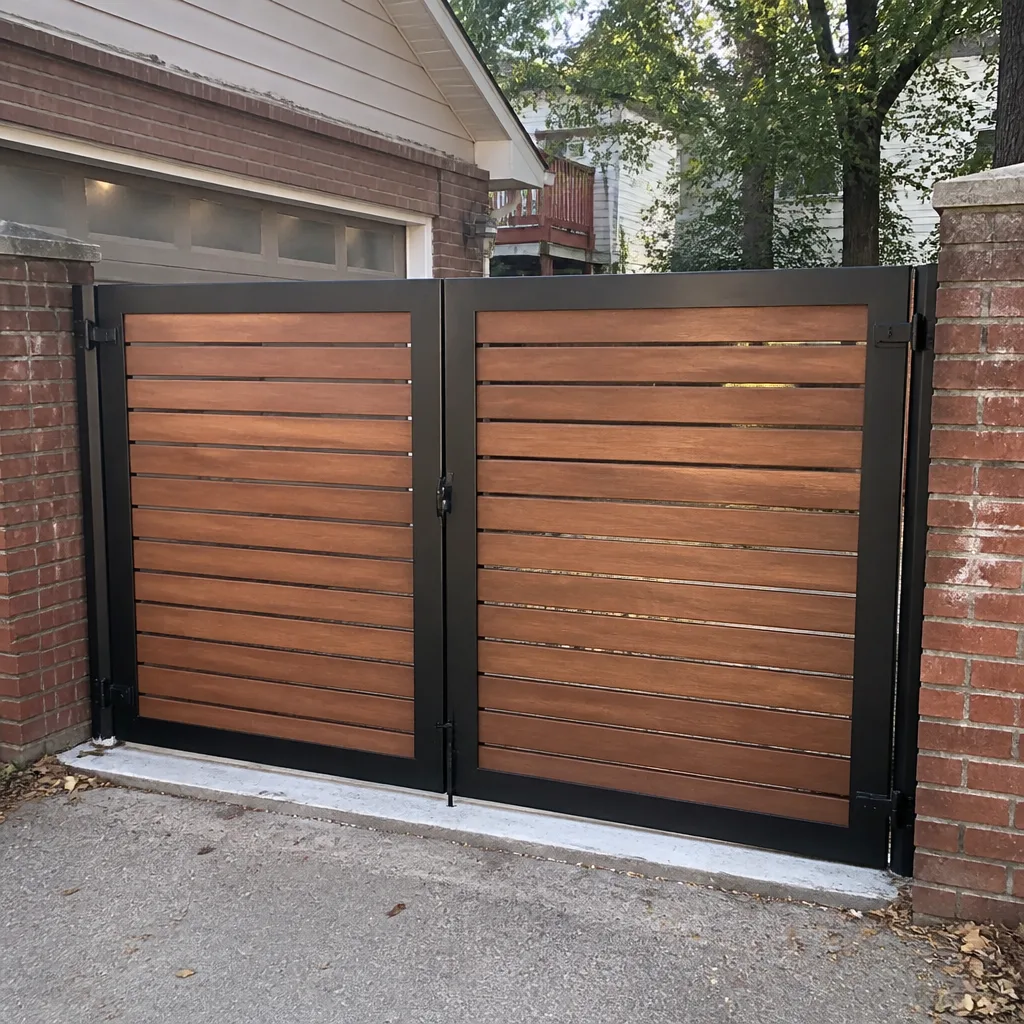 After
After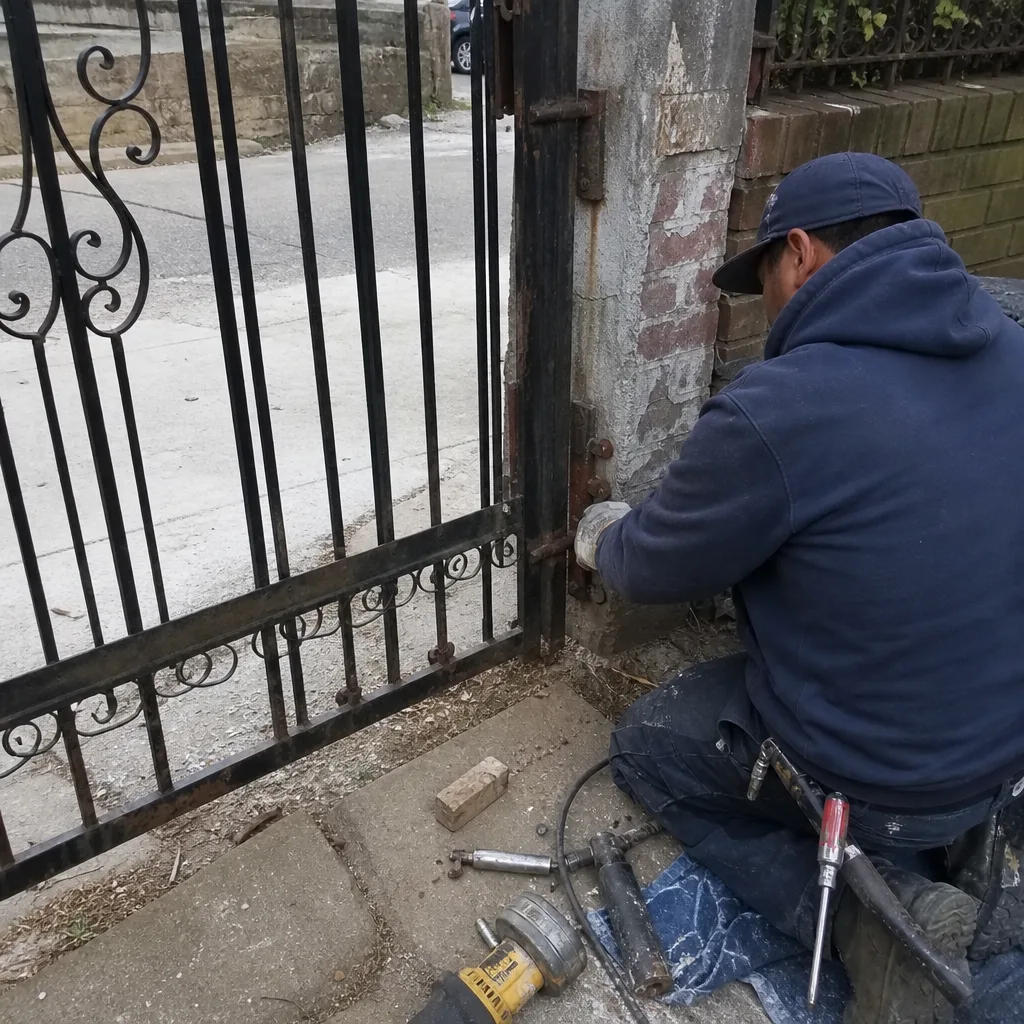 Before
 After
After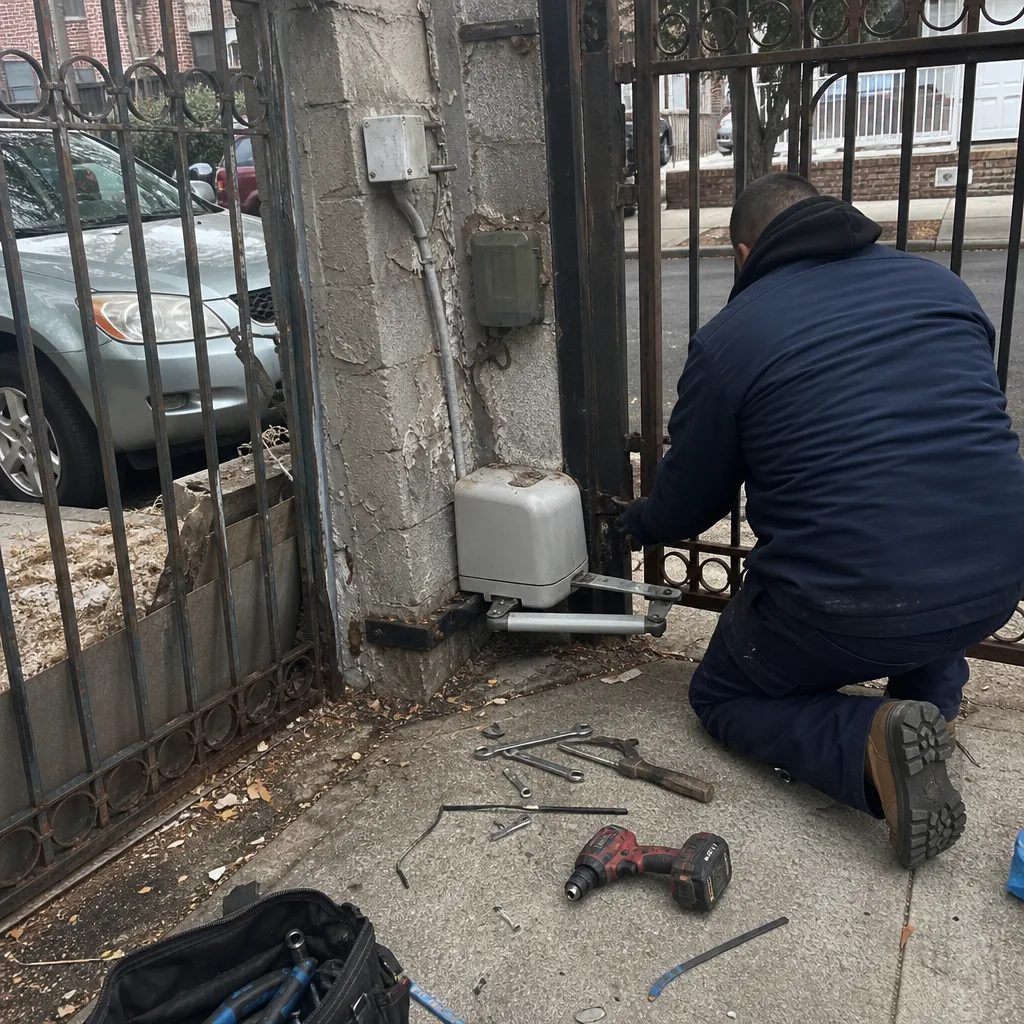 Before
 After
After