
Last updated October 17, 2026
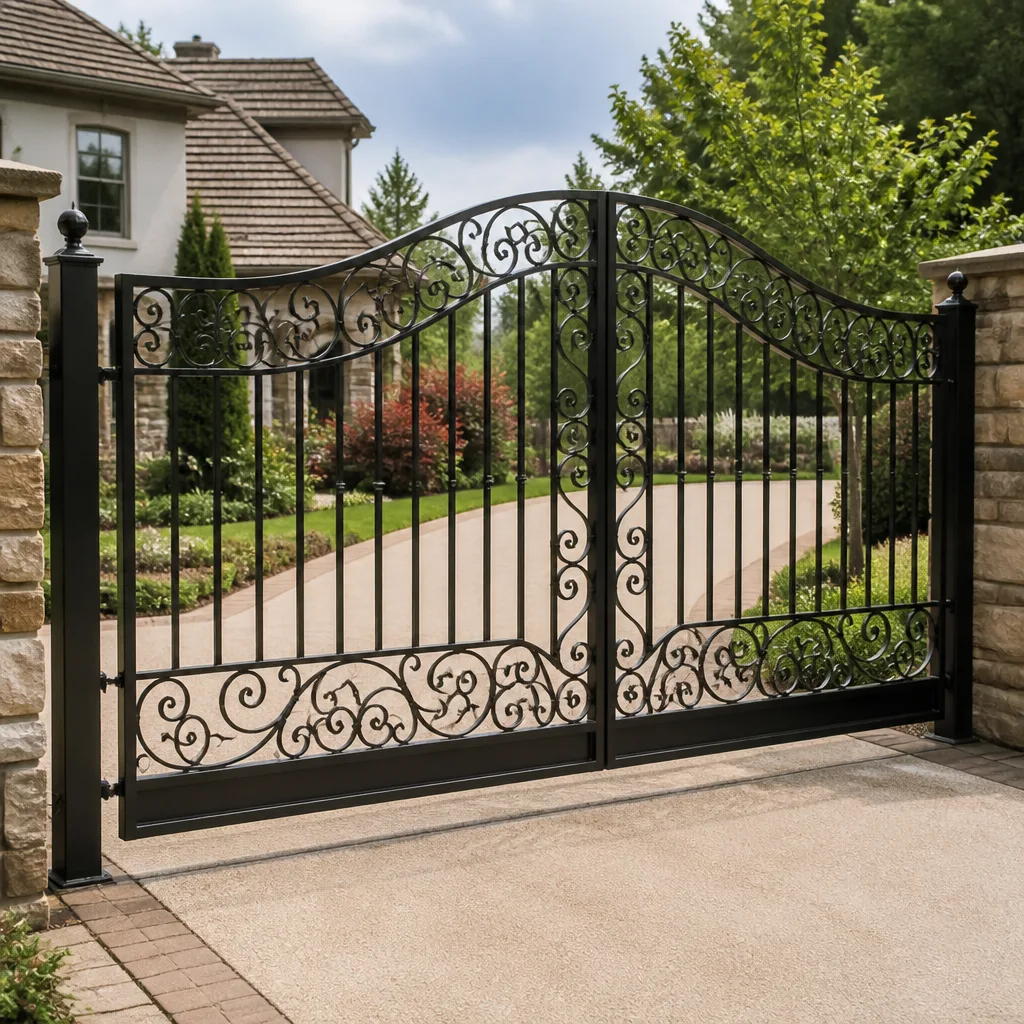 Wrought iron
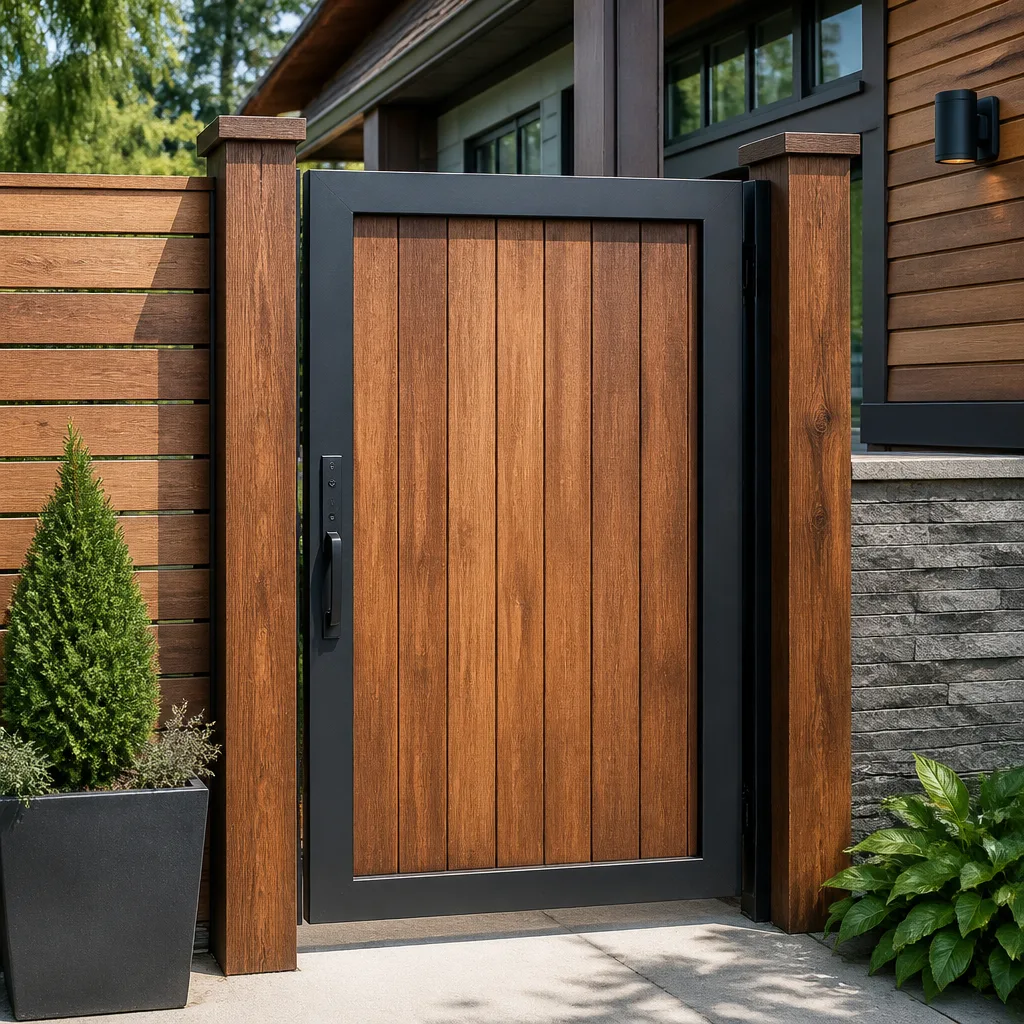 Wood & steel frame
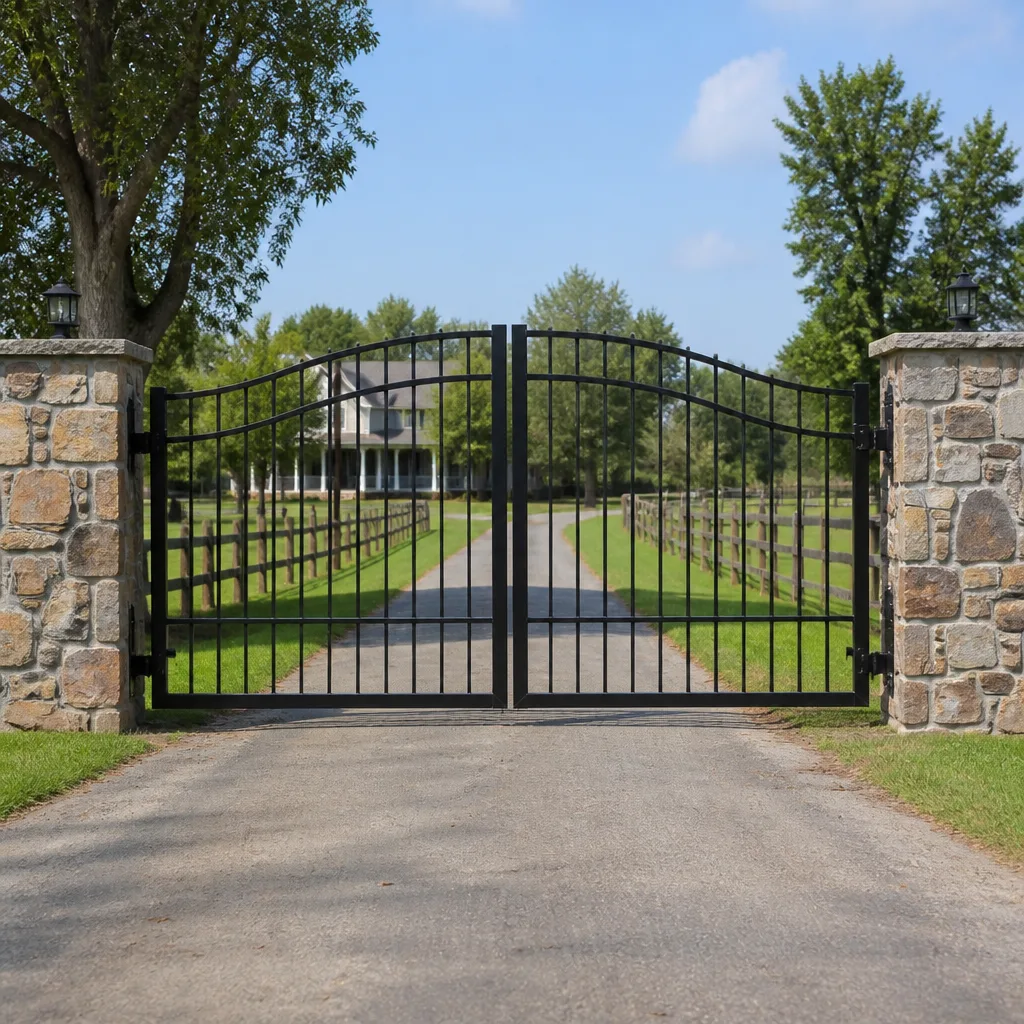 Farm & ranch
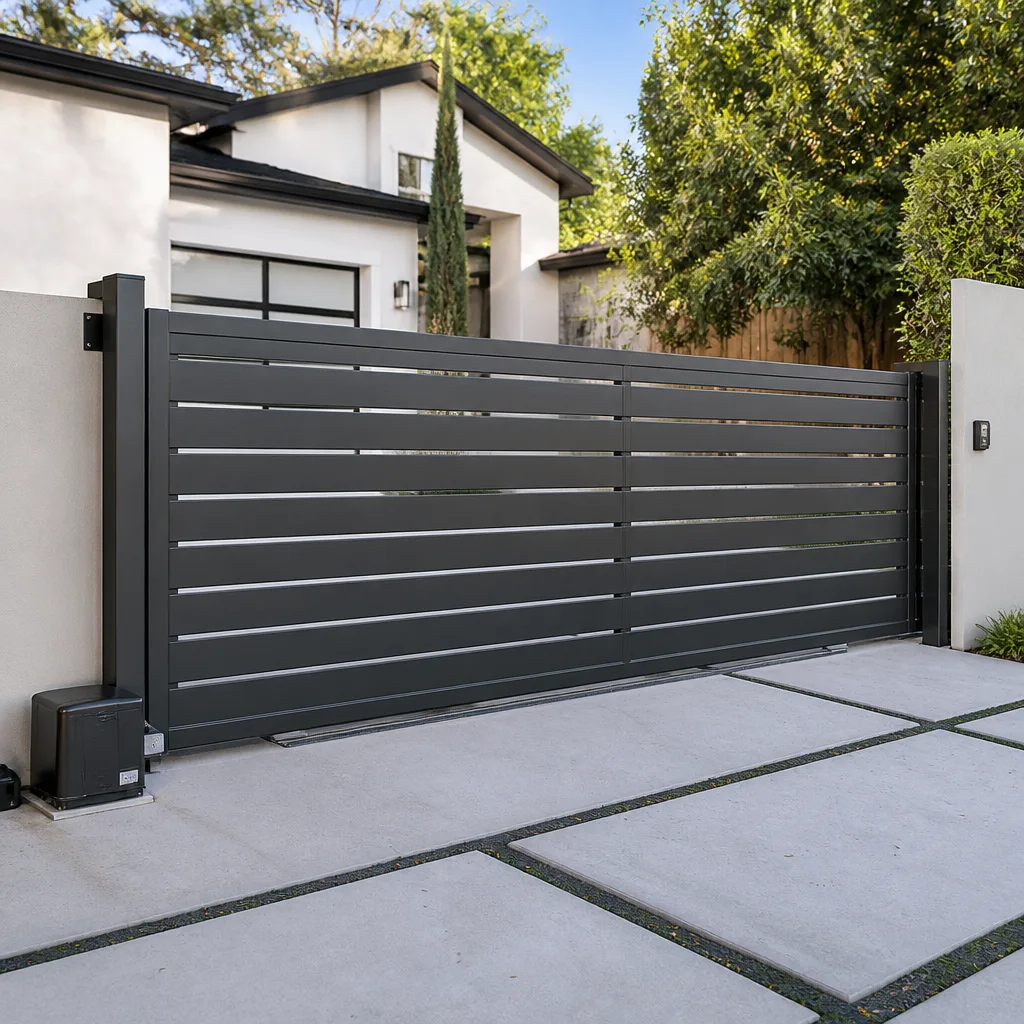 Sliding driveway gates
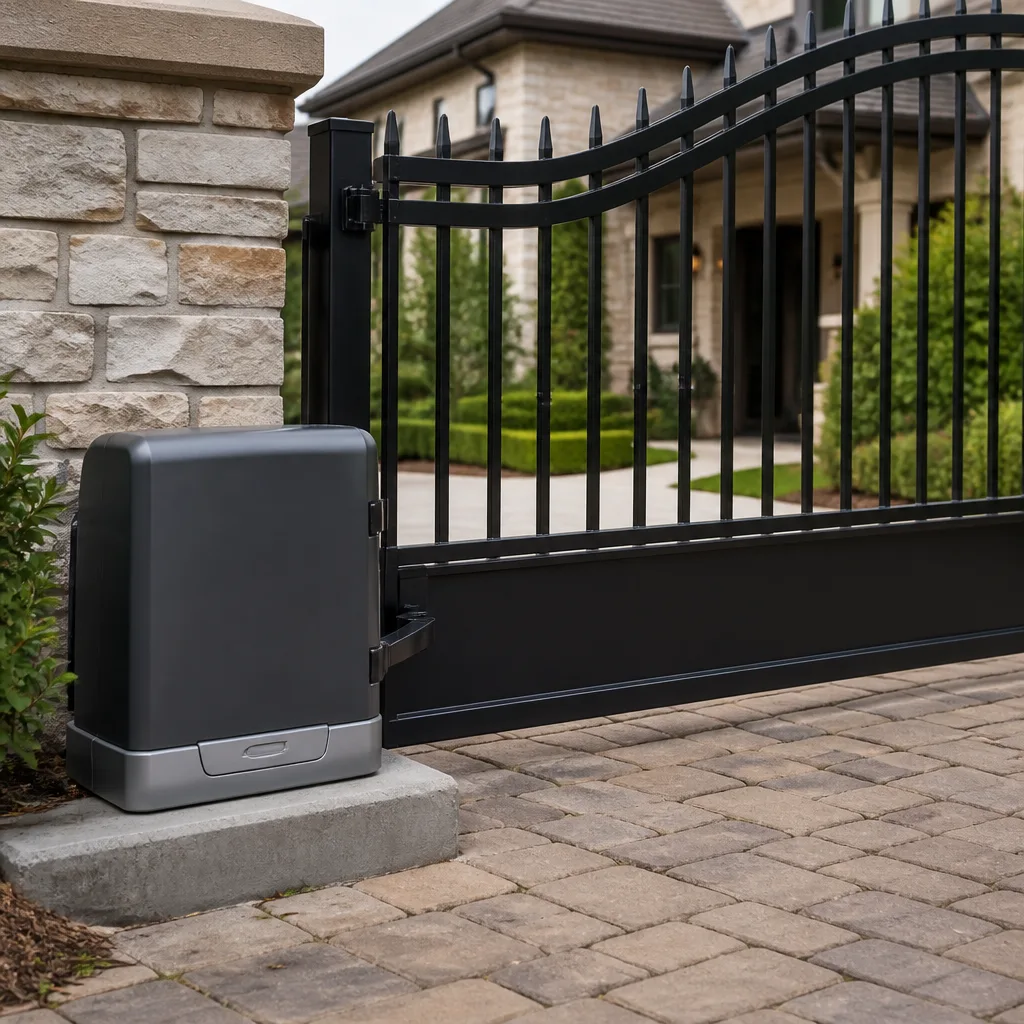 LiftMaster operators
Free on-site gate assessment - hinges, posts, and your LiftMaster or Nice gate operator checked before anything is quoted
The assessment is free and the quote is the invoice.
Get your free estimateGate Repair Permits, Codes & Inspections in NY: What You Need to Know
A homeowner in Bay Ridge was fined $1,800 after an electric gate opener was installed without an electrical permit. Not because the gate company refused to pull one. Neither party knew a residential pedestrian gate required one. That’s the reality of gate work in Brooklyn: most rules live in the gray space between a simple repair and a permitted alteration, and the difference can cost thousands. This guide walks through exactly where that line sits, which projects trigger NYC Department of Buildings (DOB) or Department of Transportation (DOT) review, how landmark districts complicate things further, and what the permit process actually costs in time and money.
Quick Answer
Replacing a gate within the same footprint in Brooklyn usually requires no permit. Moving a post, even six inches, or adding an electric operator can trigger NYC DOB and DOT review, and in landmark districts like Brooklyn Heights or Cobble Hill, the Landmarks Preservation Commission (LPC) adds a separate approval layer. If you’re unsure, call (934) 649-3673 or explore Gate Repair Warning Signs: A Brooklyn Homeowner’s Reference Guide and we’ll tell you whether your job needs one before any price is quoted.
Styles & brands we work with
Table of Contents
- NYC Permit Basics: Where Gate Work Falls
- The Repair vs. Alteration Line NYC Actually Enforces
- Landmark Districts and Historic Gate Rules in Brooklyn
- Electric Gate Permits: What an Application Actually Requires
- Permit Timeline and Cost in Brooklyn: Real Numbers
- Encroachment and DOT: When Your Gate Touches the Sidewalk
- Five NYC Code Terms Every Gate Owner Should Know
- How Latch & Post Handles the Permit Conversation
NYC Permit Basics: Where Gate Work Falls
New York City treats gates differently depending on what you’re doing to them. A gate that hangs on existing posts and swings the same way it always has is generally classified as a repair or replacement. A gate that changes the structure, the footprint, the electrical load, or the property line is an alteration. That single word, alteration, is where the DOB gets involved.
In Brooklyn, the practical threshold looks like this:
- Same footprint, same posts, same swing direction: no permit, no filing, no inspection.
- New posts in the same location: no DOB permit for the posts themselves, but you may need a DOT permit if the posts sit within the sidewalk line.
- Posts moved to a new location: this changes the fence and gate layout, which can require a DOB permit if it affects egress, zoning setbacks, or the certificate of occupancy.
- Any electrical component added: an electric gate opener, keypad, intercom, loop detector, or safety sensor all fall under NYC Electrical Code. These require an electrical permit and inspection.
We’ve seen the confusion happen constantly: a homeowner assumes a gate is a gate, and a fence company doesn’t correct them. Then the DOB inspector shows up for an unrelated reason, sees a new electric operator, and writes a violation. A violation carries a fine, plus the cost of filing the permit retroactively, which is almost always more expensive than filing it correctly the first time.
The Repair vs. Alteration Line NYC Actually Enforces
The DOB doesn’t publish a simple chart for gates, so we’ll give you the plain-language version based on what we see in the field across Brooklyn.
Work that is almost always a repair (no permit):
- Replacing a broken latch, hinge, or lock on an existing gate.
- Welding a cracked frame or re-hanging a sagging gate on its existing posts.
- Replacing the gate leaf itself if it matches the original size and swing.
- Adjusting or replacing a mechanical closer, drop rod, or cane bolt.
- Lubricating, painting, or rust-treating a gate without changing dimensions.
Work that crosses into alteration (DOB or DOT review likely):
- Moving a post. Once a post leaves its original footing, the gate’s footprint changes. The DOB cares because fences and gates define the legal yard, the egress path, and sometimes the front setback.
- Widening the gate opening. A wider gate changes how vehicles or pedestrians enter, which can affect fire access and zoning compliance.
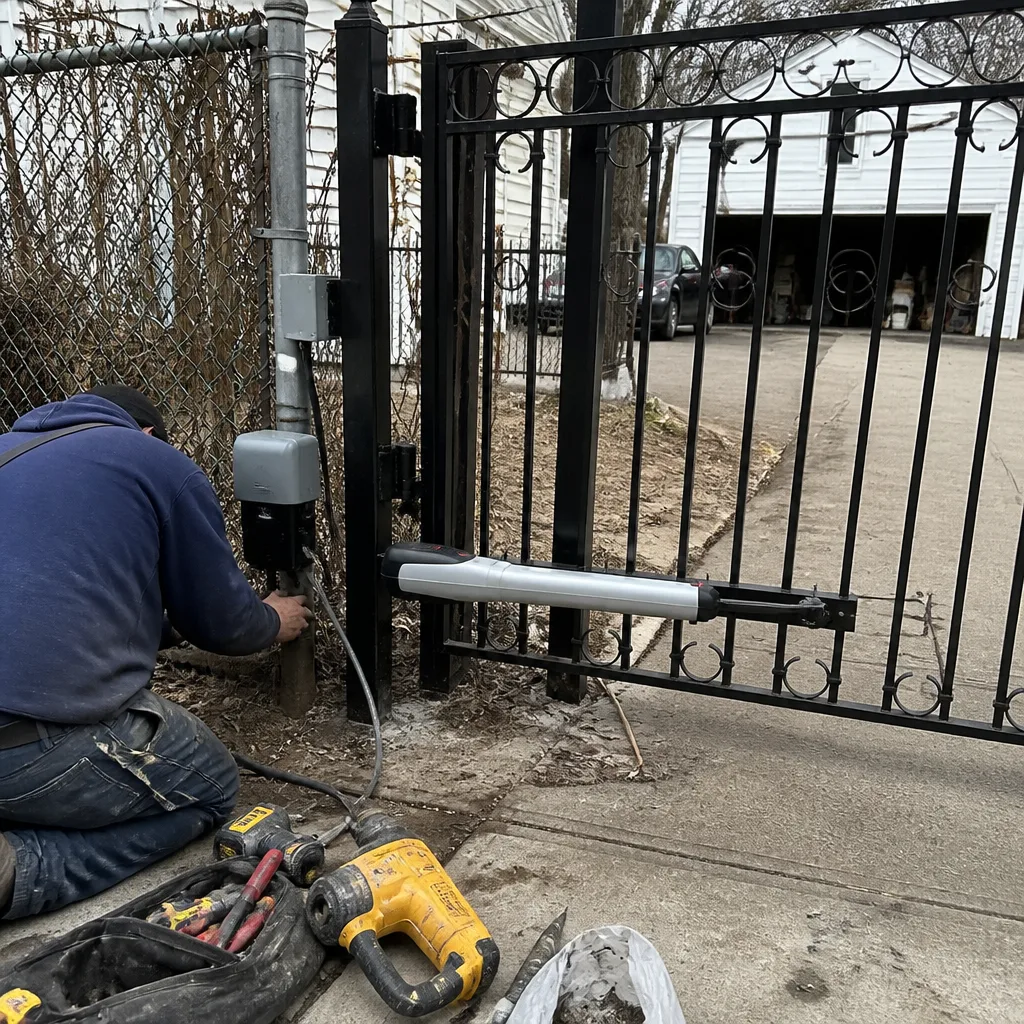
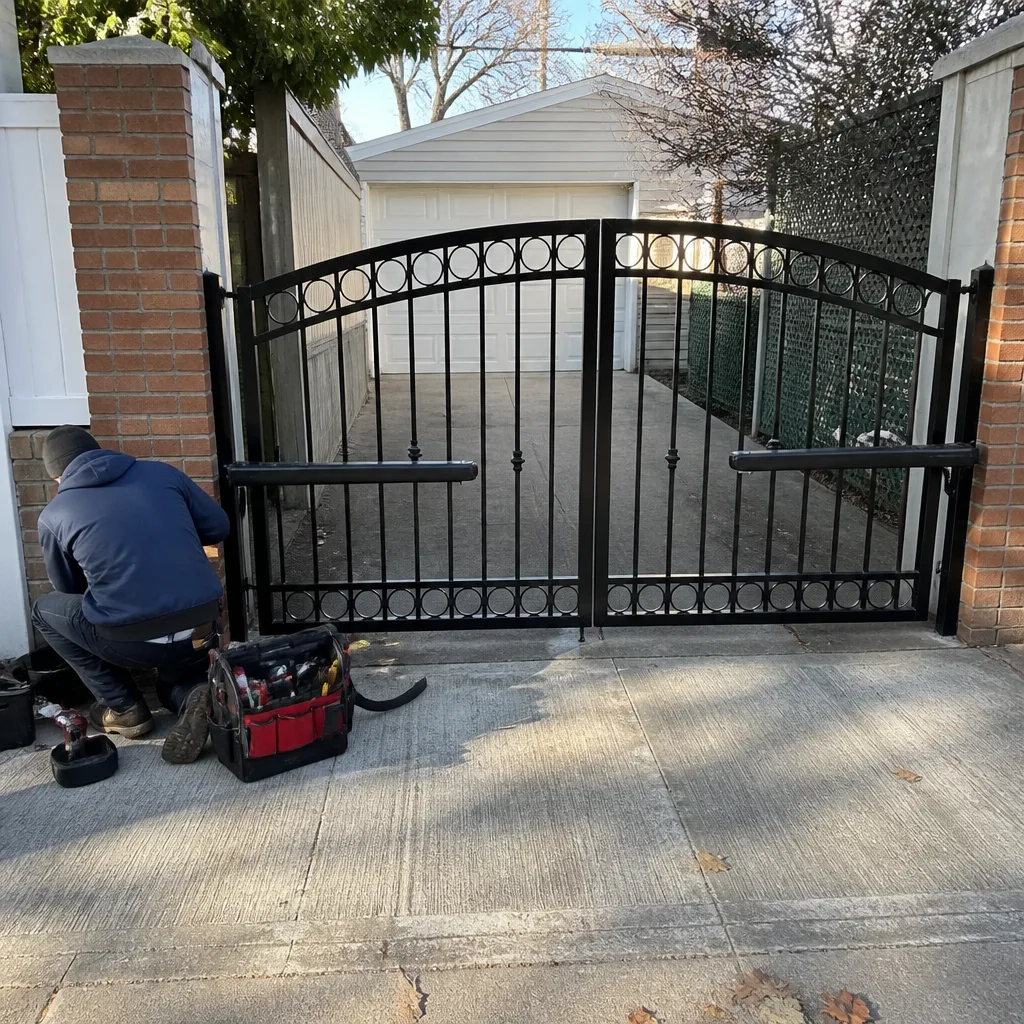
- Adding an electric operator. This is the one homeowners miss most. The operator needs power, and power means electrical work. NYC requires a licensed electrician to pull an electrical permit.
- Installing a gate where none existed. A brand-new gate creates a new structure, and if it faces the sidewalk, the DOT wants to know about it.
- Changing swing direction. A gate that swung inward and now swings outward over the sidewalk becomes an encroachment concern. DOT takes that seriously.
The six-inch rule gets mentioned a lot. It’s not an official DOB rule, but it’s a useful mental line: if you’re not moving anything, it’s a repair. If you’re moving something even a little, assume the city wants to know.
Landmark Districts and Historic Gate Rules in Brooklyn
Brooklyn has some of the most heavily landmarked blocks in the country. Brooklyn Heights, Cobble Hill, Carroll Gardens, Park Slope’s historic district, and parts of Fort Greene all fall under the Landmarks Preservation Commission’s jurisdiction. The LPC reviews any work that changes the exterior appearance of a building or its site features. A gate is a site feature.
Here’s what that means in practice for a homeowner in Cobble Hill who wants to replace a rusted iron gate:
- If the new gate matches the original in material, design, and color, the LPC staff can often approve it at the staff level. This is faster, usually 2 to 4 weeks, and costs less in filing fees.
- If the new gate changes the design, material, or color, the application goes to a public hearing at the community board and then to the LPC commissioners. That’s a 2 to 6 month process depending on the hearing calendar.
- If the property is an individual landmark, not just in a historic district, the review is stricter and the owner should expect to submit detailed drawings and material samples.
The LPC layer comes before the DOB layer. You get the LPC approval first, then file any required DOB permits. A general contractor who doesn’t work regularly in Brooklyn’s landmark districts may not know this sequencing, and that’s where projects stall for months.
In our experience, the gate itself matters less to the LPC than the post caps, finials, and the overall scale of the opening. A simple replacement that respects the original design usually moves quickly. A modern steel panel gate on a brownstone block will not.
Electric Gate Permits: What an Application Actually Requires
Adding power to a gate changes the job completely. You’re no longer just doing gate work. You’re doing electrical work, and NYC takes electrical permits seriously.
An electric gate installation permit application typically requires:
- Electrical plans: these show the circuit, the disconnect, the wiring path from the panel to the operator, and the grounding.
- Load calculations: the electrician calculates what the operator draws and confirms the circuit has capacity.
- A site diagram: showing the gate location, swing direction, and distance from the property line and sidewalk.
- Operator specifications: the make and model, whether it’s a LiftMaster, FAAC, BFT, or Mighty Mule unit, and its power requirements.
- Safety device documentation: NYC code requires photo eyes or contact edges on electric gates that close automatically. The application shows where those are placed.
The electrician files the permit, not the gate company. That’s an important distinction. We can install the operator and the gate, but the electrical permit belongs to a licensed NYC electrician. If a gate company tells you they’re handling the whole permit themselves, ask whether they have a licensed electrician on staff. Most don’t, and that’s how the Bay Ridge homeowner ended up with an $1,800 fine.
Permit Timeline and Cost in Brooklyn: Real Numbers
We give straight answers on this because the timeline is where homeowners get frustrated.
Electrical permit for a gate operator:
- Filing fees: $300 to $700 depending on the scope and the electrician’s filing service.
- Review time: 4 to 8 weeks in most Brooklyn DOB districts. Can stretch to 12 weeks during busy summer months.
- Inspection: 1 to 2 weeks after the work is complete. The inspector checks the operator, the disconnect, and the safety devices.
LPC approval in a landmark district:
- Staff-level approval: 2 to 4 weeks, filing fees around $100 to $300.
- Commissioner-level hearing: 2 to 6 months, filing fees $300 to $600.
DOT permit for a gate that encroaches on the sidewalk:
- Filing fees: $200 to $500.
- Review time: 2 to 4 weeks.
- Inspection: sometimes required, sometimes waived for a simple residential gate.
These are the real ranges we see across Brooklyn. When you add it all up, an electric gate project in a landmark district can take 3 to 6 months from first measurement to final inspection. The gate installation itself might take one day. The paperwork is what takes time.
Encroachment and DOT: When Your Gate Touches the Sidewalk
Brooklyn gates sit close to the sidewalk. That’s the nature of the borough. Row houses, brownstones, and even detached homes in neighborhoods like Dyker Heights and Bensonhurst have gates that swing within inches of the public right-of-way.
The NYC DOT regulates anything that encroaches on the public sidewalk. An encroachment is any private structure that extends over or onto city property. A gate that swings outward over the sidewalk is an encroachment. A gate post set into the sidewalk is an encroachment. Even a gate that swings inward but has a latch post close to the property line can raise a DOT question.
The DOT’s concern is pedestrian safety and liability. If a gate swings outward and strikes someone walking by, the city wants documentation that the installation was reviewed. That’s the DOT permit. It’s not complicated, but it does add a step.
Here’s what we tell homeowners in neighborhoods like Clinton Hill and Prospect Heights:
- If your gate swings outward over the sidewalk, even partially, plan for a DOT review.
- If your posts sit within the sidewalk flagstones, plan for a DOT review.
- If your gate swings inward and your posts are inside your property line, the DOT usually stays out of it.
The line between your property and the city’s is in your survey. If you don’t have a recent survey, the DOB filing process will typically flag it, and you may need one before the permit moves forward. That’s another $1,500 to $3,000 for a survey, which nobody budgets for until it’s required.
Five NYC Code Terms Every Gate Owner Should Know
These five terms come up in almost every gate permit conversation in Brooklyn. We define them the way the city actually uses them, not the way a code textbook does.
1. Alteration
Any change to a building or site feature that goes beyond replacing what was there. For gates, moving a post, changing the opening width, adding power, or changing swing direction counts as an alteration. The DOB cares because alterations can affect zoning compliance, egress, and safety. A repair is not an alteration. A replacement is not an alteration. A change is.
2. Repair
Restoring something to its existing condition without changing its size, location, or function. Fixing a latch, welding a crack, or re-hanging a gate on its existing posts is a repair. No permit required. The moment you change the configuration, you’ve left repair territory.
3. Electrical Work
Any installation, modification, or extension of wiring, devices, or equipment that carries electricity. An electric gate operator is a motor. It needs a circuit, a disconnect, and possibly a ground. NYC requires a licensed electrician to perform the electrical work and pull the permit. The gate company installs the operator. The electrician connects it. The permit belongs to the electrician.
4. Encroachment
A private structure that extends onto public property. For gates, this means swinging over the sidewalk, placing posts in the sidewalk, or any part of the gate assembly crossing the property line. The DOT reviews encroachments because the city owns the sidewalk and carries liability for what happens on it.
5. Certificate of Occupancy
A document issued by the DOB that says a building is legal for its current use. Gate work rarely triggers a C.O. review on its own, but if an alteration changes the front yard, the egress, or the fence height, the DOB may check the existing C.O. for conflicts. That’s the moment homeowners learn their fence was never legal in the first place, and the project suddenly expands.
How Latch & Post Handles the Permit Conversation
We start with the footprint question, because that’s where the surprises live. Before we quote our Gate Repair services, we ask: Is the gate staying where it is, or is something moving? Is there power involved? Are you in a landmark district? Those three questions tell us whether we’re looking at a simple repair or a permitted alteration.
If the job needs a permit, we say so before we give a price. You’ll know the filing fees, the timeline, and who’s responsible for the paperwork. If you need a licensed electrician, we tell you that, and we can recommend one we’ve worked with on gate projects across Brooklyn. If the LPC is involved, we walk you through the sequence: LPC approval first, DOB second, DOT third if the sidewalk is in play.
Most gate companies in Brooklyn don’t have this conversation until the posts are already out of the ground and someone realizes the city should have been notified. For help avoiding this, see How to Hire a Gate Repair Contractor in Brooklyn: A Step-by-Step Guide. That’s how homeowners get violations. We’d rather spend twenty minutes on the phone before the job than have you spend six months cleaning up a DOB issue after it.
Every project also comes with the basics we don’t negotiate on: a written price before work starts, shoe covers and drop cloths inside the home, and a cleanup photo before we leave. The paperwork side and the house side both get the same level of care. That’s the Latch and Post Gate Repair Brooklyn home standard, and it applies whether we’re fixing a latch in Bay Ridge or installing a full electric gate in Park Slope.
Common Mistakes to Avoid
- Assuming a gate replacement needs no permit because the old gate had no permit. The old gate may have been installed before current rules existed, or it may have been installed illegally. The DOB judges the new work by current code, not by what was there before.
- Treating an electric gate opener as a DIY project. The operator is a motor that draws real current. Connecting it to your panel without a permit and inspection is a violation, and it can void your homeowner’s insurance if something goes wrong.
- Forgetting the landmark district layer. Homeowners in Brooklyn Heights and Carroll Gardens often know their buildings are landmarked but don’t realize the gate is part of the review. The LPC reviews site features, not just facades.
- Hiring a contractor who says they’ll handle the permit and then never files. Ask to see the filed permit number. If they can’t produce one, the work is unpermitted, and you own the liability.
- Moving a post a few inches to make the gate fit without checking the setback. That six-inch move can push the gate into the front yard setback, and the DOB can require you to move it back. We’ve seen this in Greenwood Heights and Windsor Terrace more than once.
- Ignoring the swing direction. A gate that swings outward over the sidewalk creates a DOT encroachment. If a pedestrian gets hit, the liability is yours. The DOB and DOT both care about this.
- Budgeting for the gate but not the permit. A $2,000 gate becomes a $3,500 project once filing fees, drawings, and an inspection are added. We tell every client the full number before work starts so there’s no surprise.
See the difference
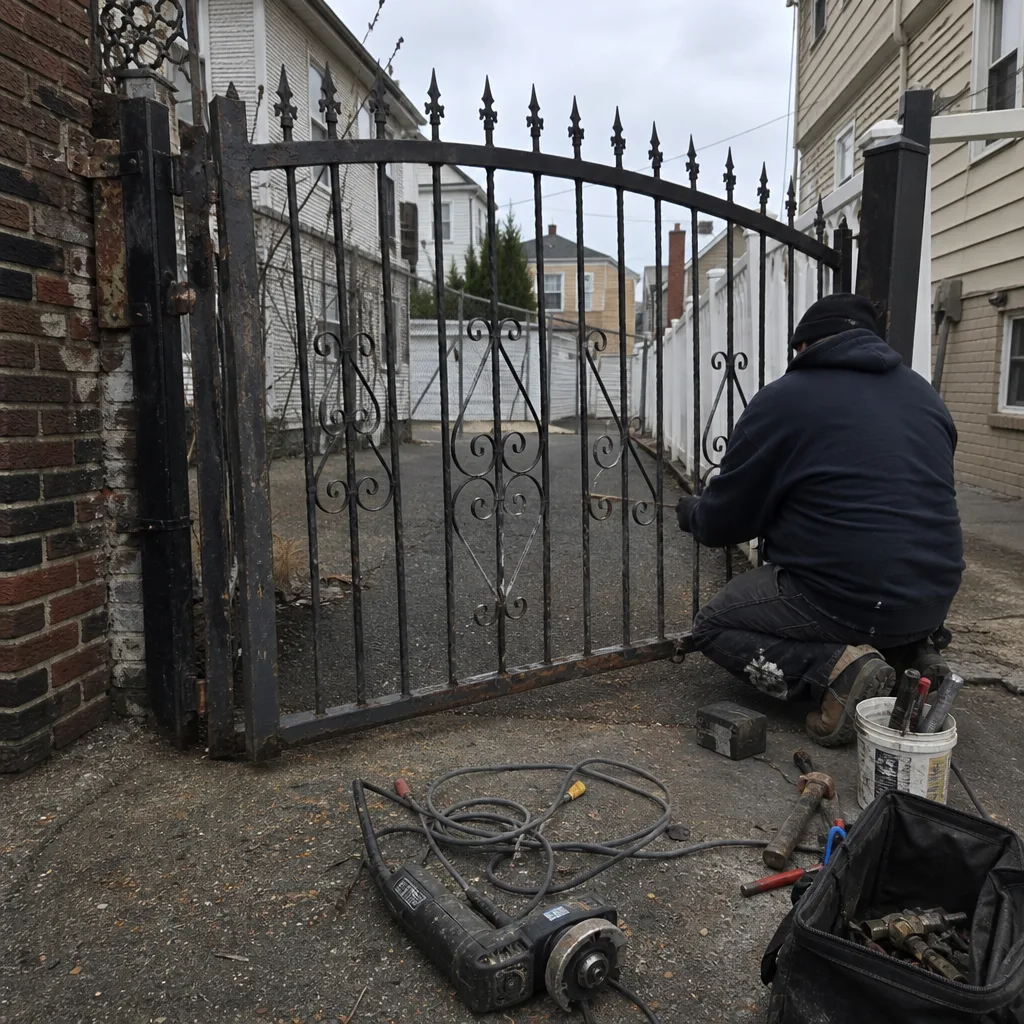 Before
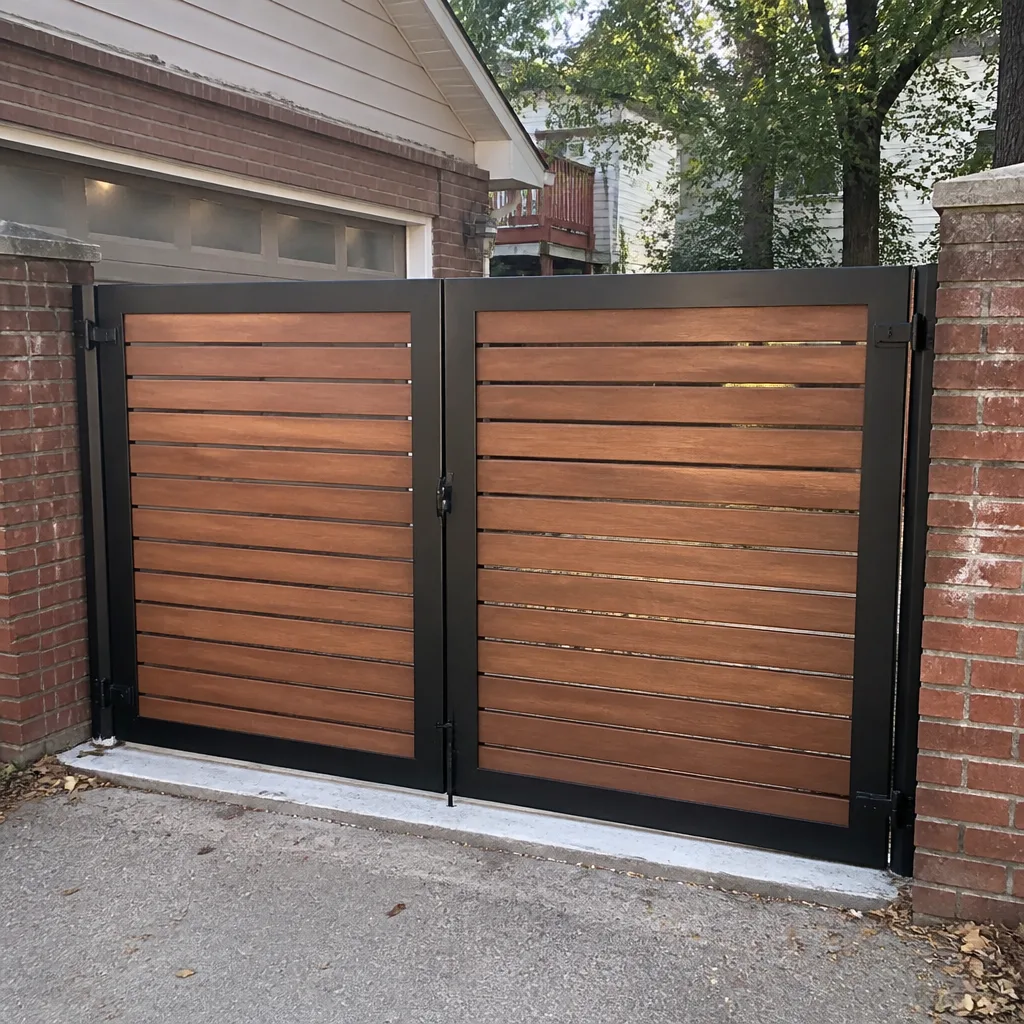 After
After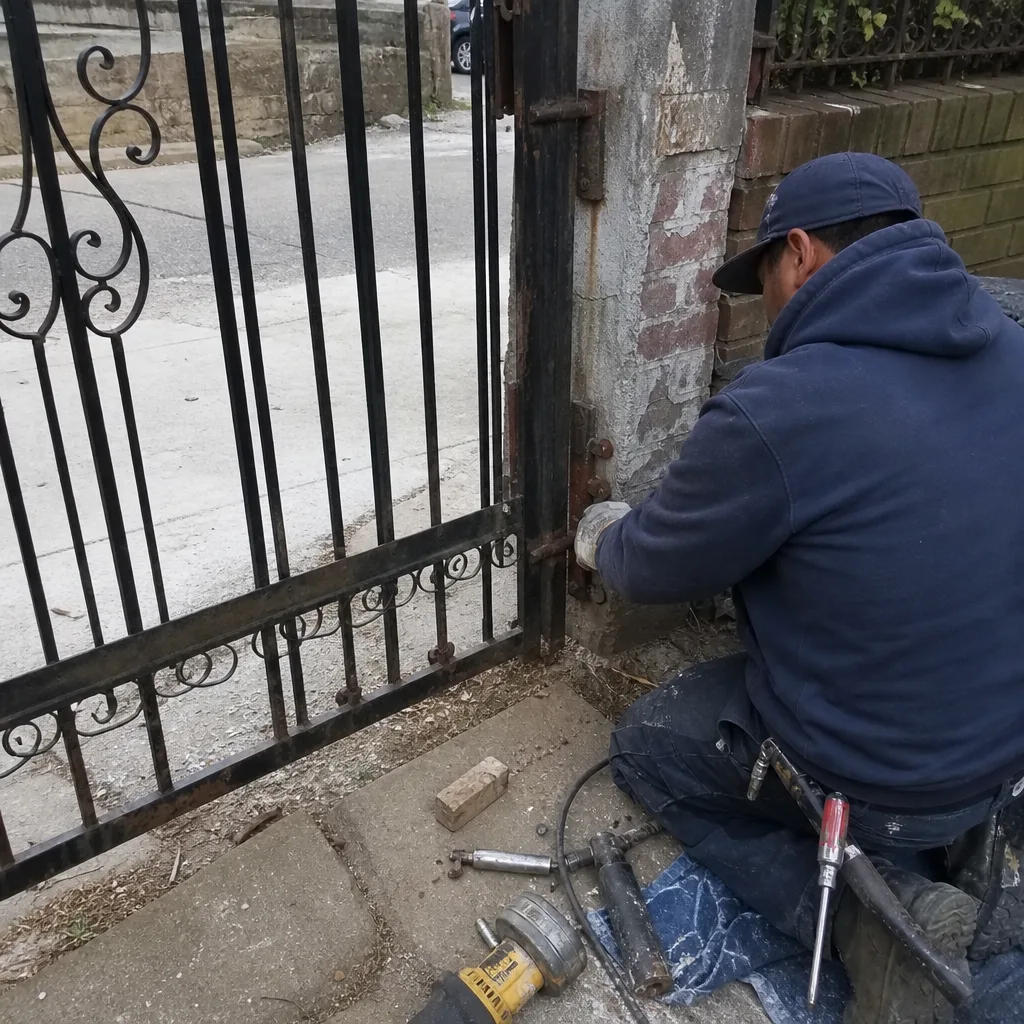 Before
 After
After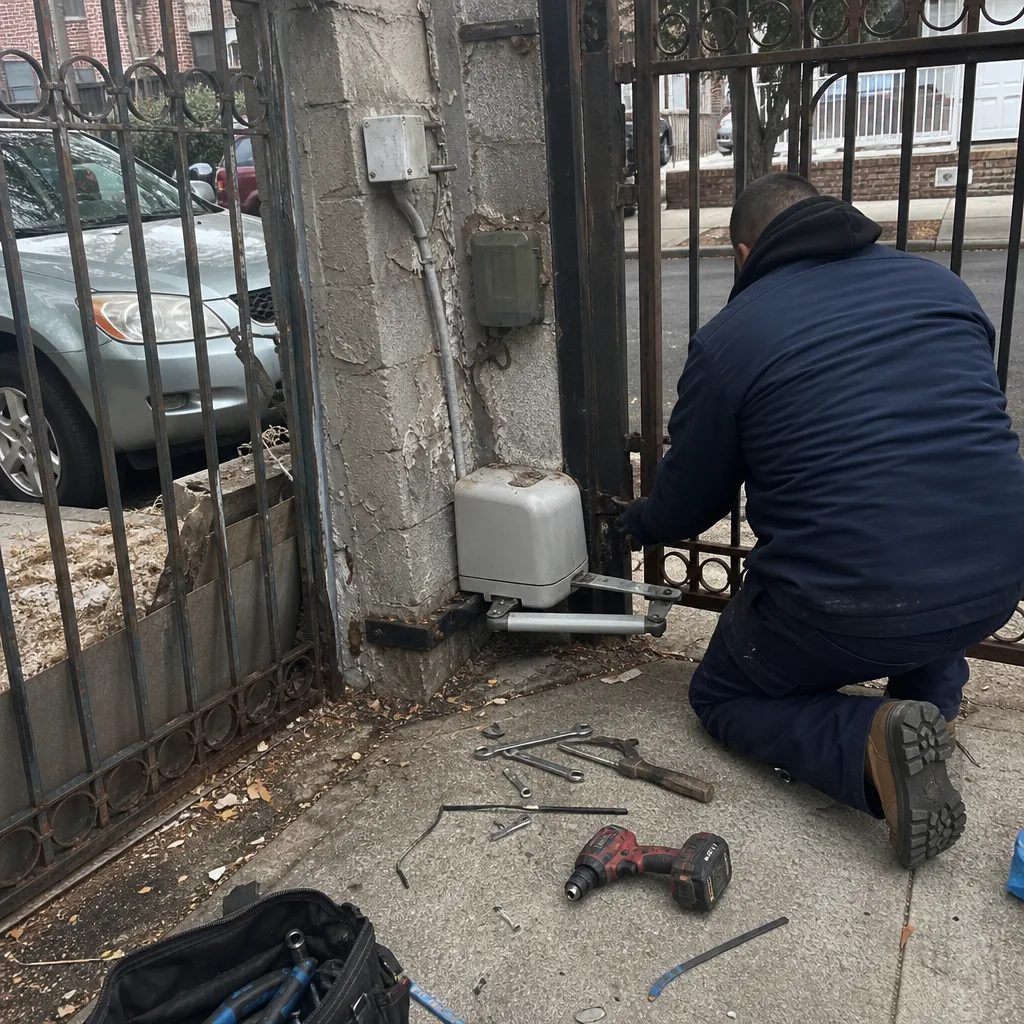 Before
 After
AfterWhen to Call a Professional
If your gate has a broken latch or a squeaky hinge and nothing about the footprint is changing, a handyman can often handle it. But the moment you’re moving a post, adding power, changing swing direction, or working in a landmark district, call someone who does this every day. The rules in Brooklyn are specific, and the cost of getting them wrong is measured in violation fines, not just repair bills. Gate Repair in Brooklyn starts with a conversation about permits, not a quote that hides the paperwork. Latch and Post Gate Repair Brooklyn offers free estimates in Brooklyn, call (934) 649-3673.
Frequently Asked Questions
No, if the new gate matches the existing size, swing direction, and post locations. Yes, if you move posts, widen the opening, change swing direction, or add an electric operator. Call (934) 649-3673 and we’ll tell you which category your job falls into before we quote anything.
An electrical permit for a gate operator typically costs $300 to $700 in filing fees. LPC approval in a landmark district adds $100 to $600 depending on whether it’s a staff-level or commissioner-level review. A DOT encroachment permit runs $200 to $500. These are filing fees only, not the cost of the gate or the installation.
No. An electric gate operator requires a licensed electrician to pull an NYC electrical permit and schedule an inspection. Installing one without a permit can result in a DOB violation, a fine, and the cost of retroactive filing, which is almost always higher than filing correctly the first time.
Yes. In Brooklyn Heights, Cobble Hill, Carroll Gardens, and other landmark districts, gates are site features subject to LPC review. A replacement that matches the original design can be approved quickly at staff level. A redesign requires a public hearing and can take 2 to 6 months.
We identify whether a permit is required before we give a price. We can recommend licensed electricians and expeditors we’ve worked with on Brooklyn gate projects. The electrical permit must be filed by a licensed electrician, and the LPC filing goes through the property owner or an expediter. We coordinate the sequence so the work happens in the right order. Read more about how we work on Gate Installation in Brooklyn.
The DOB judges new work by current code. If you’re now replacing that gate and the replacement is a repair, the old installation usually doesn’t matter. If you’re doing an alteration, the DOB may require documentation that the old installation was legal, and if it wasn’t, the project can expand to include legalizing it. We’ve handled enough of these cases across Brooklyn to give you a straight answer on your specific situation. For electric gate work specifically, see Electric Gate Repair in Brooklyn.
The Bottom Line
Most gate repairs in Brooklyn are simple: fix the latch, weld the crack, re-hang the gate, done. No permit, no filing, no inspection. But the moment you change the footprint, add power, or work in a landmark district, the city’s process takes over, and it moves at the city’s speed. The difference between a one-day repair and a four-month permitted project comes down to three questions: Is something moving? Is there electricity? Are you in a landmark district? Ask those questions first, and the rest of the process becomes predictable. We’re happy to answer them for you, no charge, before any work starts, or you can browse more guides & resources anytime.
Written by Cody Beckman, Owner at Latch and Post Gate Repair Brooklyn, serving Brooklyn since 2009.